

Information Sampling and Adaptive Cognition
Book Details
Format
Hardback
ISBN-10
0521831598
ISBN-13
9780521831598
Publisher
Cambridge University Press
Imprint
Cambridge University Press
Country of Manufacture
GB
Country of Publication
GB
Publication Date
Dec 19th, 2005
Print length
498 Pages
Weight
767 grams
Dimensions
22.90 x 15.20 x 3.20 cms
Product Classification:
Cognition & cognitive psychologyCognition and cognitive psychology
KSh 13,400.00
Currently unavailable
0 in stock
Delivery Location
Delivery fee: Select location
Secure
Quality
Fast
Previous scientific attempts to explain the causes of wrong decisions have mainly focused on shortcomings in the cognitive processing of the information given. This book offers that the input of environmental information samples are biased in the first place, whereas the cognitive processing is often unbiased and remarkably accurate.
A 'sample' is not only a concept from statistics that has penetrated common sense but also a metaphor that has inspired much research and theorizing in current psychology. The sampling approach emphasizes the selectivity and the biases that are inherent in the samples of information input with which judges and decision makers are fed. As environmental samples are rarely random, or representative of the world as a whole, decision making calls for censorship and critical evaluation of the data given. However, even the most intelligent decision makers tend to behave like 'naive intuitive statisticians': quite sensitive to the data given but uncritical concerning the source of the data. Thus, the vicissitudes of sampling information in the environment together with the failure to monitor and control sampling effects adequately provide a key to re-interpreting findings obtained in the last two decades of research on judgment and decision making.
Get Information Sampling and Adaptive Cognition by Klaus Fiedler at the best price and quality guaranteed only at Werezi Africa's largest book ecommerce store. The book was published by Cambridge University Press and it has 498 pages.
Customers Who Bought This Also Bought
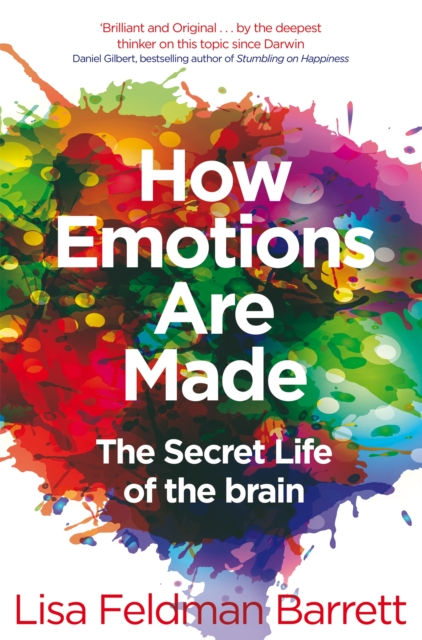
How Emotions Are Made
KSh 2,350.00

Gödel, Escher, Bach
KSh 4,200.00
Thinking, Fast and Slow
KSh 3,050.00

The Art of Seduction
KSh 5,050.00
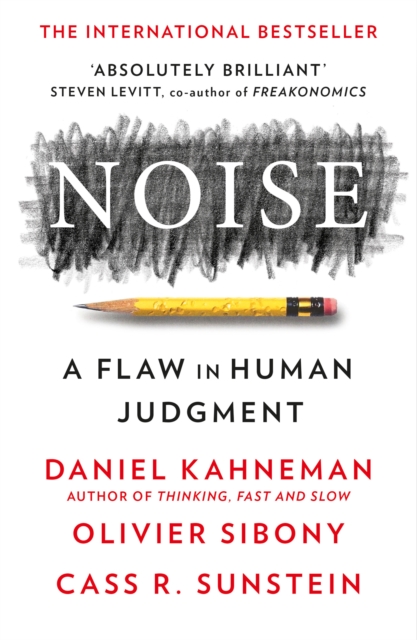
Noise
KSh 2,000.00
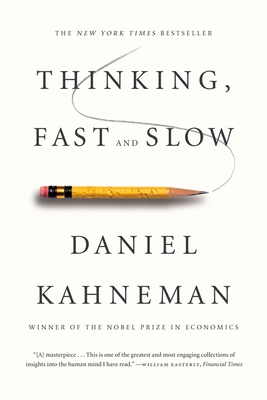
Thinking, Fast and Slow
KSh 2,700.00
Seven and a Half Lessons About the Brain
KSh 2,000.00
Influence: Science and Practice
KSh 12,850.00

Do the Work
KSh 1,450.00

Thinking in Bets
KSh 5,050.00

Art Of Listening
KSh 3,050.00
Mind''s Eye
KSh 2,000.00
