
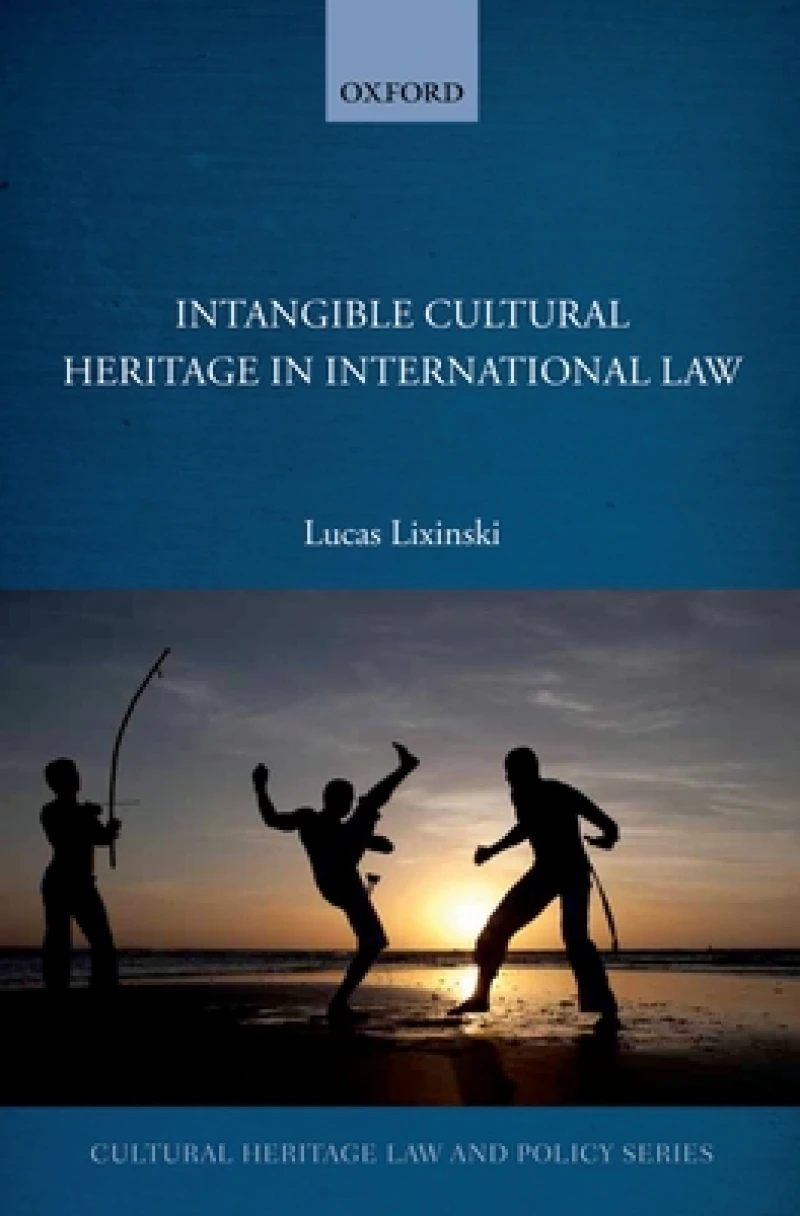
Intangible Cultural Heritage in International Law
Book Details
Format
Hardback or Cased Book
Book Series
Cultural Heritage Law And Policy
ISBN-10
0199679509
ISBN-13
9780199679508
Publisher
Oxford University Press
Imprint
Oxford University Press
Country of Manufacture
GB
Country of Publication
GB
Publication Date
Jun 13th, 2013
Print length
296 Pages
Weight
568 grams
Dimensions
24.00 x 16.10 x 2.20 cms
Ksh 18,600.00
Manufactured on Demand
0 in stock
Delivery Location
Delivery fee: Select location
Secure
Quality
Fast
Intangible cultural heritage is the traditional practices, expressions, knowledge, and skills that form part of a community's culture. It is protected by a 2003 UNESCO Convention, and by several regional and national instruments. This book analyses its legal protection, including from within human rights, intellectual property, and contract law.
This book offers a comprehensive analysis of the legal issues around intangible cultural heritage (also known as traditional cultural expressions or folklore). It explores both institutional and substantive responses the law offers to the safeguarding of intangible heritage, relying heavily on critiques internal and external to the law. These external critiques primarily come from the disciplines of anthropology and heritage studies.Intangible cultural heritage is safeguarded on three different levels: international, regional, and national. At the international level, the foremost instrument is the specific UNESCO Convention for the Safeguarding of the Intangible Cultural Heritage (2003). At the regional level, initiatives are undertaken both in schemes of political and economic integration, a common thread being that intangible cultural heritage helps promote a common identity for the region, becoming thus a desirable aspect of the integration process. Domestically, responses range from strong constitutional forms of protection to rather weak policy initiatives aimed primarily at attracting foreign aid.Intangible heritage can also be safeguarded via substantive law, and, in this respect, the book looks at the potential and pitfalls of human rights law, intellectual property tools, and contractual approaches. It investigates how the law works and ought to work towards protecting communities, defined as those from where intangible cultural heritage stems, and to whom benefits of its exploitation must return. The book takes the critiques from anthropological and heritage studies into account in order to posit a re-shaped law, offering tools that can be valuable to both scholars and practitioners when understanding how to safeguard intangible heritage.
Get Intangible Cultural Heritage in International Law by at the best price and quality guaranteed only at Werezi Africa's largest book ecommerce store. The book was published by Oxford University Press and it has pages.

