
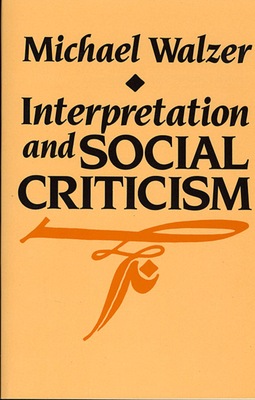
Interpretation & Social Criticism (Paper)
Book Details
Format
Paperback / softback
Book Series
The Tanner Lectures on Human Values
ISBN-10
0674459717
ISBN-13
9780674459717
Publisher
Harvard University Press
Imprint
Harvard University Press
Country of Manufacture
US
Country of Publication
GB
Publication Date
Oct 15th, 1993
Print length
108 Pages
Weight
168 grams
Dimensions
21.50 x 14.00 x 0.70 cms
Product Classification:
Social theory
KSh 5,050.00
Werezi Extended Catalogue
Delivery in 12 days
1 copies in stock
Delivery Location
Delivery fee: Select location
Delivery in 12 days
Secure
Quality
Fast
In succinct and engaging fashion Michael Walzer demystifies the activity of the social critic, providing a philosophical framework for understanding social criticism as social practice.
What do social critics do? I How do they go about doing it? Where do their principles come from? How do critics establish their distance from the people and institutions they criticize?Michael Walzer addresses these problems in succinct and engaging fashion, providing a philosophical framework for understanding social criticism as a social practice. Walzer maintains that social criticism is an ordinary activity—less the offspring of scientific knowledge than the “educated cousin of common complaint”—and does not depend for its force or accuracy upon any sort of high theory. In his view, the social critic is not someone radically detached and disinterested, who looks at society as a total stranger and applies objective and universal principles. The true social critic must stand only a little to the side of his society—unlike Jean-Paul Sartre during the Algerian war, for example, who described himself as an enemy of his own people. And unlike Lenin, who judged Russian society against a standard worked out with reference to other places far away. The “connected” critic is the model Walzer offers, one whose distance is measured in inches but who is highly critical nevertheless. John Locke is one example of the connected critic who argued for religious toleration not as a universal right ordained by reason but as a practical consequence of Protestant theology. The biblical prophets, such as Amos, were also men of their own day, with a particular quarrel to conduct with their fellows; the universalism of that quarrel is our own extrapolation. Walzer explains where critical principles come from, how much distance is “critical distance,” and what the historical practice of criticism has actually been like in the work of social philosophers such as Marx, Gramsci, Koestler, Lenin, Habermas, and Rawls. Walzer posits a moral world already in existence, a historical product, that gives structure to our lives but whose ordinances are always uncertain and in need of scrutiny, argument, and commentary. The social critic need bring to his task only the ordinary tools of interpretation. Philosophers, political theorists, and all readers seriously interested in the possibility of a moral life will find sustenance and inspiration in this book.
Get Interpretation & Social Criticism (Paper) by Michael Walzer at the best price and quality guaranteed only at Werezi Africa's largest book ecommerce store. The book was published by Harvard University Press and it has 108 pages.
Customers Who Bought This Also Bought
Development as Freedom
KSh 2,900.00

Nexus
KSh 2,350.00

Being and Nothingness
KSh 7,300.00

The Sane Society
KSh 3,500.00

Sister Outsider
KSh 2,000.00

Revenge of the Tipping Point
KSh 3,050.00

Half of It
KSh 2,000.00

Feminist Criticism and Social Change
KSh 9,200.00

Homo Deus
KSh 2,350.00

Nexus
KSh 5,050.00

Half of It
KSh 3,600.00

Fanon and Education
KSh 5,250.00
More by Michael Walzer

Arguing About War
KSh 3,100.00

Just and Unjust Wars
KSh 3,550.00
The Politics of Ethnicity
KSh 5,400.00

Liberty and Power
KSh 3,400.00

The Revolution of the Saints
KSh 6,300.00

Regicide and Revolution – Speeches at the Trial of Louis XVI
KSh 5,750.00

Regicide and Revolution
KSh 18,000.00
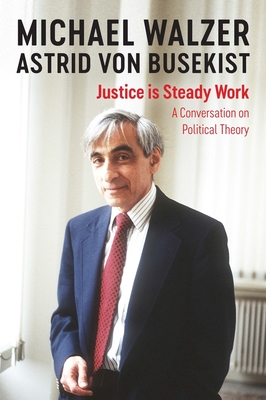
Justice is Steady Work: A Conversation on Political Theory
KSh 9,900.00

Thick and Thin
KSh 3,400.00

The Struggle for a Decent Politics – On "Liberal" as an Adjective
KSh 3,850.00

Liberties Journal of Culture and Politics
KSh 2,600.00
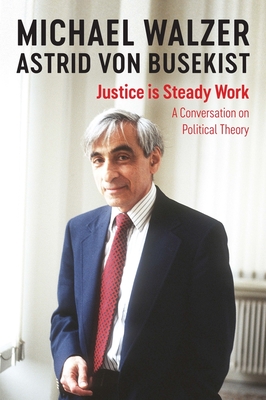
Justice is Steady Work – A Conversation on Political Theory
KSh 3,350.00
