
Book Details
Format
Paperback / softback
ISBN-10
0412299607
ISBN-13
9780412299605
Edition
Softcover reprint of the original 1st ed. 1999
Publisher
Chapman and Hall
Imprint
Chapman and Hall
Country of Manufacture
NL
Country of Publication
GB
Publication Date
Sep 30th, 1996
Print length
356 Pages
Weight
534 grams
Dimensions
23.30 x 15.70 x 2.00 cms
Product Classification:
Applied ecology
KSh 21,600.00
Currently unavailable
0 in stock
Delivery Location
Delivery fee: Select location
Secure
Quality
Fast
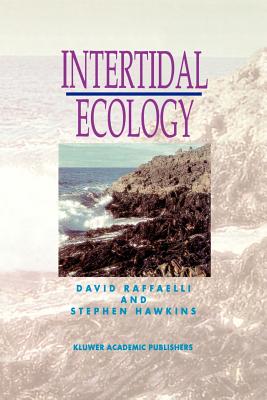
The seashore has long been the subject of fascination and study - the Ancient Greek scholar Aristotle made observations and wrote about Mediterranean sea urchins.
The seashore has long been the subject of fascination and study - the Ancient Greek scholar Aristotle made observations and wrote about Mediterranean sea urchins. The considerable knowledge of what to eat and where it could be found has been passed down since prehistoric times by oral tradition in many societies - in Britain it is still unwise to eat shellfish in months without an ''r'' in them. Over the last three hundred years or so we have seen the formalization of science and this of course has touched intertidal ecology. Linnaeus classified specimens collected from the seashore and many common species (Patella vulgata L. , Mytilus edulis L. , Littorina littorea (L. )) bear his imprint because he formally described, named and catalogued them. Early natural historians described zonation patterns in the first part of the 19th century (Audouin and Milne-Edwards, 1832), and the Victorians became avid admirers and collectors of shore animals and plants with the advent of the new fashion of seaside holidays (Gosse, 1856; Kingsley, 1856). As science became professionalized towards the end of the century, marine biologists took advantage of low tides to gain easy access to marine life for taxonomic work and classical studies of functional morphology. The first serious studies of the ecology of the shore were made at this time (e. g.
Get Intertidal Ecology by D. Raffaelli, S.J. Hawkins at the best price and quality guaranteed only at Werezi Africa's largest book ecommerce store. The book was published by Chapman and Hall and it has 356 pages.
Customers Who Bought This Also Bought

Braiding Sweetgrass
KSh 2,350.00
Democracy of Species
KSh 1,450.00
Sacred Nature
KSh 2,350.00

Land Before Humans, a Land After Humans
KSh 2,700.00

Ecology and Empire
KSh 6,100.00
Design and Nature
KSh 8,000.00

Double Hyenas and Lazarus Birds
KSh 2,700.00
Planet Work – Rethinking Labor and Leisure in the Anthropocene
KSh 22,300.00
A High Low Tide
KSh 5,200.00

Intraterrestrials
KSh 2,900.00

The Tender Carnivore and the Sacred Game
KSh 7,550.00

Life`s Philosophy – Reason and Feeling in a Deeper World
KSh 19,850.00
