

Book Details
Format
Paperback / softback
ISBN-10
0521794838
ISBN-13
9780521794831
Edition
2 Revised edition
Publisher
Cambridge University Press
Imprint
Cambridge University Press
Country of Manufacture
GB
Country of Publication
GB
Publication Date
Sep 28th, 2000
Print length
612 Pages
Weight
1,076 grams
Dimensions
24.60 x 19.00 x 3.20 cms
KSh 13,000.00
Currently unavailable
0 in stock
Delivery Location
Delivery fee: Select location
Secure
Quality
Fast
The second edition of this successful textbook provides an up-to-date introduction both to distributed algorithms and to the theory behind them. The clear presentation makes the book suitable for courses. The two new chapters on sense of direction and failure detectors will provide an entry to these still-developing topics.
Distributed algorithms have been the subject of intense development over the last twenty years. The second edition of this successful textbook provides an up-to-date introduction both to the topic, and to the theory behind the algorithms. The clear presentation makes the book suitable for advanced undergraduate or graduate courses, whilst the coverage is sufficiently deep to make it useful for practising engineers and researchers. The author concentrates on algorithms for the point-to-point message passing model, and includes algorithms for the implementation of computer communication networks. Other key areas discussed are algorithms for the control of distributed applications (wave, broadcast, election, termination detection, randomized algorithms for anonymous networks, snapshots, deadlock detection, synchronous systems), and fault-tolerance achievable by distributed algorithms. The two new chapters on sense of direction and failure detectors are state-of-the-art and will provide an entry to research in these still-developing topics.
Get Introduction to Distributed Algorithms by Gerard Tel at the best price and quality guaranteed only at Werezi Africa's largest book ecommerce store. The book was published by Cambridge University Press and it has 612 pages.
Customers Who Bought This Also Bought
Python Crash Course, 3rd Edition
KSh 8,650.00

Managing Construction Technology
KSh 11,700.00

Machine Learning with Python
KSh 14,750.00

Programming Language Pragmatics
KSh 14,650.00
Constraint Processing
KSh 13,850.00
Programming from the Ground Up
KSh 5,150.00

Arduino Internals
KSh 9,900.00
Palm Programming in Basic
KSh 5,150.00
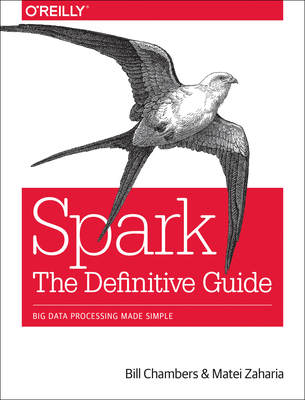
Spark – The Definitive Guide
KSh 10,100.00
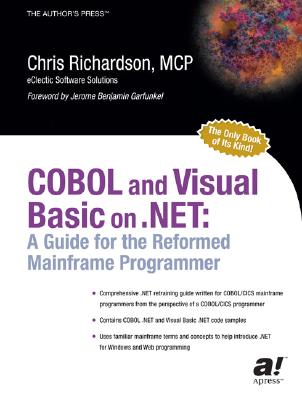
COBOL and Visual Basic on .NET
KSh 9,000.00

Android Application Development All–in–One For Dummies, 3rd Edition
KSh 5,950.00

Choose your WoW - Second Edition (FRENCH)
KSh 3,450.00
