
Book Details
Format
Hardback or Cased Book
ISBN-10
0198856555
ISBN-13
9780198856559
Edition
3 Revised edition
Publisher
Oxford University Press
Imprint
Oxford University Press
Country of Manufacture
GB
Country of Publication
GB
Publication Date
Mar 30th, 2021
Print length
492 Pages
Weight
994 grams
Dimensions
24.00 x 16.10 x 3.10 cms
Product Classification:
Medical imagingMedical imagingScientific equipment, experiments & techniquesScientific equipment, experiments and techniquesCondensed matter physics (liquid state & solid state physics)Condensed matter physics (liquid state and solid state physics)CrystallographyNanotechnologyMaterials scienceApplied optics
Ksh 19,800.00
Werezi Extended Catalogue
0 in stock
Delivery Location
Delivery fee: Select location
Secure
Quality
Fast
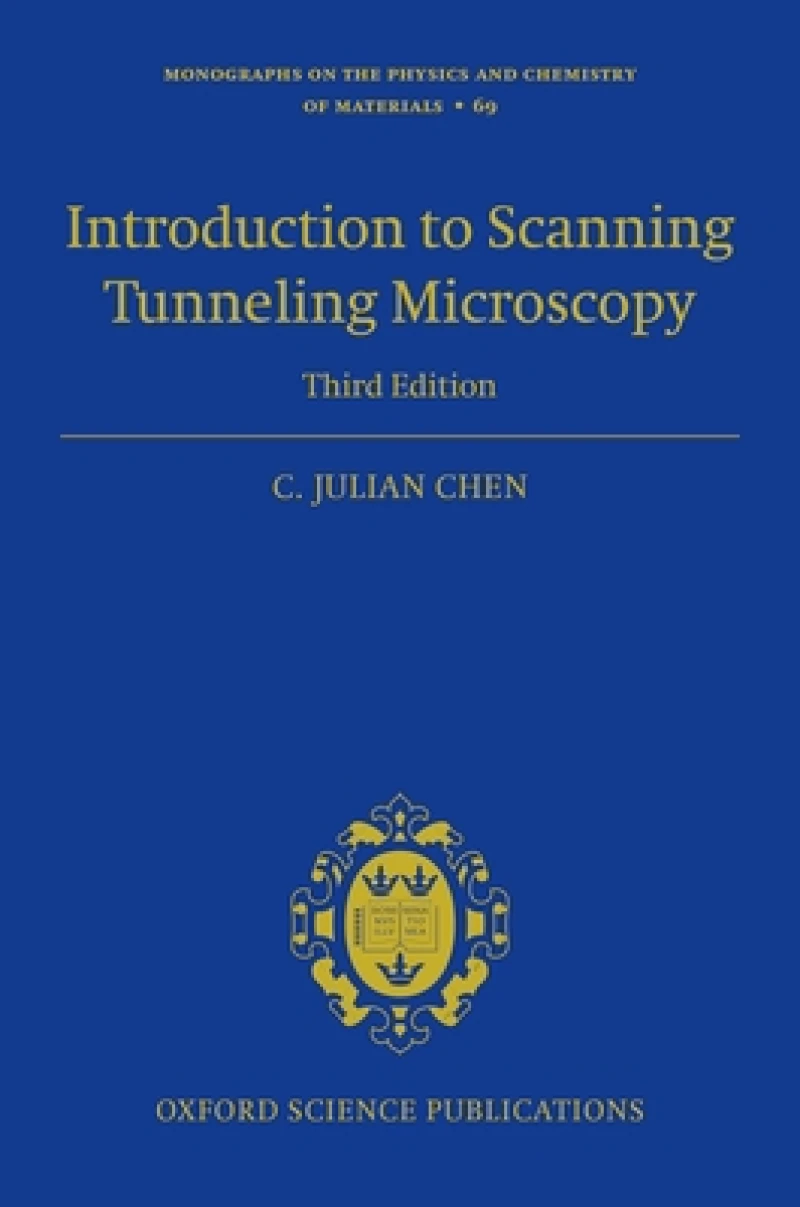
This third edition is a thoroughly updated and improved version of the recognized "Bible" of the field.
The scanning tunnelling microscope (STM) was invented by Binnig and Rohrer and received a Nobel Prize of Physics in 1986. Together with the atomic force microscope (AFM), it provides non-destructive atomic and subatomic resolution on surfaces. Especially, in recent years, internal details of atomic and molecular wavefunctions are observed and mapped with negligible disturbance. Since the publication of its first edition, this book has been the standard reference book and a graduate-level textbook educating several generations of nano-scientists. In Aug. 1992, the co-inventor of STM, Nobelist Heinrich Rohrer recommended: "The Introduction to Scanning tunnelling Microscopy by C.J. Chen provides a good introduction to the field for newcomers and it also contains valuable material and hints for the experts". For the second edition, a 2017 book review published in the Journal of Applied Crystallography said "Introduction to Scanning tunnelling Microscopy is an excellent book that can serve as a standard introduction for everyone that starts working with scanning probe microscopes, and a useful reference book for those more advanced in the field". The third edition is a thoroughly updated and improved version of the recognized "Bible" of the field. Additions to the third edition include: theory, method, results, and interpretations of the non-destructive observation and mapping of atomic and molecular wavefunctions; elementary theory and new verifications of equivalence of chemical bond interaction and tunnelling; scanning tunnelling spectroscopy of high Tc superconductors; imaging of self-assembled organic molecules on the solid-liquid interfaces. Some key derivations are rewritten using mathematics at an undergraduate level to make it pedagogically sound.
Get Introduction to Scanning Tunneling Microscopy Third Edition by at the best price and quality guaranteed only at Werezi Africa's largest book ecommerce store. The book was published by Oxford University Press and it has pages.

