
Search

Categories

    • categories-img Jacket, Women
    • categories-img Woolend Jacket
    • categories-img Western denim
    • categories-img Mini Dresss
    • categories-img Jacket, Women
    • categories-img Woolend Jacket
    • categories-img Western denim
    • categories-img Mini Dresss
    • categories-img Jacket, Women
    • categories-img Woolend Jacket
    • categories-img Western denim
    • categories-img Mini Dresss
    • categories-img Jacket, Women
    • categories-img Woolend Jacket
    • categories-img Western denim
    • categories-img Mini Dresss
    • categories-img Jacket, Women
    • categories-img Woolend Jacket
    • categories-img Western denim
    • categories-img Mini Dresss

Filter By Price

$
-
$

Dietary Needs

Top Rated Product

product-img product-img

Modern Chair

$165.00
product-img product-img

Plastic Chair

$165.00
product-img product-img

Design Rooms

$165.00

Brands

  • Wooden
  • Chair
  • Modern
  • Fabric
  • Shoulder
  • Winter
  • Accessories
  • Dress

Welcome and thank you for visiting us. For any query call us on 0799 626 359 or Email [email protected]

Offcanvas Menu Open

Shopping Cart

Africa largest book store

Sub Total:

Search for any Title

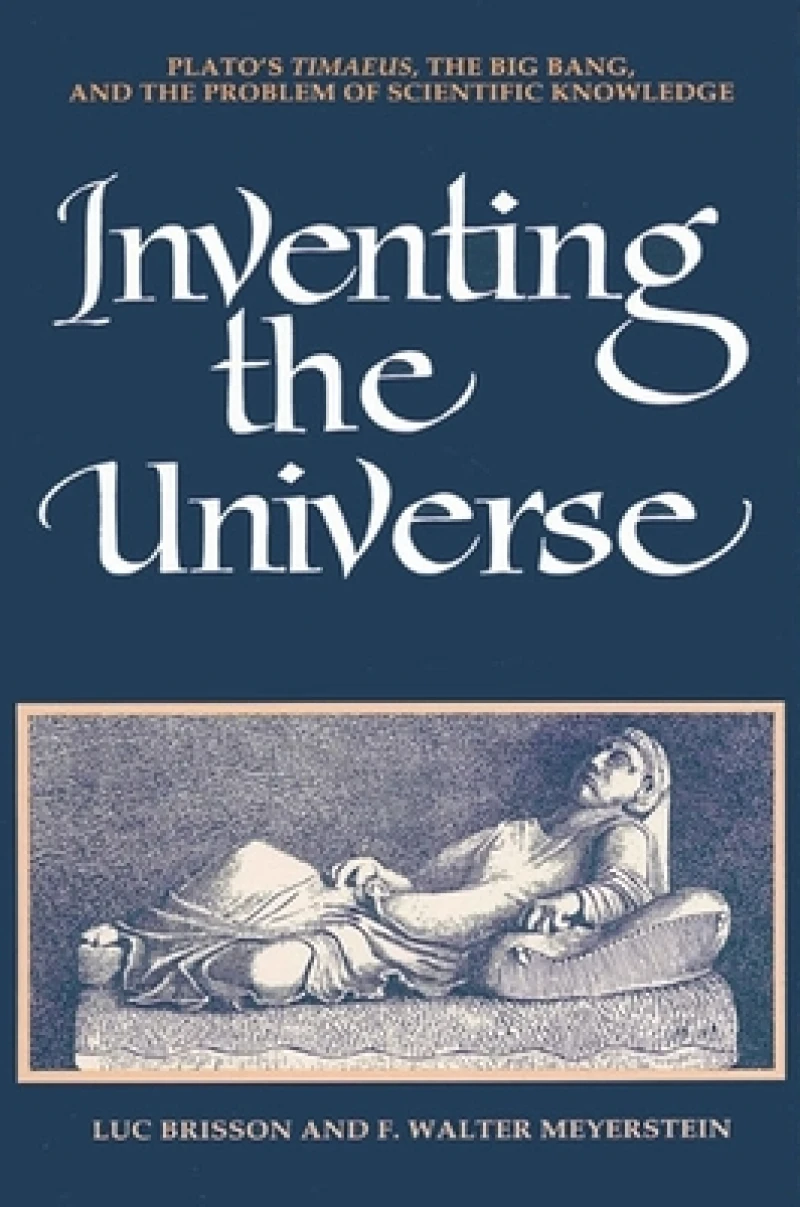
Inventing the Universe : Plato's Timaeus, the Big Bang, and the Problem of Scientific Knowledge

By: (Author) F. Walter Meyerstein , (Author) Luc Brisson

Werezi Extended Catalogue
Delivery in 34 days

Ksh 4,500.00

Format: Paperback / Softback

ISBN-10: 0791426920

ISBN-13: 9780791426920

Series: SUNY series in Ancient Greek Philosophy

Publisher: State University of New York Press

Imprint: State University of New York Press

Country of Manufacture: GB

Country of Publication: GB

Publication Date: Jul 20th, 1995

Print length: 193 Pages

Weight: 290 grams

Product Classification: Western philosophy: Ancient, to c 500

Choose your Location

Shipping & Delivery

Door Delivery

Delivery fee

Delivery in 34 days

  • Description

  • Reviews

A parallel investigation of both Plato's Timaeusand the contemporary standard Big Bang model of the universe shows that any possible scientific knowledge of the universe is ultimately grounded in irreducible and undemonstrable propositions. These are inventions of the human mind. The scientific knowledge of the universe is entirely composed in a series of axioms and rules of inference underlying a formalized system. There is no logical relationship between the sensible perception of a world of becoming and the formalized system of axioms known as a "scientific explanation."The "irrational gap" between perception and explanation can be appraised historically and identified in three stages: Plato's Timaeus furnishes the first example of a scientific theory dealing with a realm of ideality that cannot be derived from immediate sensible perception; the Big Bang model is constituted on the basis of the purely geometrical notion of symmetry; and in the more recent Algorithmic Theory of Information, the analysis of the purely symbolic language expressing physical reality reveals the level of complexity of any given theory formulated in this language. The result is that the probability of the universe actually conforming with simple mathematics is zero. In a formal system, a theorem contains more information than can be found in the set of axioms of this system, and it remains undecidable. In Aristotle' s language, the theorems that can be proved within a theoretical model are already potentially contained in the system of axioms underlying these theorems.

A parallel investigation of both Plato''s Timaeusand the contemporary standard Big Bang model of the universe shows that any possible scientific knowledge of the universe is ultimately grounded in irreducible and undemonstrable propositions. These are inventions of the human mind. The scientific knowledge of the universe is entirely composed in a series of axioms and rules of inference underlying a formalized system. There is no logical relationship between the sensible perception of a world of becoming and the formalized system of axioms known as a "scientific explanation."

The "irrational gap" between perception and explanation can be appraised historically and identified in three stages: Plato''s Timaeus furnishes the first example of a scientific theory dealing with a realm of ideality that cannot be derived from immediate sensible perception; the Big Bang model is constituted on the basis of the purely geometrical notion of symmetry; and in the more recent Algorithmic Theory of Information, the analysis of the purely symbolic language expressing physical reality reveals the level of complexity of any given theory formulated in this language. The result is that the probability of the universe actually conforming with simple mathematics is zero.

In a formal system, a theorem contains more information than can be found in the set of axioms of this system, and it remains undecidable. In Aristotle'' s language, the theorems that can be proved within a theoretical model are already potentially contained in the system of axioms underlying these theorems.


Get Inventing the Universe by at the best price and quality guranteed only at Werezi Africa largest book ecommerce store. The book was published by State University of New York Press and it has pages. Enjoy Shopping Best Offers & Deals on books Online from Werezi - Receive at your doorstep - Fast Delivery - Secure mode of Payment

Customer Reviews

Based on 0 reviews

Mind, Body, & Spirit
