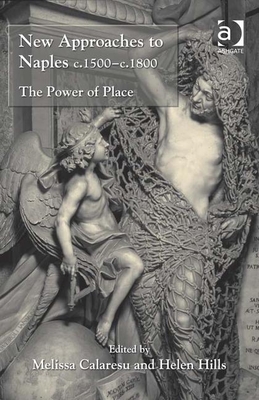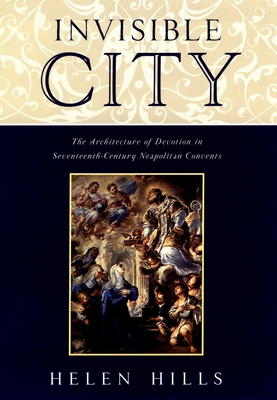
Invisible City : The Architecture of Devotion in Seventeenth Century Neapolitan Convents
by
Helen Hills
Book Details
Format
Hardback
ISBN-10
0195117743
ISBN-13
9780195117745
Publisher
Oxford University Press Inc
Imprint
Oxford University Press Inc
Country of Manufacture
GB
Country of Publication
GB
Publication Date
Feb 12th, 2004
Print length
320 Pages
Weight
596 grams
Dimensions
16.00 x 23.40 x 2.80 cms
Product Classification:
Italy16th century, c 1500 to c 159917th century, c 1600 to c 1699BaroqueArt & design styles: BaroqueHistory of artArchitecture: religious buildingsReligious buildingsEuropean historyModern history to 20th century: c 1700 to c 1900Christian communities & monasticismHistoryEuropean historyChristianity
KSh 21,800.00
Currently unavailable
0 in stock
Delivery Location
Delivery fee: Select location
Secure
Quality
Fast
Invisible City analyzes conventual architecture in terms of the politics of sight, "the optics of power", the relationship between flesh and stone. It uncovers the connections between the bodies of the nuns and the walls that housed them, presenting the architecture of female convents as a metaphor for the body of the aristocratic female virgin nun.
More than any other European city, Baroque Naples was dominated by convents. Behind their imposing facades and highly decorated churches, the convents of Naples housed the daughters of the city''s most exclusive families, women who, despite their cloistered existence, were formidable players in the city''s power structure. Invisible City vividly portrays the religious world of seventeenth-century Naples, a city of familial and internecine rivalries, of religious devotion and intense urban politics, of towering structures built to house the virgin daughters of the aristocracy. Helen Hills demonstrates how the architecture of the convents and the nuns'' bodies they housed existed both in parallel and in opposition to one another. She discusses these women as subjects of enclosure, as religious women, and as art patrons, but also as powerful agents whose influence extended beyond the convent walls. Though often ensconced in convents owing to their families'' economic circumstances, many of these young women were able to extend their influence as a result of the role convents played both in urban life and in art patronage. The convents were rich and powerful organizations, riven with feuds and prey to the ambitions of viceregal and elite groups, which their thick walls could not exclude. Even today, Neapolitan convents figure prominently in the city''s fabric. In analyzing the architecture of these august institutions, Helen Hills skillfully reads conventual architecture as a metaphor for the body of the aristocratic virgin nun, mapping out the dialectic between flesh and stone.
Get Invisible City by Helen Hills at the best price and quality guaranteed only at Werezi Africa's largest book ecommerce store. The book was published by Oxford University Press Inc and it has 320 pages.
Customers Who Bought This Also Bought
Caravaggio
KSh 3,250.00

Tiepolo Pink
KSh 2,700.00
The Spectacle of Clouds 1439-1650
KSh 9,900.00

Bernini: Painter and Sculptor
KSh 6,500.00

Boucher?s Four Seasons
KSh 4,500.00

Caravaggio
KSh 2,000.00

Juste-Aurele Meissonnier
KSh 7,200.00

Roman Baroque
KSh 2,700.00

Schluter in Berlin
KSh 1,800.00

Caravaggio
KSh 15,400.00

Luigi Valadier in Nicaragua
KSh 8,250.00

Poussin and the Dance
KSh 5,300.00