
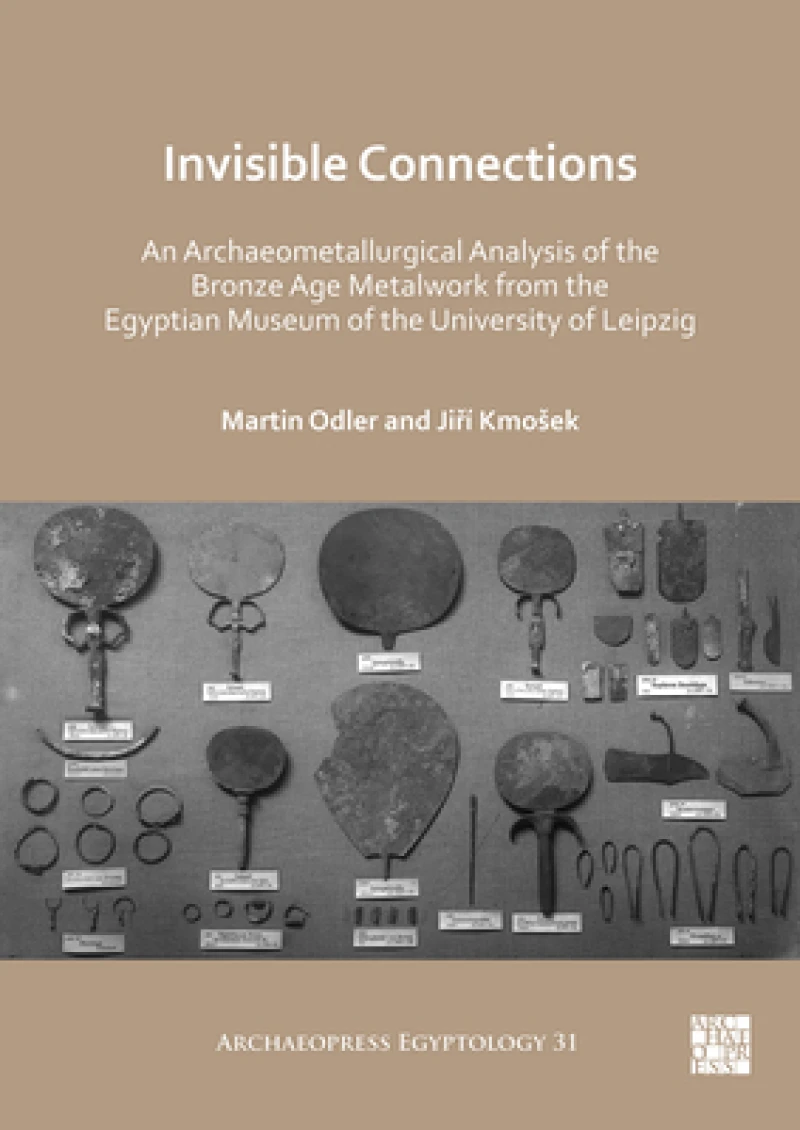
Invisible Connections: An Archaeometallurgical Analysis of the Bronze Age Metalwork from the Egyptian Museum of the University of Leipzig
Book Details
Format
Paperback / Softback
Book Series
Archaeopress Egyptology
ISBN-10
1789697409
ISBN-13
9781789697407
Publisher
Archaeopress
Imprint
Archaeopress
Country of Manufacture
GB
Country of Publication
GB
Publication Date
Dec 3rd, 2020
Print length
200 Pages
Weight
724 grams
Dimensions
20.40 x 29.10 x 2.30 cms
Product Classification:
Egyptian archaeology / EgyptologyMetals technology / metallurgy
Ksh 8,350.00
Werezi Extended Catalogue
Delivery in 14 days
1 copies in stock
Delivery Location
Delivery fee: Select location
Delivery in 14 days
Secure
Quality
Fast
The Egyptian Museum of the University of Leipzig has the largest university collection of ancient Egyptian artefacts in Germany. This volume presents an analysis of 86 of these artefacts using a range of archaeometallurgical methods in order to provide a diachronic sample of Bronze Age Egyptian copper alloy metalwork from Dynasty 1 to Dynasty 19.
The Egyptian Museum of the University of Leipzig has the largest university collection of ancient Egyptian artefacts in Germany. It includes important objects from the excavations of the most prolific excavator among the museum’s curators, Georg Steindorff, at the sites of Abusir, Aniba, and Giza, complemented by objects from Abydos, Thebes, and Kerma. The catalogue represents the results of an interdisciplinary project by Egyptologist and archaeologist Martin Odler, archaeometalurgist Jiří Kmošek and other participating researchers. A selection of 86 artefacts was analysed using a range of archaeometallurgical methods (X-ray fluorescence; metallography; neutron activation analysis; lead isotope analysis), providing a diachronic sample of Bronze Age Egyptian copper alloy metalwork from Dynasty 1 to Dynasty 19.
Besides currently popular focus on the ore provenance, the selection of the applied methods aimed also at the description of practical physical properties of the objects. The question of differences between full-size functional artefacts and models is addressed, as is the problem of ''imports'' and their ethnic interpretation. The analyses brought many unexpected results to light, the most surprising being a bowl (ÄMUL 2162) made of arsenical copper high in nickel, which has parallels in Chalcolithic and Early Bronze Age Anatolia, and was featured in an article in the Journal of Archaeological Science in 2018. The corpus presented here involves the largest analysed metalwork assemblage from the Nubian C-Group and the Egyptian New Kingdom, and it addresses the issue of the use of local Nubian ore sources versus the sources of copper from Cyprus and elsewhere.
Besides currently popular focus on the ore provenance, the selection of the applied methods aimed also at the description of practical physical properties of the objects. The question of differences between full-size functional artefacts and models is addressed, as is the problem of ''imports'' and their ethnic interpretation. The analyses brought many unexpected results to light, the most surprising being a bowl (ÄMUL 2162) made of arsenical copper high in nickel, which has parallels in Chalcolithic and Early Bronze Age Anatolia, and was featured in an article in the Journal of Archaeological Science in 2018. The corpus presented here involves the largest analysed metalwork assemblage from the Nubian C-Group and the Egyptian New Kingdom, and it addresses the issue of the use of local Nubian ore sources versus the sources of copper from Cyprus and elsewhere.
Get Invisible Connections: An Archaeometallurgical Analysis of the Bronze Age Metalwork from the Egyptian Museum of the University of Leipzig by at the best price and quality guaranteed only at Werezi Africa's largest book ecommerce store. The book was published by Archaeopress and it has pages.

