
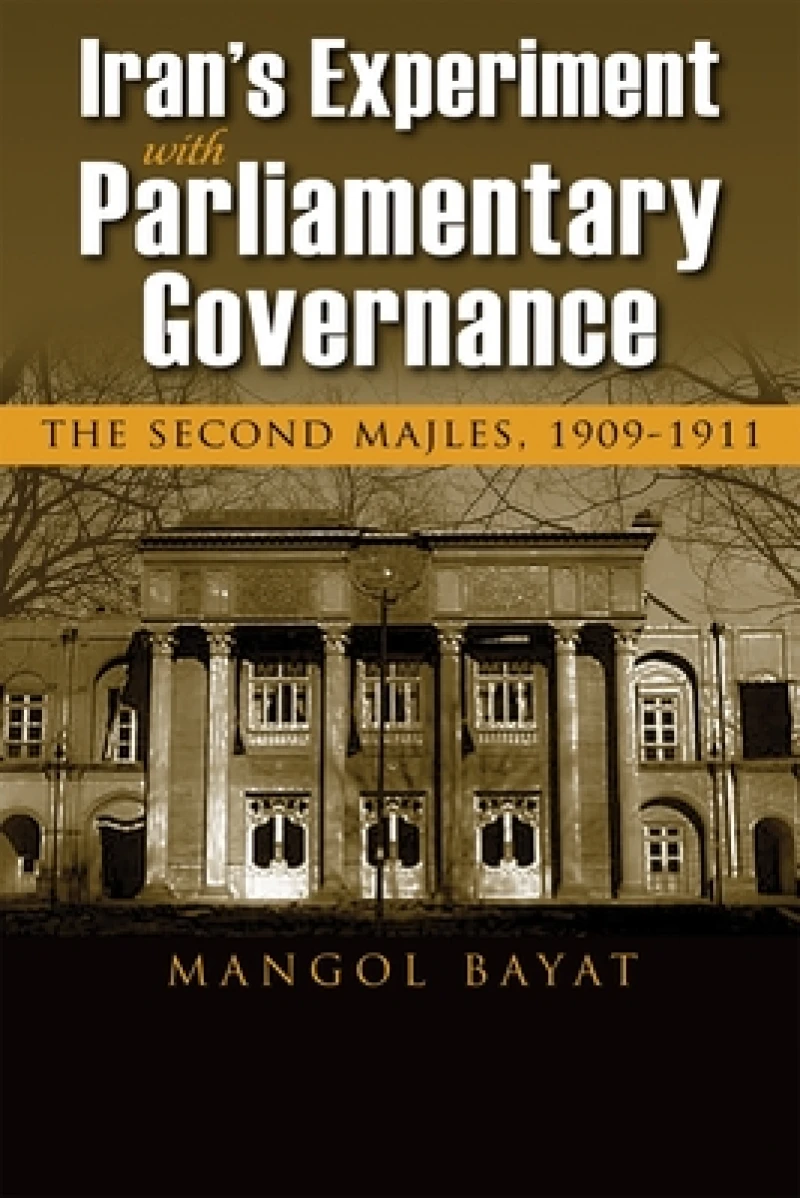
Iran''s Experiment with Parliamentary Governance : The Second Majles, 1909-1911
by
Mangol Bayat
Book Details
Format
Paperback / Softback
ISBN-10
0815636865
ISBN-13
9780815636861
Publisher
Syracuse University Press
Imprint
Syracuse University Press
Country of Manufacture
US
Country of Publication
GB
Publication Date
Aug 17th, 2020
Print length
520 Pages
Weight
872 grams
Dimensions
18.00 x 25.50 x 3.20 cms
Ksh 6,350.00
Werezi Extended Catalogue
0 in stock
Delivery Location
Delivery fee: Select location
Secure
Quality
Fast
After the 1979 Islamic Revolution, constitutionalist leaders represented a diverse composite of beliefs, yet they all shared a similar vision of a new Iran, one that included far-reaching modernizing reforms. Mangol Bayat provides a much-needed detailed analysis of this historic episode.
For the past several decades, scholars have studied and written about the Iranian constitutional revolution with the 1979 Islamic Revolution as a subtext, obscuring the secularist trend that characterized its very nature. Constitutionalist leaders represented a diverse composite of beliefs, yet they all shared a similar vision of a new Iran, one that included far-reaching modernizing reforms and concepts rooted in the European Enlightenment. The second national assembly (majles), during its brief two-year term, aspired to legislate these reforms in one of the most important experiments in parliamentary governance.
Mangol Bayat provides a much-needed detailed analysis of this historic episode, examining the national and international actors, and the political climate that engendered one crisis after another, ultimately leading to its fateful end. Bayat highlights the radical transformation of old institutions and the innovation of new ones, and most importantly, shows how this term provided a reasonably successful model of parliament imposing its will on the executive power that was primarily composed of old-guard, elite leaders. At the same time, Bayat challenges the traditional perception among scholars that reform attempts failed due to sectarian politics and ideological differences.
Mangol Bayat provides a much-needed detailed analysis of this historic episode, examining the national and international actors, and the political climate that engendered one crisis after another, ultimately leading to its fateful end. Bayat highlights the radical transformation of old institutions and the innovation of new ones, and most importantly, shows how this term provided a reasonably successful model of parliament imposing its will on the executive power that was primarily composed of old-guard, elite leaders. At the same time, Bayat challenges the traditional perception among scholars that reform attempts failed due to sectarian politics and ideological differences.
Get Iran''s Experiment with Parliamentary Governance by at the best price and quality guaranteed only at Werezi Africa's largest book ecommerce store. The book was published by Syracuse University Press and it has pages.

