
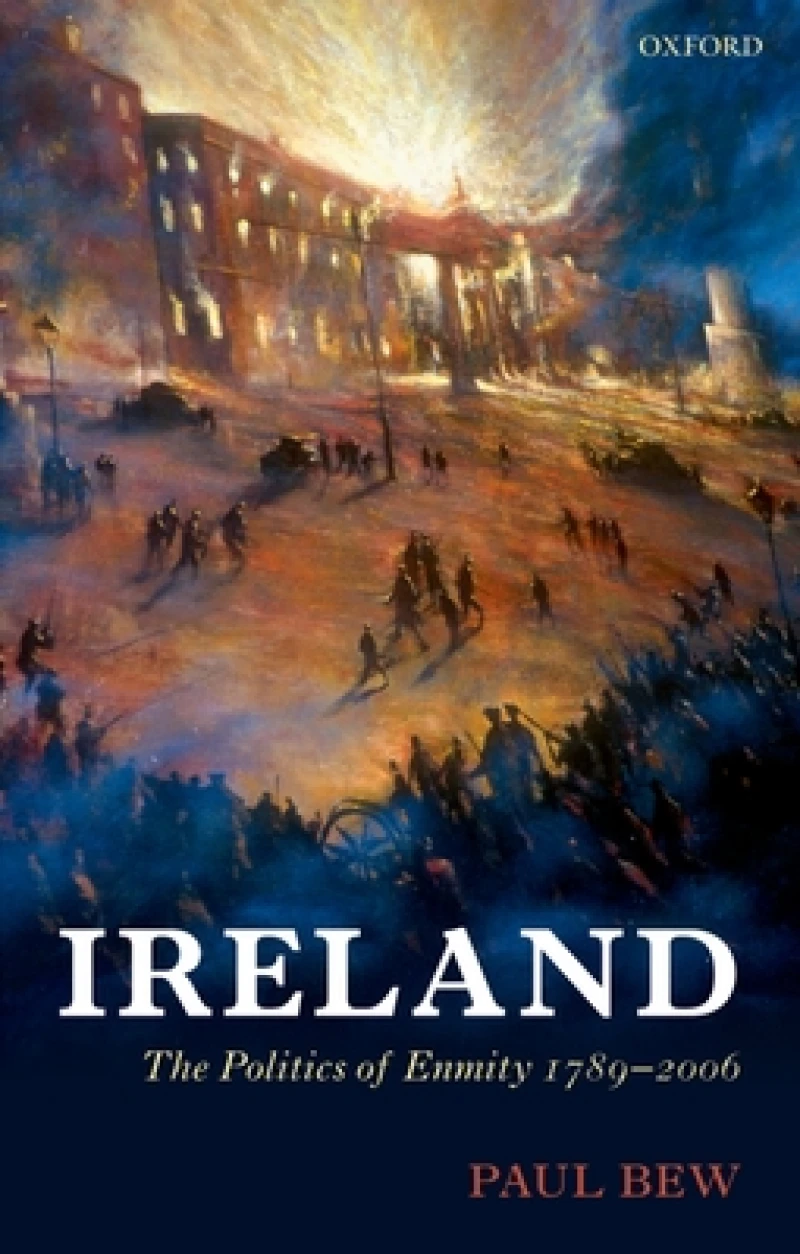
Ireland : The Politics of Enmity 1789-2006
by
Paul Bew
Book Details
Format
Paperback / Softback
Book Series
Oxford History of Modern Europe
ISBN-10
0199561265
ISBN-13
9780199561261
Publisher
Oxford University Press
Imprint
Oxford University Press
Country of Manufacture
GB
Country of Publication
GB
Publication Date
Feb 12th, 2009
Print length
640 Pages
Weight
758 grams
Dimensions
21.50 x 14.00 x 3.50 cms
Product Classification:
18th century, c 1700 to c 179919th century, c 1800 to c 189920th century, c 1900 to c 199921st century, c 2000 to c 2100British & Irish historyModern history to 20th century: c 1700 to c 190020th century history: c 1900 to c 200021st century history: from c 2000 -NationalismNationalism and nationalist ideologies and movementsHistoryEuropean history
Ksh 9,900.00
Manufactured on Demand
Delivery in 14 days
1 copies in stock
Delivery Location
Delivery fee: Select location
Delivery in 14 days
Secure
Quality
Fast
Paul Bew sheds new light on the changing ideological passions of the modern Irish question. Examining the influence and legacies of many key figures, from Tone to Parnell to Haughey and from Peel to Churchill to Blair, he takes the reader all the way from the society of the United Irishman to the crisis of the Good Friday Agreement.
The French revolution had an electrifying impact on Irish society. The 1790s saw the birth of modern Irish republicanism and Orangeism, whose antagonism remains a defining feature of Irish political life. The 1790s also saw the birth of a new approach to Ireland within important elements of the British political elite, men like Pitt and Castlereagh. Strongly influenced by Edmund Burke, they argued that Britain''s strategic interests were best served by a policy of catholic emancipation and political integration in Ireland. Britain''s failure to achieve this objective, dramatised by the horrifying tragedy of the Irish famine of 1846-50, in which a million Irish died, set the context for the emergence of a popular mass nationalism, expressed in the Fenian, Parnell, and Sinn Fein movements, which eventually expelled Britain from the greater part of the island.This book reassesses all the key leaders of Irish nationalism - Tone, O''Connell, Butt, Parnell, Collins, and de Valera - alongside key British political leaders such as Peel and Gladstone in the nineteenth century, or Winston Churchill and Tony Blair in the twentieth century. A study of the changing ideological passions of the modern Irish question, this analysis is, however, firmly placed in the context of changing social and economic realities.Using a vast range of original sources, Paul Bew holds together the worlds of political class in London, Dublin, and Belfast in one coherent analysis which takes the reader all the way from the society of the United Irishman to the crisis of the Good Friday Agreement.
Get Ireland by at the best price and quality guaranteed only at Werezi Africa's largest book ecommerce store. The book was published by Oxford University Press and it has pages.

