
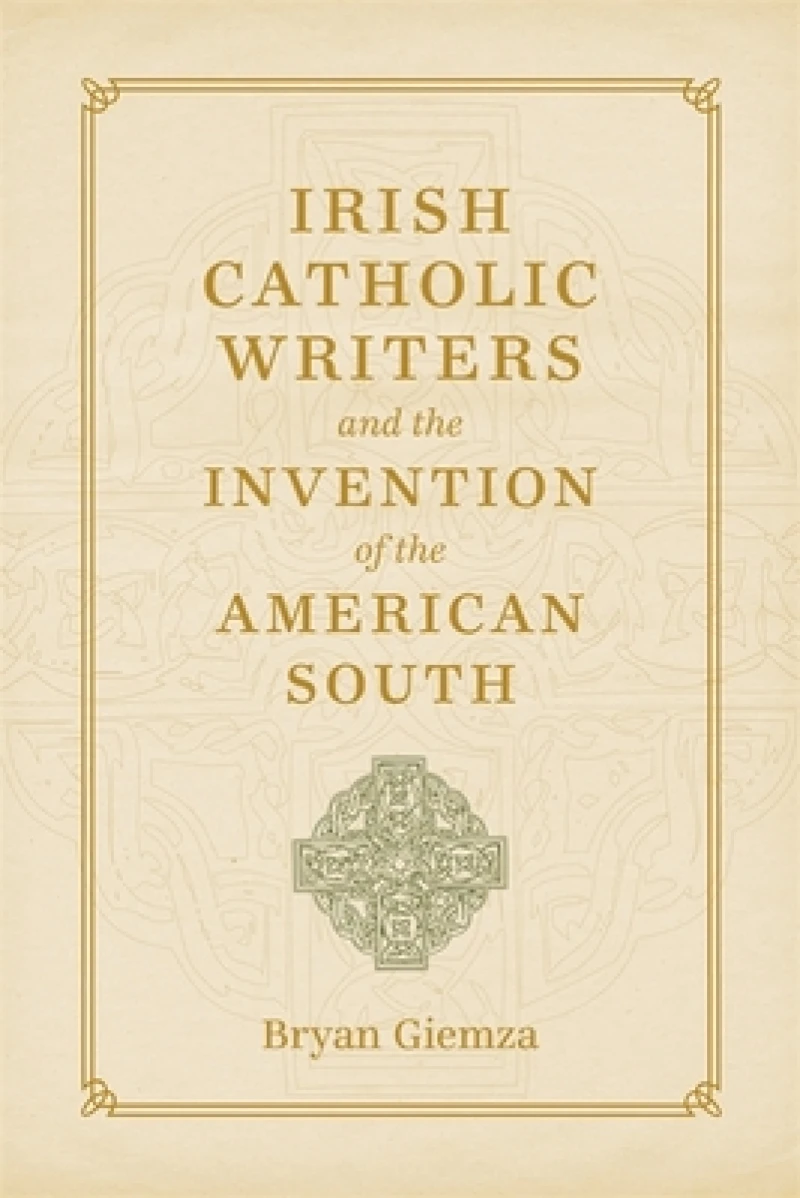
Irish Catholic Writers and the Invention of the American South
by
Bryan Giemza
Book Details
Format
Hardback or Cased Book
Book Series
Southern Literary Studies
ISBN-10
0807150908
ISBN-13
9780807150900
Publisher
Louisiana State University Press
Imprint
Louisiana State University Press
Country of Manufacture
US
Country of Publication
GB
Publication Date
Jul 8th, 2013
Print length
384 Pages
Weight
333 grams
Dimensions
23.10 x 15.20 x 3.30 cms
Ksh 7,200.00
Temporarily out of stock, due soon
0 in stock
Delivery Location
Delivery fee: Select location
Secure
Quality
Fast
In this expansive study, Bryan Giemza recovers a neglected subculture and retrieves a missing chapter of Irish Catholic heritage by canvassing the literature of American Irish writers from the US South. Giemza offers a defining new view of Irish American authors and their interrelationships within both transatlantic and ethnic regional contexts.
In this expansive study, Bryan Giemza recovers a neglected subculture and retrieves a missing chapter of Irish Catholic heritage by canvassing the literature of American Irish writers from the U.S. South. Giemza offers a defining new view of Irish American authors and their interrelationships within both transatlantic and ethnic regional contexts.
From the first Irish American novel, published in Winchester, Virginia, in 1817, Giemza investigates a cast of nineteenth-century writers contending with the turbulence of their time, writers influenced by both American and Irish revolutions. Additionally, he considers dramatists and propagandists of the Civil War and Lost Cause memoirists who emerged in its wake. Some familiar names reemerge in an Irish context, including Joel Chandler Harris, Lafcadio Hearn, and Kate (O'Flaherty) Chopin. Giemza also examines the works of twentieth-century southern Irish writers, such as Margaret Mitchell, John Kennedy Toole, Flannery O'Connor, Pat Conroy, Anne Rice, Valerie Sayers, and Cormac McCarthy. For each author, Giemza traces the influences of Catholicism as it shaped both faith and ethnic identity, pointing to shared sensibilities and contradictions. Flannery O'Connor, for example, resisted identification as an Irish American, while Cormac McCarthy, described by some as ""anti-Catholic,"" continues a dialogue with the Church from which he distanced himself.
Giemza draws on many never-before-seen documents, including authorized material from the correspondence of Cormac McCarthy, interviews from the Irish community of Flannery O'Connor's native Savannah, Georgia, and Giemza's own correspondence with writers such as Valerie Sayers and Anne Rice. This lively literary history prompts a new understanding of how the Irish in the region helped invent a regional mythos, an enduring literature, and a national image.
From the first Irish American novel, published in Winchester, Virginia, in 1817, Giemza investigates a cast of nineteenth-century writers contending with the turbulence of their time, writers influenced by both American and Irish revolutions. Additionally, he considers dramatists and propagandists of the Civil War and Lost Cause memoirists who emerged in its wake. Some familiar names reemerge in an Irish context, including Joel Chandler Harris, Lafcadio Hearn, and Kate (O'Flaherty) Chopin. Giemza also examines the works of twentieth-century southern Irish writers, such as Margaret Mitchell, John Kennedy Toole, Flannery O'Connor, Pat Conroy, Anne Rice, Valerie Sayers, and Cormac McCarthy. For each author, Giemza traces the influences of Catholicism as it shaped both faith and ethnic identity, pointing to shared sensibilities and contradictions. Flannery O'Connor, for example, resisted identification as an Irish American, while Cormac McCarthy, described by some as ""anti-Catholic,"" continues a dialogue with the Church from which he distanced himself.
Giemza draws on many never-before-seen documents, including authorized material from the correspondence of Cormac McCarthy, interviews from the Irish community of Flannery O'Connor's native Savannah, Georgia, and Giemza's own correspondence with writers such as Valerie Sayers and Anne Rice. This lively literary history prompts a new understanding of how the Irish in the region helped invent a regional mythos, an enduring literature, and a national image.
Get Irish Catholic Writers and the Invention of the American South by at the best price and quality guaranteed only at Werezi Africa's largest book ecommerce store. The book was published by Louisiana State University Press and it has pages.

