
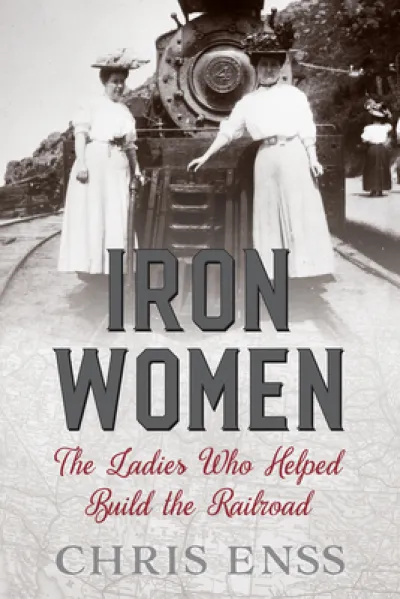
Iron Women : The Ladies Who Helped Build the Railroad
by
Chris Enss
Book Details
Format
Paperback / Softback
ISBN-10
1493037757
ISBN-13
9781493037759
Publisher
Rowman & Littlefield
Imprint
TwoDot Books
Country of Manufacture
US
Country of Publication
GB
Publication Date
May 1st, 2021
Print length
200 Pages
Weight
281 grams
Dimensions
22.90 x 15.50 x 1.10 cms
Product Classification:
History of the Americas
Ksh 2,750.00
Werezi Extended Catalogue
0 in stock
Delivery Location
Delivery fee: Select location
Secure
Quality
Fast
When the last spike was hammered into the steel track of the Transcontinental Railroad on May 10, 1869, at Promontory Point, Utah, Western Union lines sounded the glorious news of the railroad’s completion from New York to San Francisco. For more than five years an estimated four thousand men mostly Irish working west from Omaha and Chinese working east from Sacramento, moved like a vast assembly line toward the end of the track. Editorials in newspapers and magazines praised the accomplishment and some boasted that the work that “was begun, carried on, and completed solely by men.” The August edition of Godey’s Lady’s Book even reported “No woman had laid a rail and no woman had made a survey.” Although the physical task of building the railroad had been achieved by men, women made significant and lasting contributions to the historic operation. However, the female connection with railroading dates as far back as 1838 when women were hired as registered nurses/stewardesses in passenger cars. Those ladies attended to the medical needs of travelers and also acted as hostesses of sorts helping passengers have a comfortable journey. Beyond nursing and service roles, however, women played a larger part in the actual creation of the rail lines than they have been given credit for. Miss E. F. Sawyer became the first female telegraph operator when she was hired by the Burlington Railroad in Montgomery, Illinois, in 1872. Eliza Murfey focused on the mechanics of the railroad, creating devices for improving the way bearings on a rail wheel attached to train cars responded to the axles. Murfey held sixteen patents for her 1870 invention. In 1879, another woman inventor named Mary Elizabeth Walton developed a system that deflected emissions from the smoke stacks on railroad locomotives. She was awarded two patents for her pollution reducing device. Their stories and many more are included in this illustrated volume celebrating women and the railroad.
When the last spike was hammered into the steel track of the Transcontinental Railroad on May 10, 1869, at Promontory Point, Utah, Western Union lines sounded the glorious news of the railroad’s completion from New York to San Francisco. For more than five years an estimated four thousand men mostly Irish working west from Omaha and Chinese working east from Sacramento, moved like a vast assembly line toward the end of the track. Editorials in newspapers and magazines praised the accomplishment and some boasted that the work that “was begun, carried on, and completed solely by men.” The August edition of Godey’s Lady’s Book even reported “No woman had laid a rail and no woman had made a survey.” Although the physical task of building the railroad had been achieved by men, women made significant and lasting contributions to the historic operation. However, the female connection with railroading dates as far back as 1838 when women were hired as registered nurses/stewardesses in passenger cars. Those ladies attended to the medical needs of travelers and also acted as hostesses of sorts helping passengers have a comfortable journey. Beyond nursing and service roles, however, women played a larger part in the actual creation of the rail lines than they have been given credit for. Miss E. F. Sawyer became the first female telegraph operator when she was hired by the Burlington Railroad in Montgomery, Illinois, in 1872. Eliza Murfey focused on the mechanics of the railroad, creating devices for improving the way bearings on a rail wheel attached to train cars responded to the axles. Murfey held sixteen patents for her 1870 invention. In 1879, another woman inventor named Mary Elizabeth Walton developed a system that deflected emissions from the smoke stacks on railroad locomotives. She was awarded two patents for her pollution reducing device. Their stories and many more are included in this illustrated volume celebrating women and the railroad.
Get Iron Women by at the best price and quality guaranteed only at Werezi Africa's largest book ecommerce store. The book was published by Rowman & Littlefield and it has pages.

