
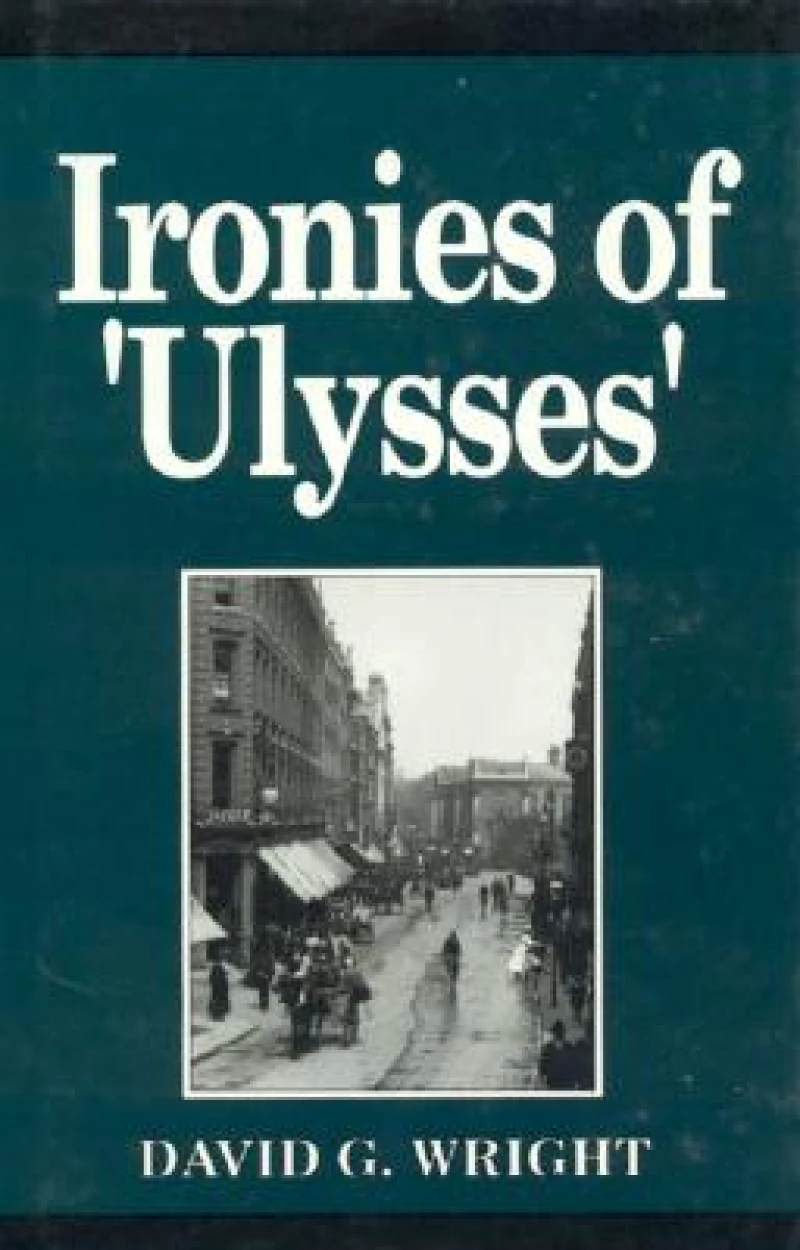
Ironies in Ulysses
by
David Wright
Book Details
Format
Hardback or Cased Book
ISBN-10
0389209732
ISBN-13
9780389209737
Publisher
Bloomsbury Publishing Plc
Imprint
Rowman & Littlefield Publishers
Country of Manufacture
US
Country of Publication
GB
Publication Date
Jan 6th, 1992
Print length
224 Pages
Weight
324 grams
Dimensions
14.80 x 22.20 x 1.90 cms
Product Classification:
Literature: history & criticism
Ksh 20,700.00
Werezi Extended Catalogue
0 in stock
Delivery Location
Delivery fee: Select location
Secure
Quality
Fast
This book brings a new perspective to the study of Joyce's great novel. The author argues the case for employing the concept of irony as an explicatory tool in the study of Ulyssesoand indeed of the whole Joycean canon. Moreover he uses modern critical theory to enlarge our understanding of irony itself and to suggest how such theory has an appropriate object of attention in Joyce. Wright defines irony as "the use of a 'false' textual surface to direct a reader's attention towards initially concealed premises or implications". Thus an author lays a partly false trail, but one which usually leads towards a more authenthic or appropriate understanding of the subject under discussion. Joyce's work is full of this kind of semantic counterpoint. Indeed, it is essential to his whole comic method. Both Portrait of the Artist As a Young Man and Ulysses are full of ironic contrasts between the desire for order, certainty and stability on the one hand and random meetings and perverse associations. The author argues that Joyce's other favorite techniques of ambiguity and punning are so closely related to that of irony that all three may legitimately be considered as a unity, specially formed and deployed by Joyce in his mature work. ; Contents: Preface; List of Abbreviations; Introduction; Local Ironies; Single-Episode Ironies; Inter-Episode Ironies; Ironies from Early Joyce; Ironies from Homer to Shakespeare; Bibliography; Index.
This book brings a new perspective to the study of Joyce''s great novel. The author argues the case for employing the concept of irony as an explicatory tool in the study of Ulyssesóand indeed of the whole Joycean canon. Moreover he uses modern critical theory to enlarge our understanding of irony itself and to suggest how such theory has an appropriate object of attention in Joyce. Wright defines irony as "the use of a ''false'' textual surface to direct a reader''s attention towards initially concealed premises or implications". Thus an author lays a partly false trail, but one which usually leads towards a more authenthic or appropriate understanding of the subject under discussion. Joyce''s work is full of this kind of semantic counterpoint. Indeed, it is essential to his whole comic method. Both Portrait of the Artist As a Young Man and Ulysses are full of ironic contrasts between the desire for order, certainty and stability on the one hand and random meetings and perverse associations. The author argues that Joyce''s other favorite techniques of ambiguity and punning are so closely related to that of irony that all three may legitimately be considered as a unity, specially formed and deployed by Joyce in his mature work. ; Contents: Preface; List of Abbreviations; Introduction; Local Ironies; Single-Episode Ironies; Inter-Episode Ironies; Ironies from Early Joyce; Ironies from Homer to Shakespeare; Bibliography; Index.
Get Ironies in Ulysses by at the best price and quality guaranteed only at Werezi Africa's largest book ecommerce store. The book was published by Bloomsbury Publishing Plc and it has pages.

