

Is God Invisible? : An Essay on Religion and Aesthetics
Book Details
Format
Paperback / softback
ISBN-10
1108456510
ISBN-13
9781108456517
Publisher
Cambridge University Press
Imprint
Cambridge University Press
Country of Manufacture
GB
Country of Publication
GB
Publication Date
Apr 8th, 2021
Print length
190 Pages
Weight
3 grams
Dimensions
15.20 x 22.90 x 1.40 cms
KSh 4,700.00
Currently unavailable
0 in stock
Delivery Location
Delivery fee: Select location
Secure
Quality
Fast
A defense of aesthetic personalism that affirms an inclusive God's eye or ideal observer view of goodness and beauty, the reality and integrity of aesthetic experience, and a philosophy of art that sees some works of art as persons or person-like. Includes a practical guide to appreciating religious artwork.
In this volume, Charles Taliaferro and Jil Evans promote aesthetic personalism by examining three domains of aesthetics - the philosophy of beauty, aesthetic experience, and philosophy of art - through the lens of Judaism, Christianity, Islam, theistic Hinduism, and the all-seeing Compassionate Buddha. These religious traditions assume an inclusive, overarching God''s eye, or ideal point of view, that can create an emancipatory appreciation of beauty and goodness. This appreciation also recognizes the reality and value of the aesthetic experience of persons and deepens the experience of art works. The authors also explore and contrast the invisibility of persons and God. The belief that God or the sacred is invisible does not mean God or the sacred cannot be experienced through visual and other sensory or unique modes. Conversely, the assumption that human persons are thoroughly visible, or observable in all respects, ignores how racism and other forms of bias render persons invisible to others.
Get Is God Invisible? by Charles Taliaferro, Jil Evans at the best price and quality guaranteed only at Werezi Africa's largest book ecommerce store. The book was published by Cambridge University Press and it has 190 pages.
Customers Who Bought This Also Bought

Names of God and their meanings
KSh 1,400.00

Gandharan Buddhist Reliquaries
KSh 17,400.00

The Ill-Fated Afterlife
KSh 12,550.00

Signs of Grace
KSh 6,950.00
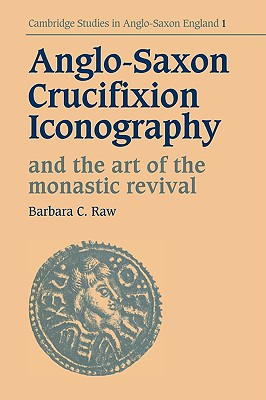
Anglo-Saxon Crucifixion Iconography and the Art of the Monastic Revival
KSh 7,750.00

Book of Job (SC,NLT)
KSh 4,500.00

The Bible and the Arts of Making
KSh 12,650.00

The Spectacle of Clouds 1439-1650
KSh 9,900.00

Islam at the Tropenmuseum
KSh 10,450.00

A Concise History of Buddhist Art in Siam
KSh 5,950.00

Raeume der Passion
KSh 14,200.00

Ecce Agnus Dei
KSh 17,100.00
More by Charles Taliaferro, Jil Evans

Evidence and Faith
KSh 18,700.00

Iris Murdoch and the Transcendent
KSh 10,100.00

Meaning of Life from Sacred and Secular Perspectives
KSh 16,400.00

Naturalism
KSh 3,400.00

Iris Murdoch and the Transcendent
KSh 3,250.00

Consciousness and the Mind of God
KSh 12,400.00

What is Philosophy of Religion?
KSh 2,700.00

A Brief History of the Soul
KSh 3,750.00

Is God Invisible?
KSh 15,300.00

Contemporary Philosophical Theology
KSh 30,950.00

Love, Love, Love
KSh 2,300.00

The History of Evil in Antiquity
KSh 8,900.00