
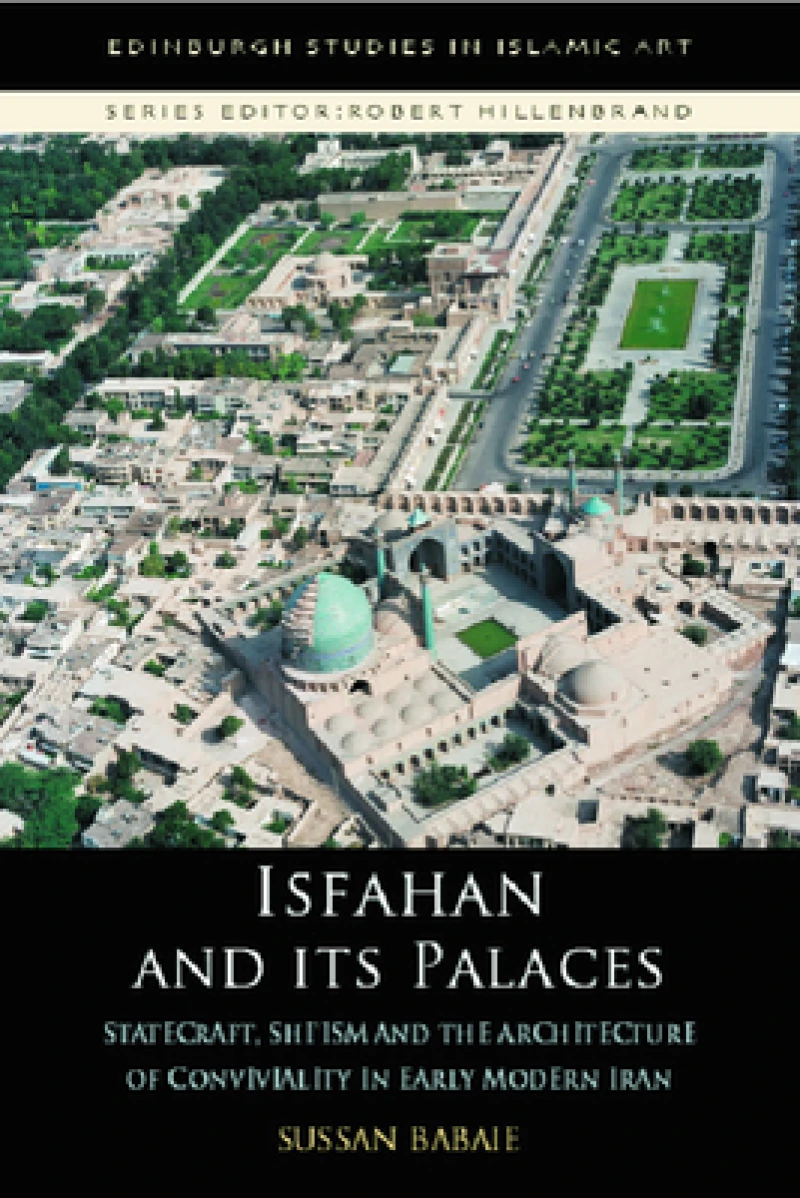
Isfahan and its Palaces : Statecraft, Shi`Ism and the Architecture of Conviviality in Early Modern Iran
Book Details
Format
Paperback / Softback
Book Series
Edinburgh Studies in Islamic Art
ISBN-10
1474437192
ISBN-13
9781474437196
Publisher
Edinburgh University Press
Imprint
Edinburgh University Press
Country of Manufacture
GB
Country of Publication
GB
Publication Date
Apr 30th, 2018
Print length
320 Pages
Weight
860 grams
Dimensions
24.40 x 17.40 x 2.10 cms
Product Classification:
History of architectureMiddle Eastern historyEarly modern history: c 1450/1500 to c 1700
Ksh 7,900.00
Temporarily out of stock, due soon
0 in stock
Delivery Location
Delivery fee: Select location
Secure
Quality
Fast
This beautifully illustrated history of Safavid Isfahan (1501 1722) explores the architectural and urban forms and networks of socio-cultural action that reflected a distinctly early-modern and Perso-Shi'i practice of kingship.
This beautifully illustrated history of Safavid Isfahan (1501-1722) explores the architectural and urban forms and networks of socio-cultural action that reflected a distinctly early-modern and Perso-Shi''i practice of kingship.
An immense building campaign, initiated in 1590-91 at the millennial threshold of the Islamic calendar (1000 A.H.), transformed Isfahan from a provincial, medieval, and largely Sunni city into an urban-centered representation of the first Imami Shi''i empire in the history of Islam. The historical process of Shi''ification of Safavid Iran and the deployment of the arts in situating the shifts in the politico-religious agenda of the imperial household informs Sussan Babaie''s study of palatial architecture and urban environments of Isfahan and the earlier capitals of Tabriz and Qazvin.
Babaie argues that since the Safavid claim presumed the inheritance both of the charisma of the Shi''i Imams and of the aura of royal splendor integral to ancient Persian notions of kingship, a ceremonial regime was gradually devised in which access and proximity to the shah assumed the contours of an institutionalized form of feasting. Talar-palaces, a new typology in Islamic palatial designs, and the urban-spatial articulation of access and proximity are the architectural anchors of this argument. Cast in the comparative light of urban spaces and palace complexes elsewhere and earlier-in the Timurid, Ottoman, and Mughal realms as well as in the early modern European capitals-Safavid Isfahan emerges as the epitome of a new architectural-urban paradigm in the early modern age.
An immense building campaign, initiated in 1590-91 at the millennial threshold of the Islamic calendar (1000 A.H.), transformed Isfahan from a provincial, medieval, and largely Sunni city into an urban-centered representation of the first Imami Shi''i empire in the history of Islam. The historical process of Shi''ification of Safavid Iran and the deployment of the arts in situating the shifts in the politico-religious agenda of the imperial household informs Sussan Babaie''s study of palatial architecture and urban environments of Isfahan and the earlier capitals of Tabriz and Qazvin.
Babaie argues that since the Safavid claim presumed the inheritance both of the charisma of the Shi''i Imams and of the aura of royal splendor integral to ancient Persian notions of kingship, a ceremonial regime was gradually devised in which access and proximity to the shah assumed the contours of an institutionalized form of feasting. Talar-palaces, a new typology in Islamic palatial designs, and the urban-spatial articulation of access and proximity are the architectural anchors of this argument. Cast in the comparative light of urban spaces and palace complexes elsewhere and earlier-in the Timurid, Ottoman, and Mughal realms as well as in the early modern European capitals-Safavid Isfahan emerges as the epitome of a new architectural-urban paradigm in the early modern age.
Get Isfahan and its Palaces by at the best price and quality guaranteed only at Werezi Africa's largest book ecommerce store. The book was published by Edinburgh University Press and it has pages.

