
Book Details
Format
Hardback or Cased Book
Book Series
American University Studies
ISBN-10
1433102714
ISBN-13
9781433102714
Edition
New
Publisher
Peter Lang Publishing Inc
Imprint
Peter Lang Publishing Inc
Country of Manufacture
US
Country of Publication
GB
Publication Date
Jul 30th, 2009
Print length
261 Pages
Weight
578 grams
Dimensions
15.80 x 23.30 x 2.10 cms
Product Classification:
Philosophy of religionInterfaith relationsSufism & Islamic mysticismSociety & culture: general
Ksh 14,000.00
Manufactured on Demand
0 in stock
Delivery Location
Delivery fee: Select location
Secure
Quality
Fast
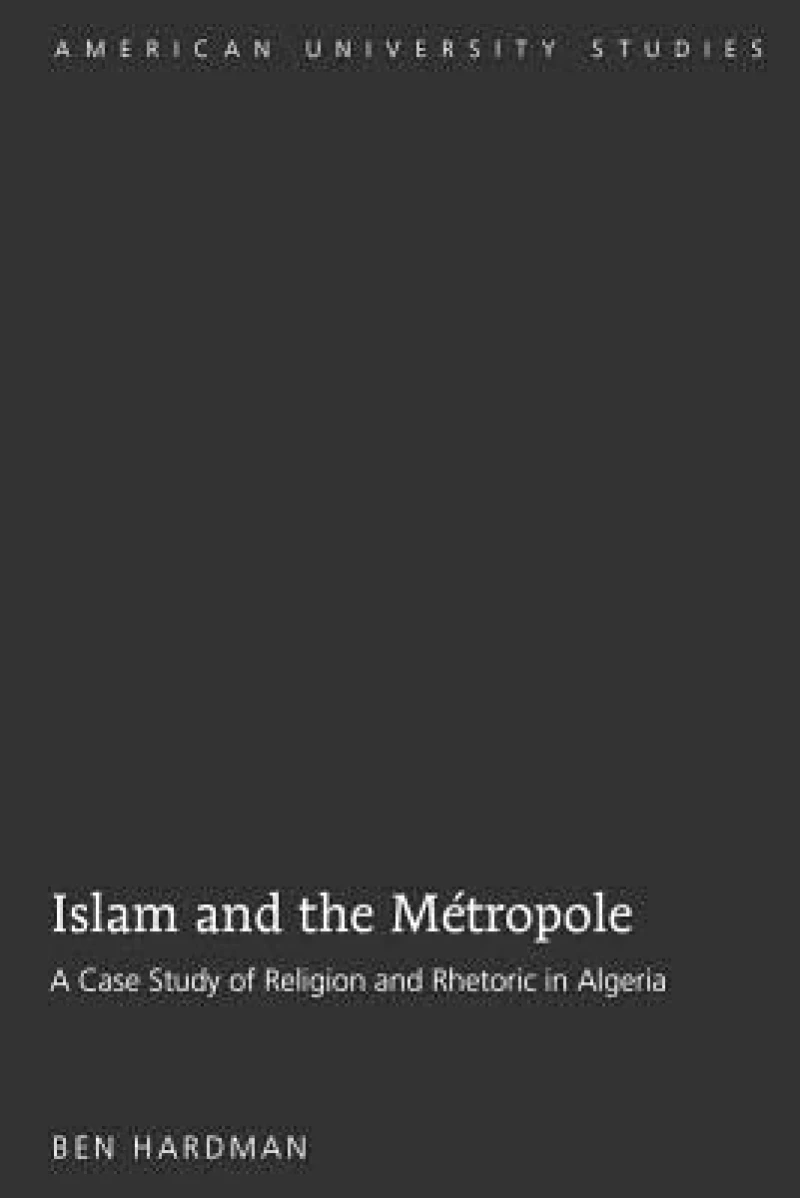
Islam and the Metropole is an exploration of the colonial policies of France regarding Islam and the effects they had on religion in the early days of Algerian independence. Following the colonization of Algeria in 1830, the French authorities adopted a manipulative policy regarding the philosophy and practice of Islam. This was based on nineteenth-century theories of progress elucidated by Saint-Simonian thought and the philosophy of Auguste Comte, which posited religion as a symbolic language that could be geared toward political ends in the name of "progress". The ensuing use of Islamic language and a simultaneous effort to depict traditional Islam as backward while using the language of "progress" to legitimate colonial repression created a complex dissonance that was reflected in the Muslim opposition to colonial rule. This dissonance continued in the early days of Algerian independence as the government sponsored its own idiosyncratic version of "Progressive Islam" as the religion of state. The contradictions underlying this vision of religion were never sufficiently resolved, resulting in the violent failure of the state's ideology.
Islam and the Métropole is an exploration of the colonial policies of France regarding Islam and the effects they had on religion in the early days of Algerian independence. Following the colonization of Algeria in 1830, the French authorities adopted a manipulative policy regarding the philosophy and practice of Islam. This was based on nineteenth-century theories of progress elucidated by Saint-Simonian thought and the philosophy of Auguste Comte, which posited religion as a symbolic language that could be geared toward political ends in the name of «progress». The ensuing use of Islamic language and a simultaneous effort to depict traditional Islam as backward while using the language of «progress» to legitimate colonial repression created a complex dissonance that was reflected in the Muslim opposition to colonial rule. This dissonance continued in the early days of Algerian independence as the government sponsored its own idiosyncratic version of «Progressive Islam» as the religion of state. The contradictions underlying this vision of religion were never sufficiently resolved, resulting in the violent failure of the state’s ideology.
Get Islam and the Metropole by at the best price and quality guaranteed only at Werezi Africa's largest book ecommerce store. The book was published by Peter Lang Publishing Inc and it has pages.

