
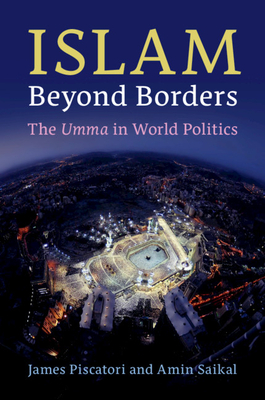
Islam Beyond Borders : The Umma in World Politics
Book Details
Format
Paperback / softback
ISBN-10
1108740553
ISBN-13
9781108740555
Publisher
Cambridge University Press
Imprint
Cambridge University Press
Country of Manufacture
GB
Country of Publication
GB
Publication Date
Sep 19th, 2019
Print length
224 Pages
Weight
340 grams
Dimensions
22.80 x 15.30 x 1.30 cms
KSh 5,150.00
Currently unavailable
0 in stock
Delivery Location
Delivery fee: Select location
Secure
Quality
Fast
Assuming a central place in Muslim life, the Qur'an speaks of one community of the faith, the umma. Despite this, there is little agreement on its meaning, and political self-interest and sectarian differences continue to undermine pan-Islamic aspirations. This study explores the search for a unified Muslim world that is rarely, if ever, achieved.
Assuming a central place in Muslim life, the Qur''an speaks of one community of the faith, the umma. This unity of the faithful is recognised as the default aspiration of the believer, and in the modern era, intellectuals and political leaders have often vied both to define, and to lead it. Based on case studies of actors such as Saudi Arabia, Iran, and ISIS, James Piscatori and Amin Saikal consider how some appeals to pan-Islam prove useful, yet other attempts at cross-border institutionalisation including the Sunni Caliphate or the modern Shi''i-inspired Islamic Revolution, founder on political self-interest and sectarian affiliations. Accompanied by a range of scriptural references to examine different interpretations of the umma, Piscatori and Saikal explore why, despite it meaning such widely different things, and its failure to be realised as a concrete project, neither the umma''s popular symbolic appeal nor its influence on a politics of identity has diminished.
Get Islam Beyond Borders by Amin Saikal, James Piscatori at the best price and quality guaranteed only at Werezi Africa's largest book ecommerce store. The book was published by Cambridge University Press and it has 224 pages.
Customers Who Bought This Also Bought

History of the Arab Peoples
KSh 2,700.00

Black Wave
KSh 2,700.00

My Promised Land
KSh 3,400.00
The Hundred Years'' War on Palestine
KSh 2,150.00

The Ethnic Cleansing of Palestine
KSh 2,350.00

Letters to My Palestinian Neighbor
KSh 3,400.00
Question of Palestine
KSh 2,700.00

Palestine
KSh 2,400.00
King of Kings
KSh 4,500.00

Recognising the Stranger
KSh 1,800.00

The Idea of Israel
KSh 2,700.00
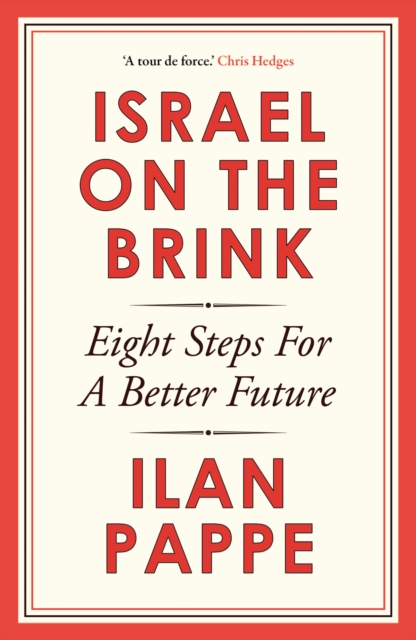
Israel on the Brink
KSh 2,350.00
More by Amin Saikal, James Piscatori
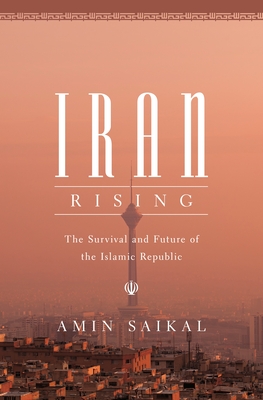
Iran Rising – The Survival and Future of the Islamic Republic
KSh 4,500.00
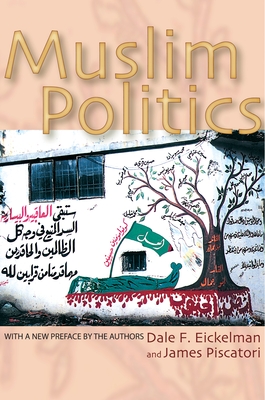
Muslim Politics
KSh 7,550.00
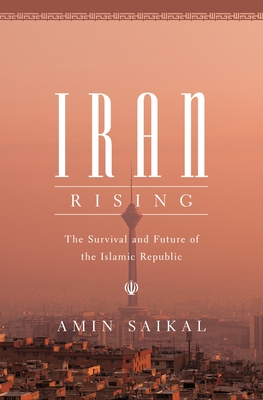
Iran Rising
KSh 3,250.00

Modern Afghanistan
KSh 5,050.00
Zone of Crisis
KSh 8,300.00
The Soviet Union As An Asianpacific Power
KSh 18,700.00
The Spectre of Afghanistan
KSh 4,700.00
The Soviet Union As An Asianpacific Power
KSh 6,150.00
The Rise and Fall of the Shah
KSh 6,850.00

Iran at the Crossroads
KSh 2,400.00

Transnational Religion And Fading States
KSh 10,450.00
Regime Change In Afghanistan
KSh 30,950.00
