
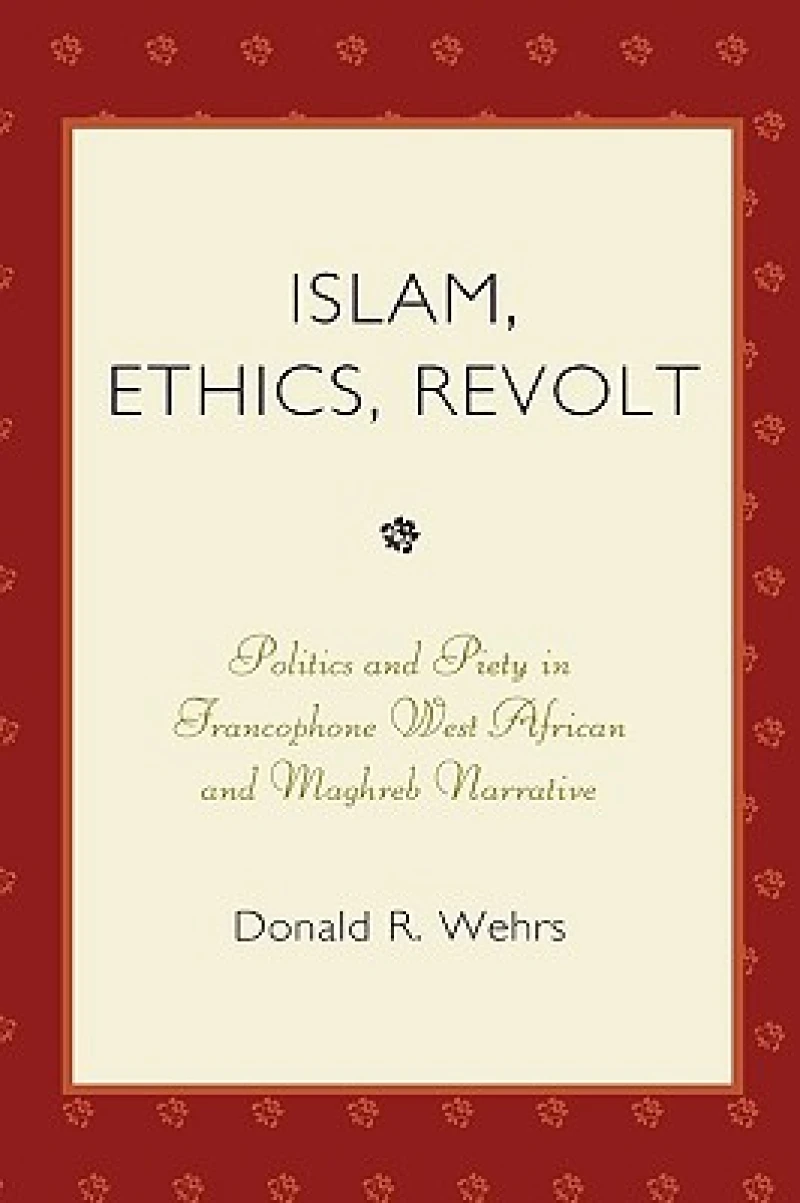
Islam, Ethics, Revolt : Politics and Piety in Francophone West African and Mahgreb Narrative
Book Details
Format
Hardback or Cased Book
ISBN-10
0739116495
ISBN-13
9780739116494
Publisher
Bloomsbury Publishing Plc
Imprint
Lexington Books
Country of Manufacture
GB
Country of Publication
GB
Publication Date
May 16th, 2008
Print length
290 Pages
Weight
592 grams
Dimensions
16.10 x 23.70 x 2.60 cms
Ksh 21,350.00
Manufactured on Demand
0 in stock
Delivery Location
Delivery fee: Select location
Secure
Quality
Fast
This book analyzes how Francophone narratives written from the 1950s to the 1990s explore the struggle to craft decolonized forms of Islamic identity within sub-Saharan and North African societies. Considering major narratives by Camara Laye, Cheikh Hamidou Kane, Mariama Bâ, Assia Djebar, Rachid Boudjedra, Yambo Ouologuem, and Amadou Kourouma, Donald Wehrs highlights not only the writers'' often sharply divergent attitudes toward Islam and varying assessments of possible relations between Islamic selfhood neither uncritical of Western modernity nor unreflectively hostile toward it. In articulating their conceptions of Islamic identity and ethical subjectivity, all of these writers set up a dialogue with the ethical implications of novelistic discourse. The inescapable ethics of affective appeals generated by lived experience are intrinsic to these works, as they are to all novels. When such appeals are put into dialogue with the teachings of Islam, they tend, on the one hand, to privilege its iconoclasm, to make common cause with the self-critical tenor of Islam, its suspicion of the "idol-making" propensity of elites, socio-political orders, and human beings generally. On the other hand, Islam requires novelistic discourse to distinguish ethics from enjoyment, ethical selfhood from unchecked and thus self-deifying and irresponsible autonomy. The privileging of prophetic discourse in Islamic novels illuminates the ethics of novelistic discourse while at the same time forcing it to question such Western idols as freedom as its own justification and material comfort as the central good of social, political life. By pursuing each narrative''s engagement with Islam as a form of piety rooted in ethical revolt against egoism and idolatry, the study challenges Western academic postcolonial criticism to hear the evocation of Islamic ethical discourse within fictions addressing the trauma of decolonization in Muslim socio-political contexts.
Get Islam, Ethics, Revolt by at the best price and quality guaranteed only at Werezi Africa's largest book ecommerce store. The book was published by Bloomsbury Publishing Plc and it has pages.

