
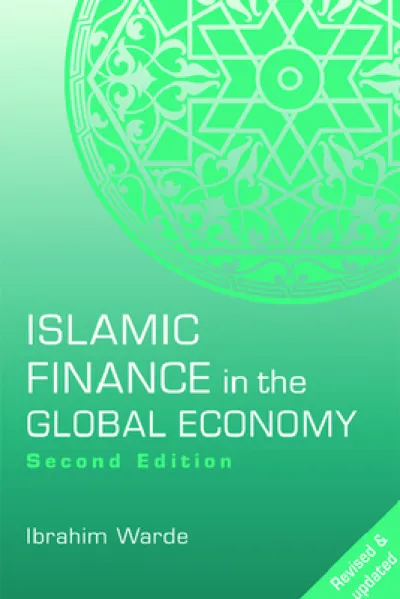
Islamic Finance in the Global Economy
Book Details
Format
Paperback / Softback
ISBN-10
0748627774
ISBN-13
9780748627776
Publisher
Edinburgh University Press
Imprint
Edinburgh University Press
Country of Manufacture
GB
Country of Publication
GB
Publication Date
May 15th, 2010
Print length
288 Pages
Weight
398 grams
Dimensions
23.30 x 15.60 x 1.50 cms
Ksh 6,100.00
Temporarily out of stock, due soon
0 in stock
Delivery Location
Delivery fee: Select location
Secure
Quality
Fast
A second edition of Islamic Finance in the Global Economy, substantially revised and updated to take into account the recent developments in the field.
"In spite of the ever-growing quantity of Islamic finance products, quantity, rather than quality, has been the main feature of literature on the topic. Ibrahim Warde''s book is in this respect a welcome exception...Warde unquestionably succeeds in his book in providing an excellent overview of modern Islamic finance. It will be particularly useful to readers who are interested in the complexity and variety of Islamic finance as it is now, as well as in possible future developments."-DAVO-Reviews
"...a profound analysis of the connection between Islamic finance and politics."-The Muslim World Book Review
"A well-researched and concise book on a fluid, complex, and sometimes misjudged concept."-MESA Bulletin
"A forthright and scholarly survey of a subject that deserves the attention of both international bankers and are specialists who are interested in Islamic Culture of political economy.. It offers a much-needed introduction to a highly complex set of economic, cultural, and political phenomena."-Middle East Journal
Islamic finance is growing at an astonishing rate and is now a global industry worth $1200 billion. This book explains the paradox of a system rooted in the medieval era thriving in the global economy. Coverage is exhaustively comprehensive, defining Islamic finance in its broadest sense to include banks, mutual funds, securities firms, and insurance (or takaful) companies.
This second edition has been completely revised and updated to take into account the great changes and developments in the field in recent times. It includes the impact of the 9/11 and 7/7 terrorist attacks on the industry, the new forms of interaction with Western financial institutions, the emergence of innovative products such as sukuk, and attempts by a broad range of financial centers-including Kuala Lumpur, London, Singapore, Bahrain, and Dubai-to become global hubs of Islam.
"...a profound analysis of the connection between Islamic finance and politics."-The Muslim World Book Review
"A well-researched and concise book on a fluid, complex, and sometimes misjudged concept."-MESA Bulletin
"A forthright and scholarly survey of a subject that deserves the attention of both international bankers and are specialists who are interested in Islamic Culture of political economy.. It offers a much-needed introduction to a highly complex set of economic, cultural, and political phenomena."-Middle East Journal
Islamic finance is growing at an astonishing rate and is now a global industry worth $1200 billion. This book explains the paradox of a system rooted in the medieval era thriving in the global economy. Coverage is exhaustively comprehensive, defining Islamic finance in its broadest sense to include banks, mutual funds, securities firms, and insurance (or takaful) companies.
This second edition has been completely revised and updated to take into account the great changes and developments in the field in recent times. It includes the impact of the 9/11 and 7/7 terrorist attacks on the industry, the new forms of interaction with Western financial institutions, the emergence of innovative products such as sukuk, and attempts by a broad range of financial centers-including Kuala Lumpur, London, Singapore, Bahrain, and Dubai-to become global hubs of Islam.
Get Islamic Finance in the Global Economy by at the best price and quality guaranteed only at Werezi Africa's largest book ecommerce store. The book was published by Edinburgh University Press and it has pages.

