
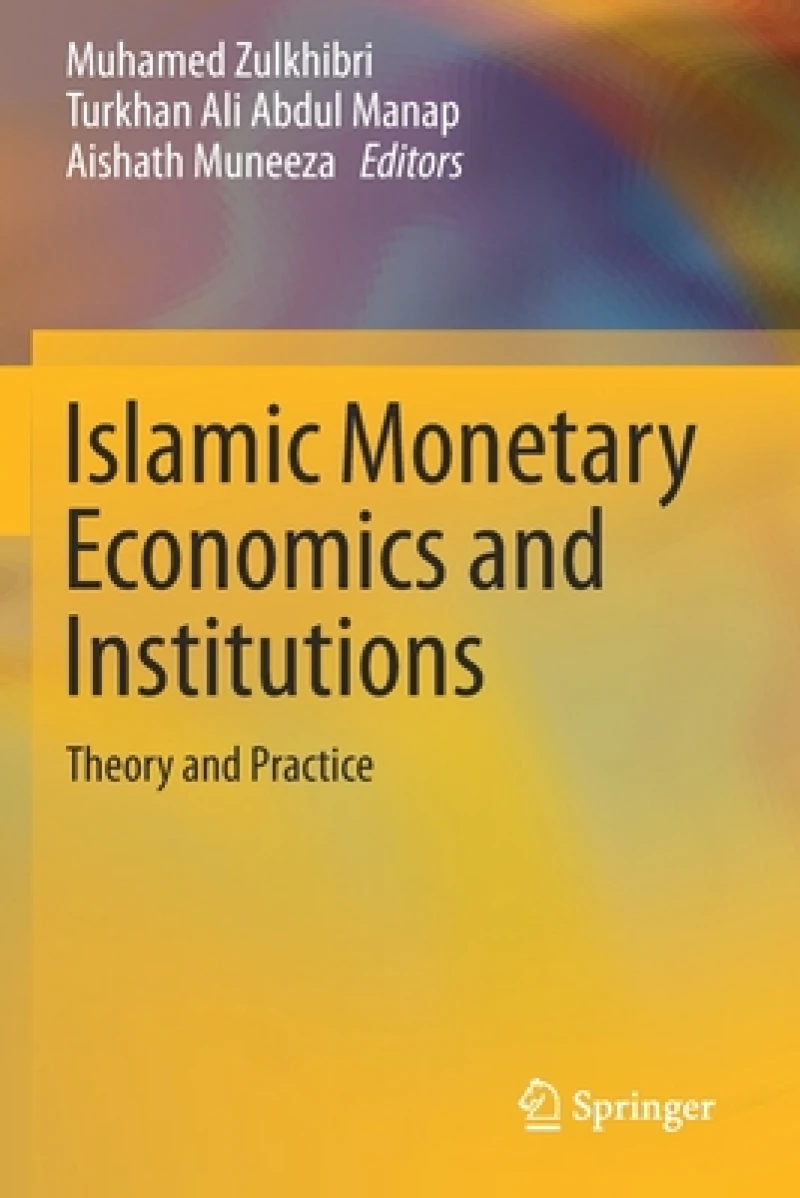
Islamic Monetary Economics and Institutions : Theory and Practice
2019 ed.
Book Details
Format
Paperback / Softback
ISBN-10
303024007X
ISBN-13
9783030240073
Edition
2019 ed.
Publisher
Springer Nature Switzerland AG
Imprint
Springer Nature Switzerland AG
Country of Manufacture
GB
Country of Publication
GB
Publication Date
Oct 15th, 2020
Print length
201 Pages
Product Classification:
Middle EastMonetary economicsEconomic growthFinanceFinance and the finance industry
Ksh 23,400.00
Werezi Extended Catalogue
0 in stock
Delivery Location
Delivery fee: Select location
Secure
Quality
Fast
In the early theoretical literature on Islamic monetary economics, many have discussed the role of money in Islamic economics system, while the number of empirical studies on Islamic monetary economics is a relatively new phenomenon.
This edited volume explores theoretical and empirical issues related to monetary economics and policy in the Islamic financial system. Derived from the Conference on Islamic Monetary Economics and Institutions: Theory and Practice 2017 held in Malé, Maldives, the enclosed papers highlights several option for authorities and regulatory bodies regarding monetary policy and regulation, as well as discussing how Islamic monetary policy effects growth, financial stability and resilience to shocks in practice. The inter-linkage between Islamic monetary policy and other markets are also explored. The subject of Islamic economics has gained considerable attention in the last four decades with the emergence of Islamic financial institutions around the world. This phenomenon has motivated economists to develop a comprehensive theoretical framework of modern monetary economics for Islamic economic system. An important characteristic of the Islamic economic system is the abolition of interest from the financial system. Islamic monetary economics is distinguished from conventional monetary economics due to the absence of interest. Therefore, under the Islamic economic system, monetary policy has to depend on other tools. In the early theoretical literature on Islamic monetary economics, many have discussed the role of money in Islamic economics system, while the number of empirical studies on Islamic monetary economics is a relatively new phenomenon. According to Islamic scholars, there are three main goals of Islamic monetary policy: a) economic well-being with full employment and optimum rate of economic growth; b) socioeconomic justice and equitable distribution of income and wealth and c) stability in the value of money. Hence, the Islamic monetary policy has several socioeconomic and ethical implications. Featuring regional case studies, this book serves as a valuable resource for academics, scholars, practitioners and policy makers in the areas of Islamic economics and finance.
Get Islamic Monetary Economics and Institutions by at the best price and quality guaranteed only at Werezi Africa's largest book ecommerce store. The book was published by Springer Nature Switzerland AG and it has pages.

