
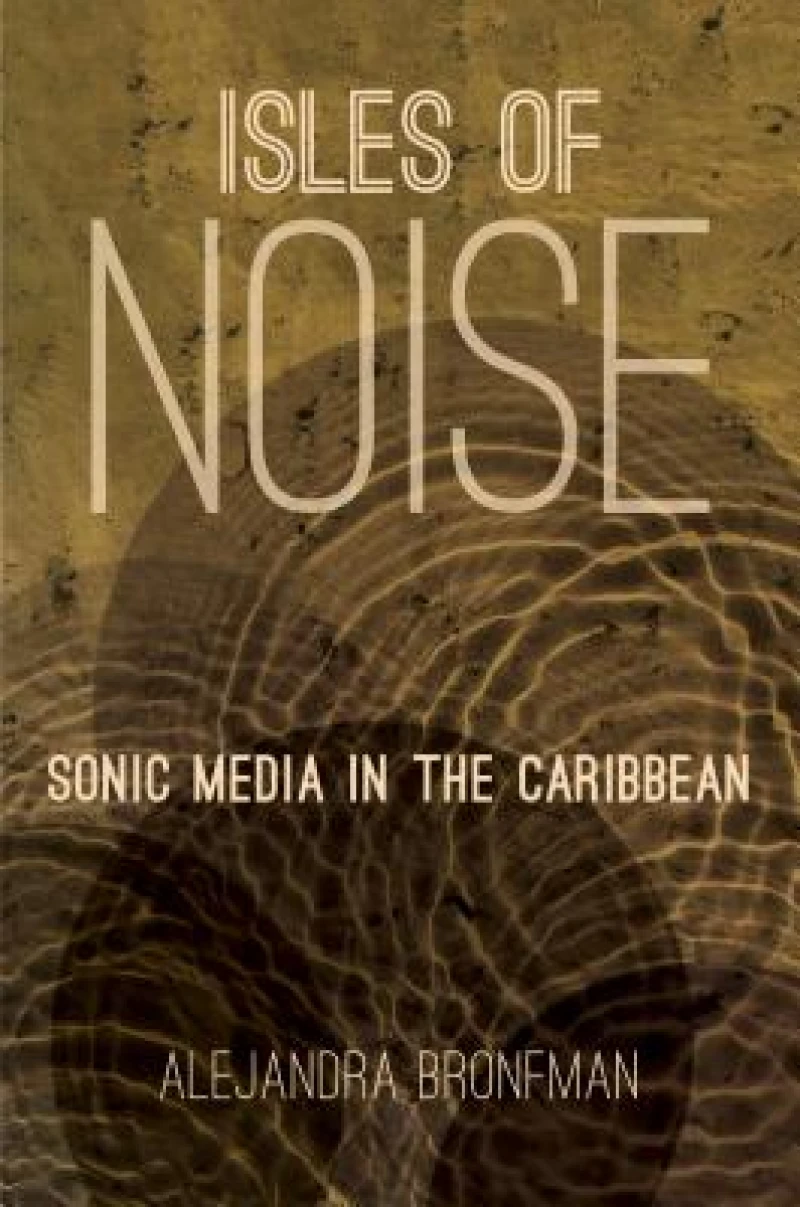
Isles of Noise : Sonic Media in the Caribbean
Book Details
Format
Hardback or Cased Book
ISBN-10
1469630338
ISBN-13
9781469630335
Publisher
The University of North Carolina Press
Imprint
The University of North Carolina Press
Country of Manufacture
US
Country of Publication
GB
Publication Date
Oct 3rd, 2016
Print length
236 Pages
Weight
504 grams
Dimensions
23.30 x 15.50 x 1.70 cms
Product Classification:
RadioRadio / podcastsMedia studiesMedia studies
Ksh 15,100.00
Werezi Extended Catalogue
0 in stock
Delivery Location
Delivery fee: Select location
Secure
Quality
Fast
In this media history of the Caribbean, Alejandra Bronfman traces how technology, culture, and politics developed in a region that was “wired” earlier and more widely than many other parts of the Americas. Attending to everyday life, infrastructure, and sounded histories, Bronfman does not allow the notion of empire to stand solely for domination.
In this media history of the Caribbean, Alejandra Bronfman traces howtechnology, culture, and politics developed in a region that was “wired” earlierand more widely than many other parts of the Americas. Haiti, Cuba,and Jamaica acquired radio and broadcasting in the early stages of theglobal expansion of telecommunications technologies. Imperial historieshelped forge these material connections through which the United States,Great Britain, and the islands created a virtual laboratory for experiments inaudiopolitics and listening practices.
As radio became an established medium worldwide, it burgeoned in theCaribbean because the region was a hub for intense foreign and domesticcommercial and military activities. Attending to everyday life, infrastructure,and sounded histories during the waxing of an American empire andthe waning of British influence in the Caribbean, Bronfman does not allowthe notion of empire to stand solely for domination. By the time of the ColdWar, broadcasting had become a ubiquitous phenomenon that renderedsound and voice central to political mobilisation in the Caribbean nationsthrowing off what remained of their imperial tethers.
As radio became an established medium worldwide, it burgeoned in theCaribbean because the region was a hub for intense foreign and domesticcommercial and military activities. Attending to everyday life, infrastructure,and sounded histories during the waxing of an American empire andthe waning of British influence in the Caribbean, Bronfman does not allowthe notion of empire to stand solely for domination. By the time of the ColdWar, broadcasting had become a ubiquitous phenomenon that renderedsound and voice central to political mobilisation in the Caribbean nationsthrowing off what remained of their imperial tethers.
Get Isles of Noise by at the best price and quality guaranteed only at Werezi Africa's largest book ecommerce store. The book was published by The University of North Carolina Press and it has pages.

