
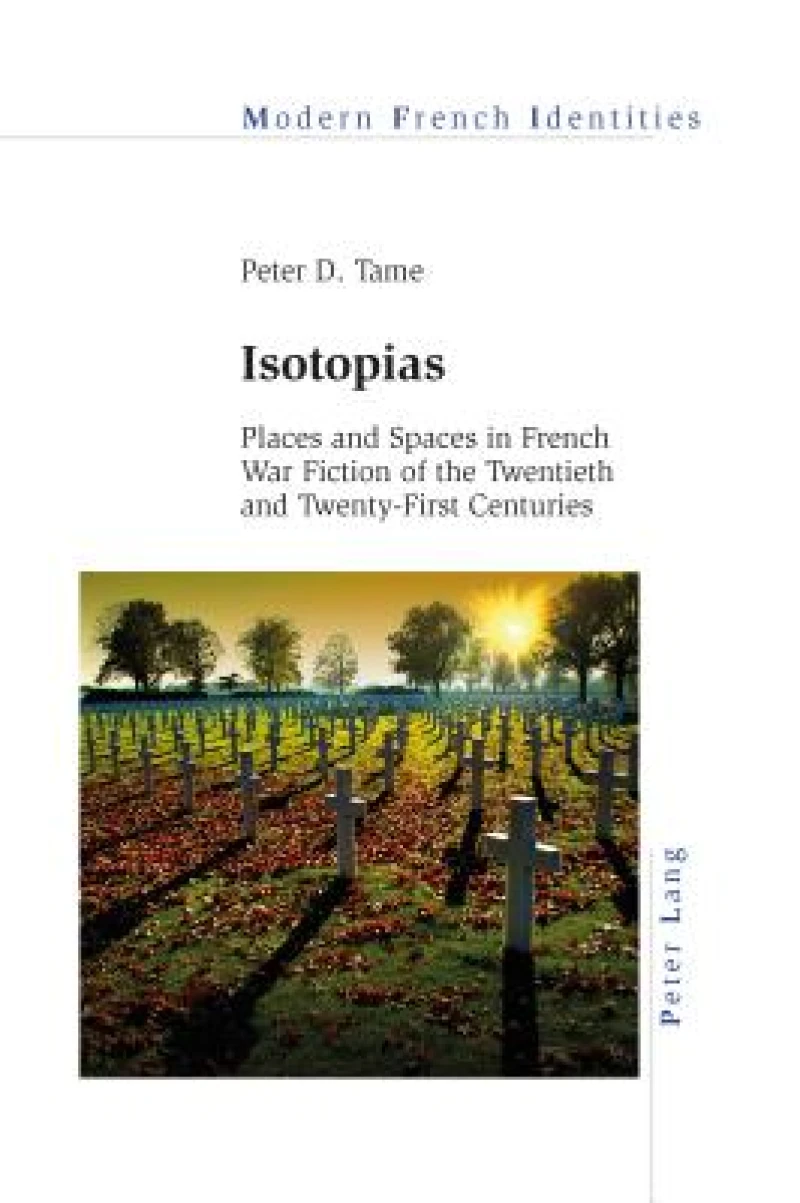
Isotopias : Places and Spaces in French War Fiction of the Twentieth and Twenty-First Centuries
New
by
Peter Tame
Book Details
Format
Paperback / Softback
Book Series
Modern French Identities
ISBN-10
303430837X
ISBN-13
9783034308373
Edition
New
Publisher
Peter Lang AG, Internationaler Verlag der Wissenschaften
Imprint
Peter Lang AG, Internationaler Verlag der Wissensc
Country of Manufacture
CH
Country of Publication
GB
Publication Date
Jun 29th, 2015
Print length
584 Pages
Weight
860 grams
Dimensions
22.80 x 15.10 x 3.80 cms
Product Classification:
Literary studies: from c 1900 -21st century history: from c 2000 -Political science & theory
Ksh 9,800.00
Manufactured on Demand
0 in stock
Delivery Location
Delivery fee: Select location
Secure
Quality
Fast
This is the first book to examine places and spaces in French war fiction of the 20th and 21st centuries as literary isotopias or fictional «worlds». Four isotopic modes are established: possession, dispossession or loss, alienation, and repossession. The spaces considered include territorial demands, gains, losses, national spaces and mental spaces.
This monograph is the first book to examine places and spaces in French war fiction of the twentieth and twenty-first centuries. These places and spaces are presented as literary isotopias, or fictional «worlds», and analysed in a selective corpus of thirty-three novelists and forty-two examples of war fiction. The book identifies and classifies the various types of isotopia that appear in fiction in the form of scenes, images or literary microcosms. The author establishes four isotopic modes – possession, dispossession or loss, alienation, and repossession – by which means the isotopias are expressed. The spaces considered include territorial demands, gains, possessions, losses and national spaces, as well as internal mental spaces.
The corpus of novels selected for this project covers a wide variety of examples of fictional worlds: the spiritual, the marginal, the regional, the ideological, the psychological, the erotic, the ecological and the political. The methods of analysis identify these worlds, demonstrate both how they function in relation to the characters in the novels and how they affect the reader, and provide further illumination on the intentions, achievements and ideologies of the characters and of the novelists concerned. One of the findings of the study is that the greater the stress of war and conflict the more authors and characters tend to seek refuge in their imaginary (isotopic) worlds.
The corpus of novels selected for this project covers a wide variety of examples of fictional worlds: the spiritual, the marginal, the regional, the ideological, the psychological, the erotic, the ecological and the political. The methods of analysis identify these worlds, demonstrate both how they function in relation to the characters in the novels and how they affect the reader, and provide further illumination on the intentions, achievements and ideologies of the characters and of the novelists concerned. One of the findings of the study is that the greater the stress of war and conflict the more authors and characters tend to seek refuge in their imaginary (isotopic) worlds.
Get Isotopias by at the best price and quality guaranteed only at Werezi Africa's largest book ecommerce store. The book was published by Peter Lang AG, Internationaler Verlag der Wissenschaften and it has pages.

