
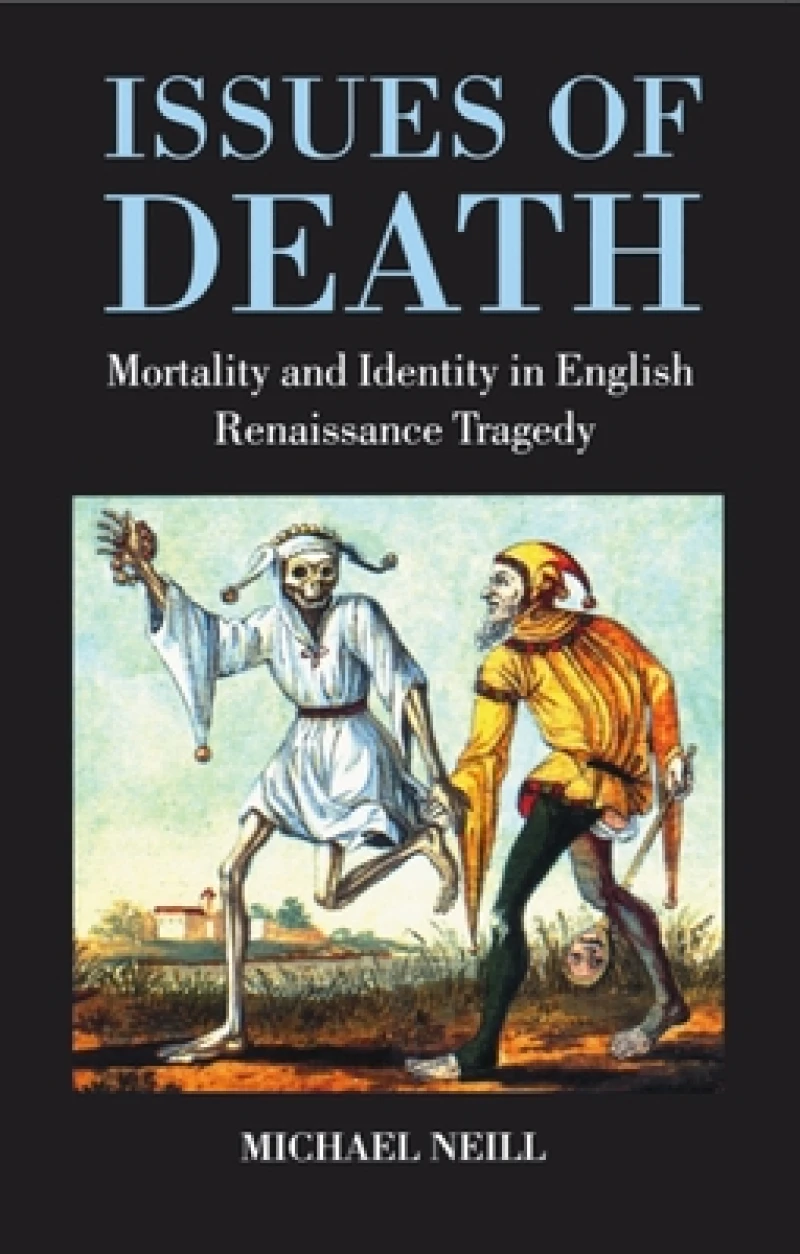
Issues of Death : Mortality and Identity in English Renaissance Tragedy
Book Details
Format
Paperback / Softback
ISBN-10
019818493X
ISBN-13
9780198184935
Publisher
Oxford University Press
Imprint
Oxford University Press
Country of Manufacture
GB
Country of Publication
GB
Publication Date
Jan 7th, 1999
Print length
418 Pages
Weight
526 grams
Dimensions
21.60 x 13.70 x 2.30 cms
Product Classification:
Literary studies: c 1500 to c 1800Literary studies: plays & playwrightsSociology: death & dying
Ksh 21,250.00
Manufactured on Demand
0 in stock
Delivery Location
Delivery fee: Select location
Secure
Quality
Fast
Examines "death" as a product of the human imagination - all animals die, but only humans suffer death. The book explores tragic literature as an instrument through which the culture of early modern England imagined the encounter with mortality, looking at the theatrical reinvention of death.
Death, like most experiences that we think of as natural, is a product of the human imagination: all animals die, but only human beings suffer Death; and what they suffer is shaped by their own time and culture. Tragedy was one of the principal instruments through which the culture of early modern England imagined the encounter with mortality. The essays in this book approach the theatrical reinvention of Death from three perspectives. Those in Part I explore Death as a trope of apocalypse -- a moment of un-veiling or dis-covery that is figured both in the fearful nakedness of the Danse Macabre and in the shameful openings enacted in the new theatres of anatomy. Separate chapters explore the apocalyptic design of two of the periods most powerful tragedies -- Shakespeare''s Othello, and Middleton and Rowley''s The Changeling. In Part 2, Neill explores the psychological and affective consequences of tragedy''s fiercely end-driven narrative in a number of plays where a longing for narrative closure is pitched against a particularly intense dread of ending. The imposition of an end is often figured as an act of writerly violence, committed by the author or his dramatic surrogate. Extensive attention is paid to Hamlet as an extreme example of the structural consequences of such anxiety. The function of revenge tragedy as a response to the radical displacement of the dead by the Protestant abolition of purgatory -- one of the most painful aspects of the early modern re-imagining of death -- is also illustrated with particular clarity. Finally, Part 3 focuses on the way tragedy articulates its challenge to the undifferentiating power of death through conventions and motifs borrowed from the funereal arts. It offers detailed analyses of three plays -- Shakespeare''s Antony and Cleopatra, Webster''s The Duchess of Malfi, and Ford''s The Broken Heart. Here, funeral is rewritten as triumph, and death becomes the chosen instrument of an heroic self-fashioning designed to dress the arbitrary abruption of mortal ending in a powerful aesthetic of closure.
Get Issues of Death by at the best price and quality guaranteed only at Werezi Africa's largest book ecommerce store. The book was published by Oxford University Press and it has pages.

