
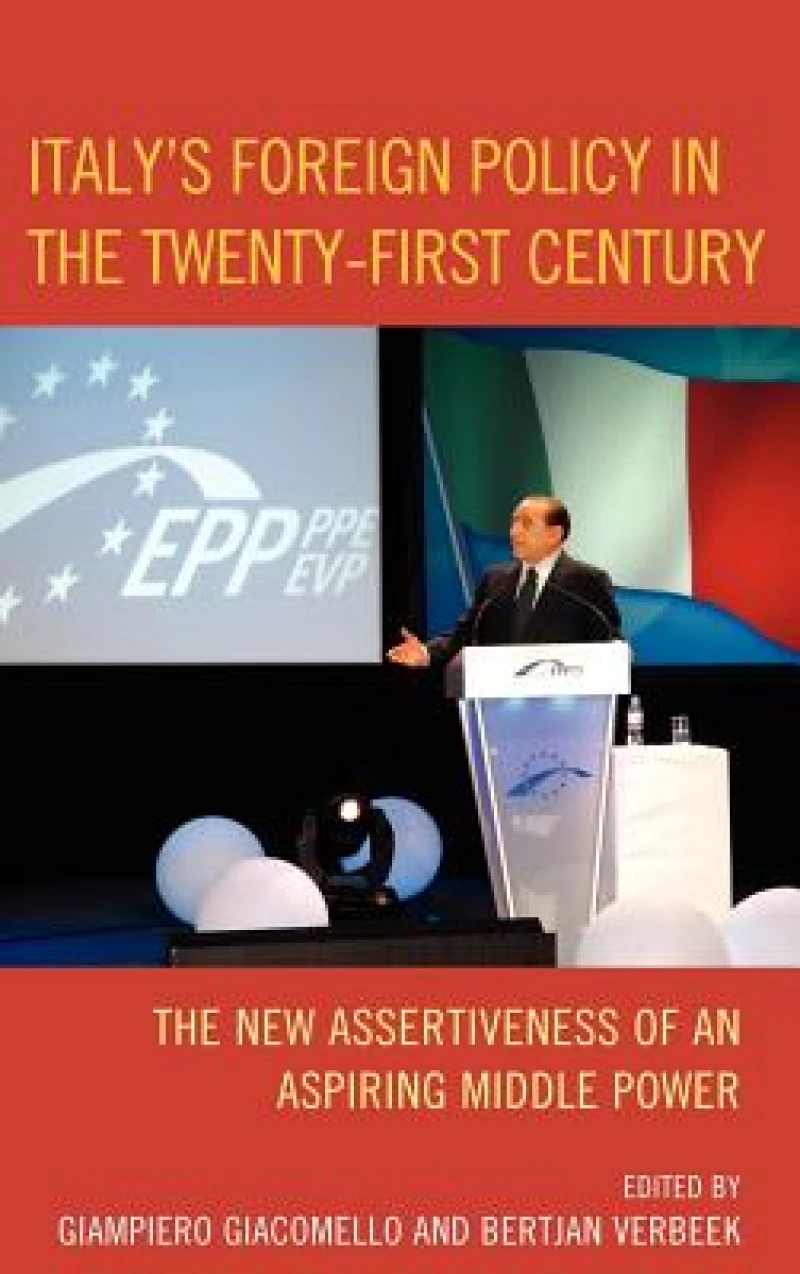
Italy's Foreign Policy in the Twenty-First Century : The New Assertiveness of an Aspiring Middle Power
Book Details
Format
Hardback or Cased Book
ISBN-10
0739148680
ISBN-13
9780739148686
Publisher
Bloomsbury Publishing Plc
Imprint
Lexington Books
Country of Manufacture
GB
Country of Publication
GB
Publication Date
Dec 9th, 2011
Print length
252 Pages
Weight
538 grams
Dimensions
23.30 x 16.40 x 2.40 cms
Product Classification:
International relations
Ksh 19,400.00
Manufactured on Demand
0 in stock
Delivery Location
Delivery fee: Select location
Secure
Quality
Fast
Italy’s Foreign Policy in the Twenty-First Century: The New Assertiveness of an Aspiring Middle Power, edited by Giampiero Giacomello and Bertjan Verbeek, shows how changes in Italy’s international and domestic environment since the early 1990s have affected Italy’s foreign policy and raised its aspiration to become, and be treated as, a middle power. The contributors theoretically engage with both rationalist and constructivist accounts of middle power behavior. They reveal that the end of the Cold War, the advent of globalization, and the increase in institutionalized regional cooperation have increased Italy’s freedom to maneuver (by reducing its dependence on the United States) while simultaneously causing Italy’s policy freedom to decrease as a result of delegation of policy competencies to the EU and the need for cooperation in a globalized world. Domestic changes, notably the transition from the First to the Second Republic and the transformation of political leadership in Italy under Prime Minister Silvio Berlusconi, have altered the specific way domestic politics is played out in foreign policy. Rather than adopting the more common focus on Italy’s bilateral relations with other counties or regions, Italy’s Foreign Policy in the Twenty-First Century centers on actors, issues, and policy instruments in vital areas of Italy’s foreign. In addition, it discusses the search for Italy’s position in global affairs and emphasizes the importance of leadership styles, domestic political agendas, and party rhetoric in determining Italy’s foreign policy. As Giacomello and Verbeek’s volume demonstrates, being consistent with such strategic prescription has always been a problematic undertaking for various Italian governments.
Italy’s Foreign Policy in the Twenty-First Century: The New Assertiveness of an Aspiring Middle Power, edited by Giampiero Giacomello and Bertjan Verbeek, shows how changes in Italy’s international and domestic environment since the early 1990s have affected Italy’s foreign policy and raised its aspiration to become, and be treated as, a middle power. The contributors theoretically engage with both rationalist and constructivist accounts of middle power behavior. They reveal that the end of the Cold War, the advent of globalization, and the increase in institutionalized regional cooperation have increased Italy’s freedom to maneuver (by reducing its dependence on the United States) while simultaneously causing Italy’s policy freedom to decrease as a result of delegation of policy competencies to the EU and the need for cooperation in a globalized world.
Domestic changes, notably the transition from the First to the Second Republic and the transformation of political leadership in Italy under Prime Minister Silvio Berlusconi, have altered the specific way domestic politics is played out in foreign policy. Rather than adopting the more common focus on Italy’s bilateral relations with other counties or regions, Italy’s Foreign Policy in the Twenty-First Century centers on actors, issues, and policy instruments in vital areas of Italy’s foreign. In addition, it discusses the search for Italy’s position in global affairs and emphasizes the importance of leadership styles, domestic political agendas, and party rhetoric in determining Italy’s foreign policy. As Giacomello and Verbeek’s volume demonstrates, being consistent with such strategic prescription has always been a problematic undertaking for various Italian governments.
Domestic changes, notably the transition from the First to the Second Republic and the transformation of political leadership in Italy under Prime Minister Silvio Berlusconi, have altered the specific way domestic politics is played out in foreign policy. Rather than adopting the more common focus on Italy’s bilateral relations with other counties or regions, Italy’s Foreign Policy in the Twenty-First Century centers on actors, issues, and policy instruments in vital areas of Italy’s foreign. In addition, it discusses the search for Italy’s position in global affairs and emphasizes the importance of leadership styles, domestic political agendas, and party rhetoric in determining Italy’s foreign policy. As Giacomello and Verbeek’s volume demonstrates, being consistent with such strategic prescription has always been a problematic undertaking for various Italian governments.
Get Italy's Foreign Policy in the Twenty-First Century by at the best price and quality guaranteed only at Werezi Africa's largest book ecommerce store. The book was published by Bloomsbury Publishing Plc and it has pages.

