
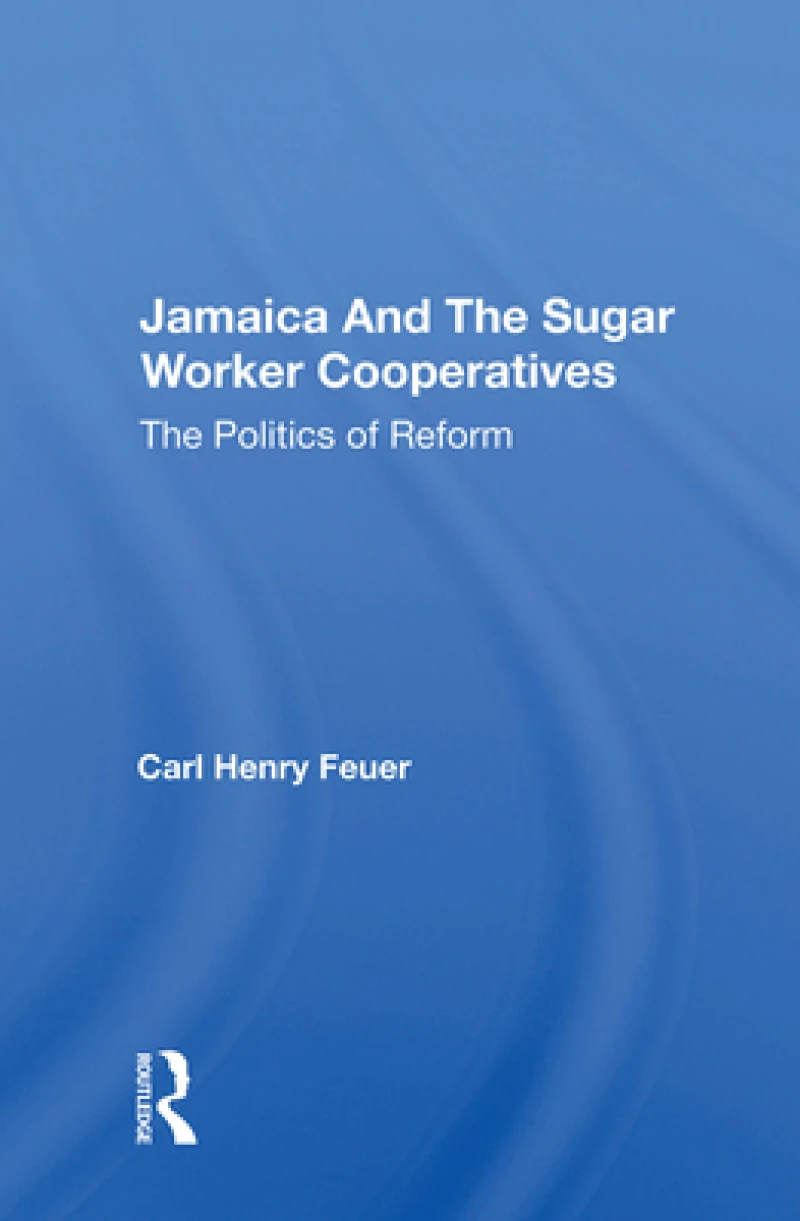
Jamaica and the Sugar Worker Cooperatives : The Politics of Reform
Book Details
Format
Hardback or Cased Book
ISBN-10
0367017318
ISBN-13
9780367017316
Publisher
Taylor & Francis Ltd
Imprint
Routledge
Country of Manufacture
GB
Country of Publication
GB
Publication Date
Jun 7th, 2019
Print length
236 Pages
Weight
600 grams
Product Classification:
Politics & government
Ksh 30,950.00
Werezi Extended Catalogue
0 in stock
Delivery Location
Delivery fee: Select location
Secure
Quality
Fast
Between 1974 and 1977, as part of a wider attempt by Prime Minister Michael Manley''s regime to carry out a democratic reformist strategy of development, the three largest sugar estates in Jamaica were converted into worker-managed farms. Within a few years, however, the cooperative program was in disarray as the farms faced economic setbacks and as political conflicts developed among the sugar workers, local authorities, and the government. Drawing on his extensive field research in Jamaica, Dr. Feuer traces the development and decline of the cooperative system and discusses the implications for the possibility of democratic reform. In his view, the logic of the cooperativization process conflicted with the priorities of the middle class, which continued to dominate the Jamaican economy. As a result, the reforms were never firmly rooted in a political coalition with the resources to carry them out. In light of the Jamaican experience, Dr. Feuer considers such questions as: What are the obstacles a nonrevolutionary regime is likely to face in an effort to help the poor? How feasible is it to mobilize the requisite political and administrative resources and neutralize the inherent constraints to reform?
Between 1974 and 1977, as part of a wider attempt by Prime Minister Michael Manley''s regime to carry out a democratic reformist strategy of development, the three largest sugar estates in Jamaica were converted into worker-managed farms. Within a few years, however, the cooperative program was in disarray as the farms faced economic setbacks and as political conflicts developed among the sugar workers, local authorities, and the government. Drawing on his extensive field research in Jamaica, Dr. Feuer traces the development and decline of the cooperative system and discusses the implications for the possibility of democratic reform. In his view, the logic of the cooperativization process conflicted with the priorities of the middle class, which continued to dominate the Jamaican economy. As a result, the reforms were never firmly rooted in a political coalition with the resources to carry them out. In light of the Jamaican experience, Dr. Feuer considers such questions as: What are the obstacles a nonrevolutionary regime is likely to face in an effort to help the poor? How feasible is it to mobilize the requisite political and administrative resources and neutralize the inherent constraints to reform?
Get Jamaica and the Sugar Worker Cooperatives by at the best price and quality guaranteed only at Werezi Africa's largest book ecommerce store. The book was published by Taylor & Francis Ltd and it has pages.

