
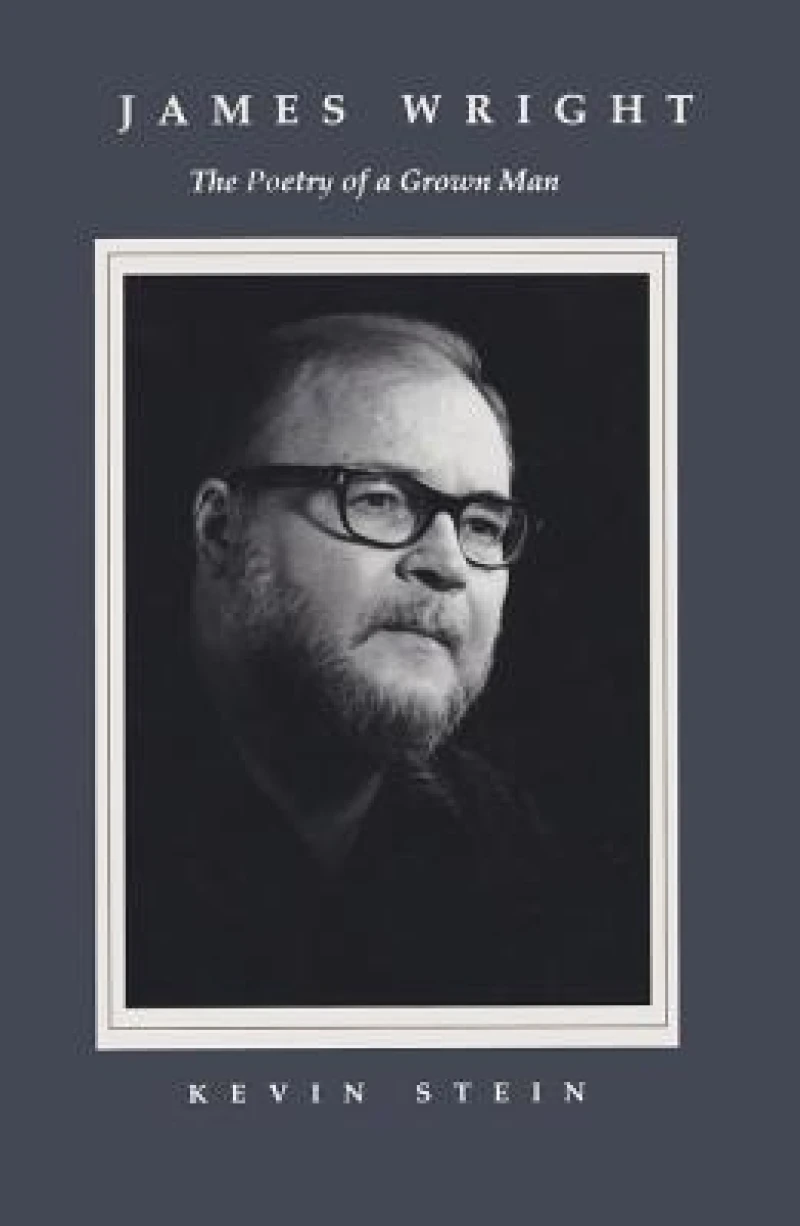
James Wright : The Poetry of a Grown Man; Constancy and Transition in the Work of James Wright
by
Kevin Stein
Book Details
Format
Hardback or Cased Book
ISBN-10
0821409093
ISBN-13
9780821409091
Publisher
Ohio University Press
Imprint
Ohio University Press
Country of Manufacture
GB
Country of Publication
GB
Publication Date
Dec 31st, 1988
Print length
240 Pages
Weight
528 grams
Dimensions
15.80 x 23.80 x 2.20 cms
Ksh 6,500.00
Werezi Extended Catalogue
0 in stock
Delivery Location
Delivery fee: Select location
Secure
Quality
Fast
Although some critics have identified two phases in the poetry of James Wright and have isolated particulars of his movement from traditional to more experimental forms, few have noted also the elements of constancy in the evolution of his poetry. This book traces the unified growth of Wright's poetry.
Although some critics have identified two phases in the poetry of James Wright and have isolated particulars of his movement from traditional to more experimental forms, few have noted also the elements of constancy in the evolution of his poetry. In this first comprehensive scholarly introduction to Wright''s work, Stein traces the unified growth of Wright''s poetry, asserting that while stylistic changes are often more apparent than actual, Wright does undergo a continuing personal and aesthetic development throughout his career. Stein examines the entire body of Wright''s poetry, including such previously unpublished materials as the collection Amenities of Stone.
Stein locates Wright in the Emersonian tradition which sees struggle with language as a struggle with the self -- a locating and defining of the self within a world of natural facts. Language, then, becomes a means of self-definition, and to be frivolous or irresponsible with language becomes a negation of the self and the world it inhabits. For Wright, "the poetry of a grown man" issues from this understanding. Because Wright joins the act of language with the act of selfhood, it is not surprising that the mode and tenor of his work would alter as the self redefines its values and goals, its very identity. In fact, Stein divides Wright''s career into three interrelated stages of development: "containment," in which he relies on traditional religious and rhetorical measures to distance himself from a world of experience; "vulnerability," in which he enters the experiential world where the self is rewarded and equally threatened; and "integration," in which he accepts and balances the necessary combination of beauty and horror inherent in being human within a natural world.
Stein shows that throughout his career Wright''s presiding concern is to discover a way of writing and a way of life that might overcome the effects of an individual''s separation from the human community, the natural world, and the spiritual presence in the universe. In Wright''s world, to do less is to betray one''s language -- and one''s self.
Stein locates Wright in the Emersonian tradition which sees struggle with language as a struggle with the self -- a locating and defining of the self within a world of natural facts. Language, then, becomes a means of self-definition, and to be frivolous or irresponsible with language becomes a negation of the self and the world it inhabits. For Wright, "the poetry of a grown man" issues from this understanding. Because Wright joins the act of language with the act of selfhood, it is not surprising that the mode and tenor of his work would alter as the self redefines its values and goals, its very identity. In fact, Stein divides Wright''s career into three interrelated stages of development: "containment," in which he relies on traditional religious and rhetorical measures to distance himself from a world of experience; "vulnerability," in which he enters the experiential world where the self is rewarded and equally threatened; and "integration," in which he accepts and balances the necessary combination of beauty and horror inherent in being human within a natural world.
Stein shows that throughout his career Wright''s presiding concern is to discover a way of writing and a way of life that might overcome the effects of an individual''s separation from the human community, the natural world, and the spiritual presence in the universe. In Wright''s world, to do less is to betray one''s language -- and one''s self.
Get James Wright by at the best price and quality guaranteed only at Werezi Africa's largest book ecommerce store. The book was published by Ohio University Press and it has pages.

