
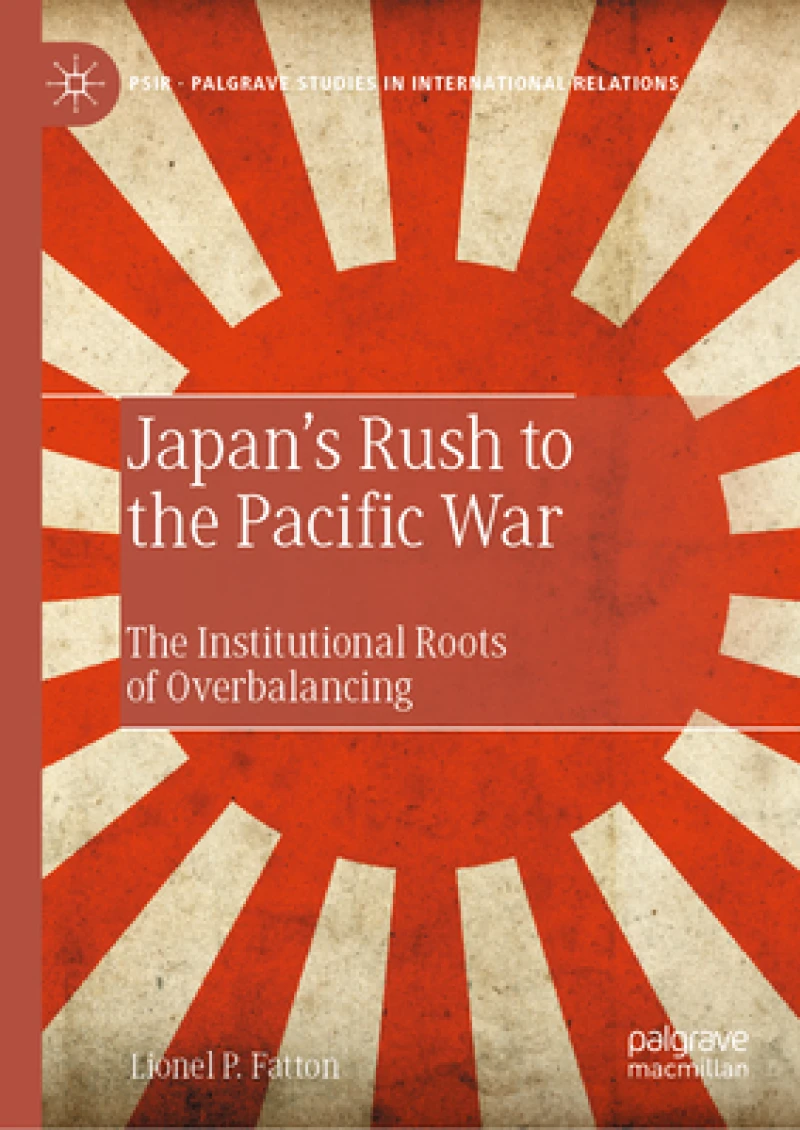
Japan’s Rush to the Pacific War : The Institutional Roots of Overbalancing
2023 ed.
Book Details
Delivery Location
Delivery fee: Select location
This book investigates the phenomenon of overbalancing through an analysis of Japan''s foreign policy during the interbellum. In the mid-1930s, Japan withdrew from a naval arms control framework that had restrained military buildup on both sides of the Pacific Ocean since the early 1920s. By doing so, Japan not only triggered a naval arms race with the United States that exhausted its economy, it also destroyed the last institutionalized structure regulating the relationship between the two Pacific powers. Japan and the United States became caught in a spiral of tensions that culminated with the attack on Pearl Harbor in December 1941. Puzzling is the fact that the international environment in the Asia-Pacific was relatively stable in the mid-1930s, while Washington was pursuing a policy of accommodation toward Tokyo. By rejecting arms control and engaging in unfettered naval expansion, Japan overbalanced against the United States and began its rush to the Pacific War.
The book explains Japan''s overbalancing with a neoclassical realist model that combines the literatures on threat perception and civil-military relations. Amid the Manchurian crisis of 1931-1933, as the Japanese government collaborated with the military institution to address the situation in China, military influence on the formulation of foreign policy surged. The perceptual and policy biases of the military, which include the tendency to distrust other countries'' intentions, to adopt worst-case analyses of international dynamics and to strive to maximize military power, gradually penetrated the decision-making process. Dysfunctions in the preexisting structure of Japanese civil-military relations, engendered by an over-depoliticization of the military institution, allowed the navy to convince policymakers that the United States was inherently hostile to Japan, hence the necessity to prepare for war. The government was brainstormed, adopting the biased military perspective on international affairs. Japan overbalanced in a myopic but conscious way.Get Japan’s Rush to the Pacific War by at the best price and quality guaranteed only at Werezi Africa's largest book ecommerce store. The book was published by Springer International Publishing AG and it has pages.

