

Jefferson's Wolf : A Founding Father's Troubling Answer to the Problem of Slavery
Book Details
Format
Hardback
ISBN-10
0674278321
ISBN-13
9780674278325
Publisher
Harvard University Press
Imprint
Harvard University Press
Country of Manufacture
GB
Country of Publication
GB
Publication Date
May 5th, 2026
Print length
272 Pages
Weight
536 grams
Dimensions
24.20 x 16.40 x 2.70 cms
KSh 4,500.00
Werezi Extended Catalogue
Delivery in 12 days
3 copies in stock
Delivery Location
Delivery fee: Select location
Delivery in 12 days
Secure
Quality
Fast
Thomas Jefferson’s views on slavery have long been seen as paradoxical or incoherent. Jefferson’s Wolf shows that he was, in fact, a consistent advocate of racial exclusion. Although he criticized slavery, he also insisted throughout his life—like many, but not all, Americans of his time—on the need to remove Black people from the United States.
A decisive reassessment of Thomas Jefferson’s long-debated views on slavery, showing that his chief antislavery strategy was racial exclusion: the removal of emancipated Black people from the United States. Toward the end of his life, Thomas Jefferson made his most famous statement about American slavery: “We have the wolf by the ear, and we can neither hold him, nor safely let him go.” Presenting abolition as both necessary and perilous, the remark has long been relied upon to explain an apparent paradox: despite publicly opposing slavery for four decades, Jefferson had made no progress toward Black freedom in his political career by the time he died in 1826. Nor had he done so in his expansive household, where he enslaved more than 600 people, including Sally Hemings and the four children he fathered with her. Christa Dierksheide and Nicholas Guyatt argue that the key to understanding Jefferson’s antislavery position is his commitment to racial exclusion. Jefferson believed that the principal reason to abolish slavery was the threat of a massive slave revolt, but he viewed the presence of free Black people in the new nation as no less dangerous. To avert racial violence, Jefferson argued, the gradual abolition of slavery had to be paired with Black exile. Even when challenged by white and Black contemporaries with more expansive views of American belonging, Jefferson held fast to his vision for a white republic. Neither an egalitarian antiracist nor a proslavery apologist, Jefferson became the most influential advocate for racial separation in the early United States. Charting the evolution of his thought across the nation’s formative decades, Jefferson’s Wolf is a surprising and provocative account of the problem of slavery in the founding era.
Get Jefferson's Wolf by Christa Dierksheide, Nicholas Guyatt at the best price and quality guaranteed only at Werezi Africa's largest book ecommerce store. The book was published by Harvard University Press and it has 272 pages.
Customers Who Bought This Also Bought
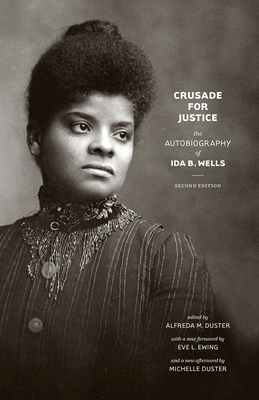
Crusade for Justice – The Autobiography of Ida B. Wells, Second Edition
KSh 4,050.00

Killers of the Flower Moon
KSh 2,000.00
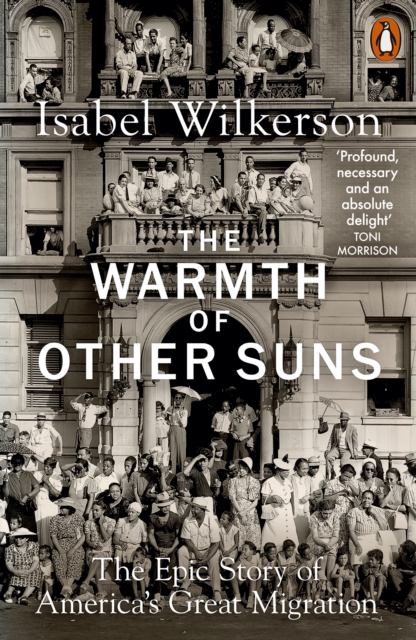
Warmth of Other Suns
KSh 3,050.00
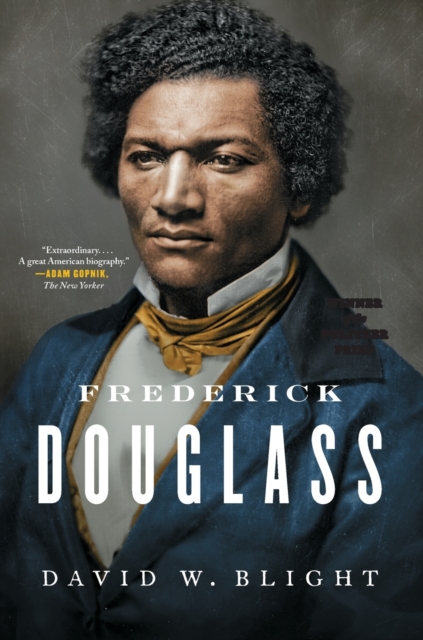
Frederick Douglass
KSh 3,350.00

107 Days
KSh 4,500.00

Second Treatise of Government – Norton Library
KSh 1,600.00

Tuesdays With Morrie
KSh 2,000.00
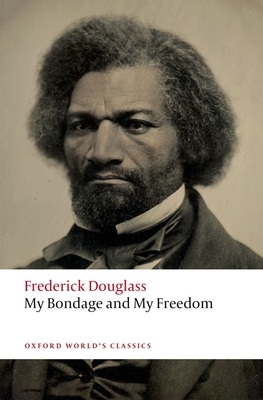
My Bondage and My Freedom
KSh 1,600.00

Hidden Figures
KSh 2,000.00
America, América
KSh 3,650.00

Holding the Line
KSh 2,000.00

Nuclear Folly
KSh 3,050.00
More by Christa Dierksheide, Nicholas Guyatt

The Hated Cage
KSh 2,150.00

Amelioration and Empire
KSh 7,550.00
Another American Century
KSh 4,500.00

Providence and the Invention of the United States, 1607-1876
KSh 5,450.00

Bind Us Apart
KSh 5,050.00

Beyond Jefferson – The Hemingses, the Randolphs, and the Making of Nineteenth–Century America
KSh 4,850.00

The Hated Cage
KSh 4,500.00

Have a Nice Doomsday
KSh 2,900.00
Providence and the Invention of the United States, 1607–1876
KSh 9,850.00
Bind Us Apart
KSh 5,950.00
