
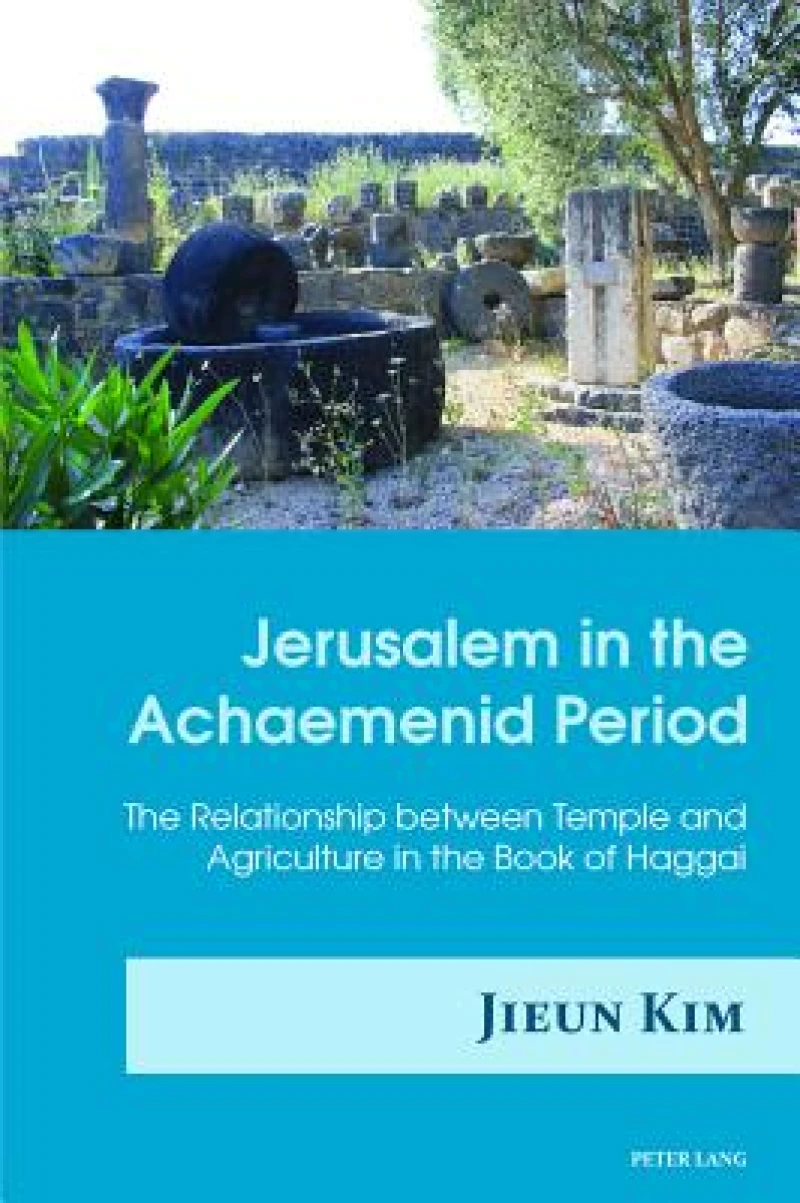
Jerusalem in the Achaemenid Period : The Relationship between Temple and Agriculture in the Book of Haggai
New
by
Jieun Kim
Book Details
Format
Paperback / Softback
ISBN-10
3034322100
ISBN-13
9783034322102
Edition
New
Publisher
Peter Lang AG, Internationaler Verlag der Wissenschaften
Imprint
Peter Lang AG, Internationaler Verlag der Wissensc
Country of Manufacture
CH
Country of Publication
GB
Publication Date
Apr 23rd, 2016
Print length
287 Pages
Weight
456 grams
Dimensions
15.20 x 22.50 x 1.70 cms
Product Classification:
HistoryArchaeologyReligion & beliefsEconomic theory & philosophy
Ksh 10,950.00
Manufactured on Demand
0 in stock
Delivery Location
Delivery fee: Select location
Secure
Quality
Fast
This is the first book to explore the importance of agriculture in relation to the restoration of the Jerusalem temple in the Book of Haggai during the Achaemenid period. It is intended to shed new light on the value of agriculture for the people of Judah and the whole imperial economy. It also presents a new interpretation of the Book of Haggai.
This is the first book to explore the importance of agriculture in relation to the restoration of the Jerusalem temple in the Book of Haggai during the Achaemenid period. Scholars discussing the rebuilding of the temple have mainly focused on the political and social context. Additionally, the missions of Ezra and Nehemiah have been used as a basis for analysing the economy of postexilic Judah. This has, however, understated the wider socio-economic significance of the temple by disregarding the agricultural capacity of Judah.
The Book of Haggai is primarily concerned with agriculture and the temple. This analysis of Haggai includes an examination of the temple’s reconstruction from a historical and economic point of view, with agriculture playing a central role. Archaeological records are examined and show that prized commodities such as olives and grapes were produced in and around Jerusalem in large quantities and exported all over the ancient Near East.
This book is intended to shed new light on the value of agriculture for the people of Judah and the whole imperial economy. It also presents a new interpretation of the Book of Haggai and a new perspective on the temple economy in Jerusalem.
The Book of Haggai is primarily concerned with agriculture and the temple. This analysis of Haggai includes an examination of the temple’s reconstruction from a historical and economic point of view, with agriculture playing a central role. Archaeological records are examined and show that prized commodities such as olives and grapes were produced in and around Jerusalem in large quantities and exported all over the ancient Near East.
This book is intended to shed new light on the value of agriculture for the people of Judah and the whole imperial economy. It also presents a new interpretation of the Book of Haggai and a new perspective on the temple economy in Jerusalem.
Get Jerusalem in the Achaemenid Period by at the best price and quality guaranteed only at Werezi Africa's largest book ecommerce store. The book was published by Peter Lang AG, Internationaler Verlag der Wissenschaften and it has pages.

