
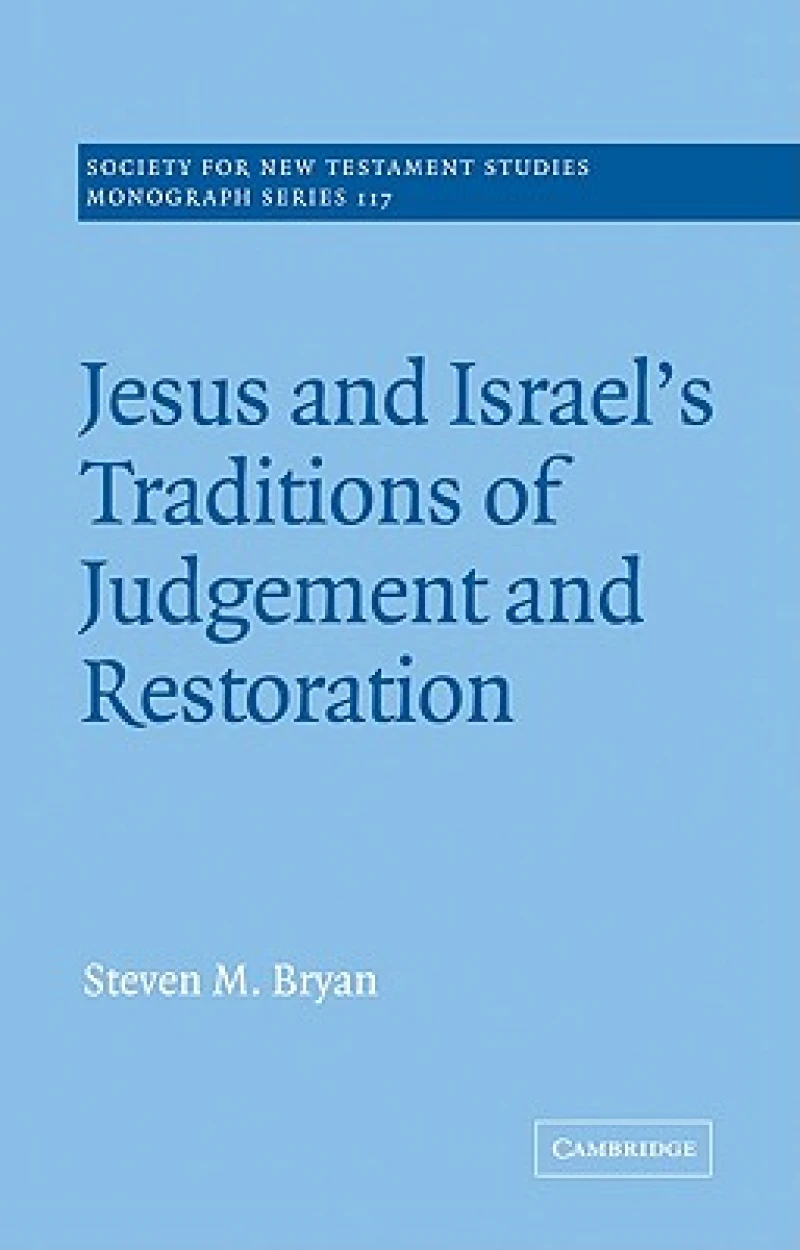
Jesus and Israel''s Traditions of Judgement and Restoration
Book Details
Format
Paperback / Softback
ISBN-10
0521010624
ISBN-13
9780521010627
Publisher
Cambridge University Press
Imprint
Cambridge University Press
Country of Manufacture
GB
Country of Publication
GB
Publication Date
Oct 6th, 2005
Print length
296 Pages
Weight
390 grams
Dimensions
21.50 x 13.80 x 1.80 cms
Product Classification:
NoneChristian theologyChristianityChristianity
Ksh 6,200.00
Manufactured on Demand
0 in stock
Delivery Location
Delivery fee: Select location
Secure
Quality
Fast
First published in 2002, Jesus and Israel's Traditions of Judgement and Restoration examines the eschatology of Jesus by evaluating his appropriation of sacred traditions related to Israel's restoration. It addresses the way in which Jesus' future expectations impinged upon his understanding of key features of Jewish society.
Jesus and Israel's Traditions of Judgement and Restoration examines the eschatology of Jesus by evaluating his appropriation of sacred traditions related to Israel's restoration. It addresses the way in which Jesus' future expectations impinged upon his understanding of key features of Jewish society. Scholars have long debated the degree to which Jesus' eschatology can be said to have been realized. This 2002 book considers Jesus' expectations regarding key constitutional features of the eschaton: the shape of the people of God, purity, Land and Temple. Bryan shows that Jesus' anticipation of coming national judgement led him to use Israel's sacred traditions in ways that differed significantly from their use by his contemporaries. This did not lead Jesus to the conviction that Israel's restoration had been delayed. Instead he employed Israel's traditions to support a different understanding of restoration and a belief that the time of restoration had arrived.
Get Jesus and Israel''s Traditions of Judgement and Restoration by at the best price and quality guaranteed only at Werezi Africa's largest book ecommerce store. The book was published by Cambridge University Press and it has pages.

