
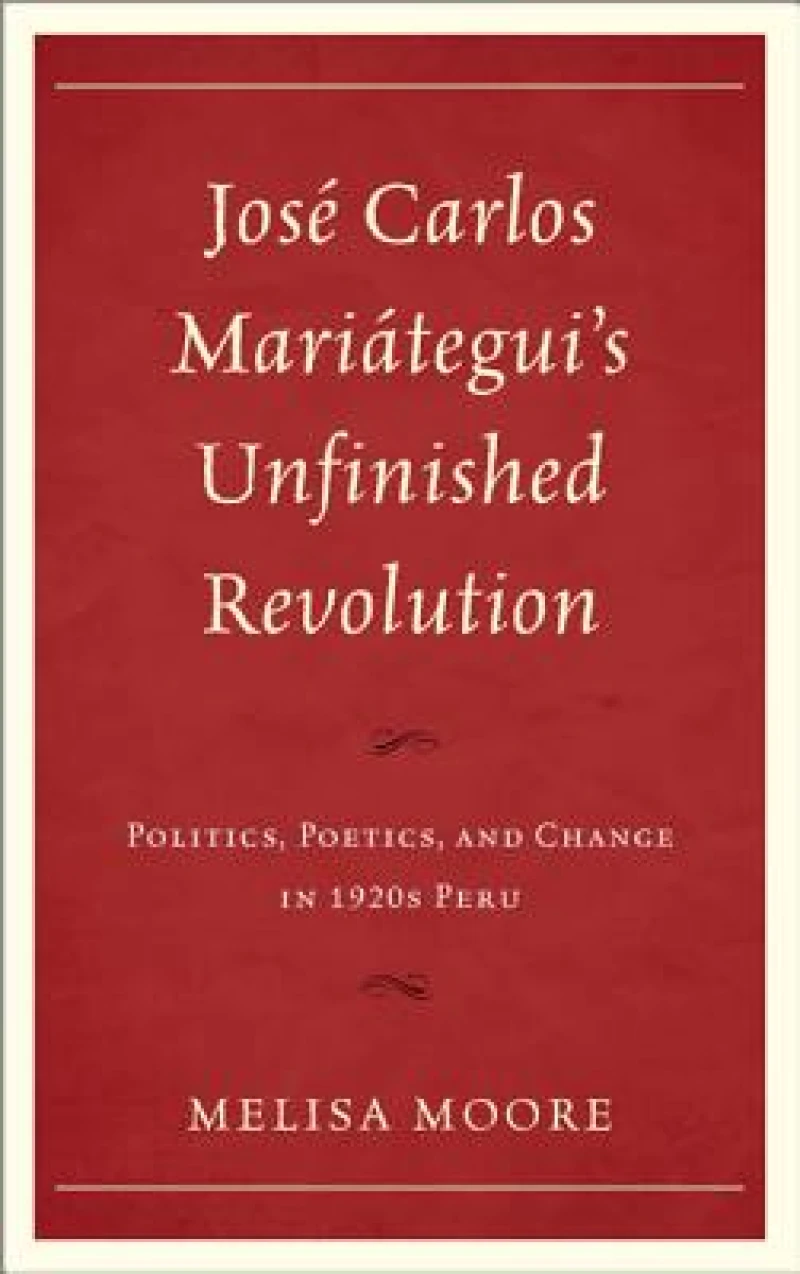
Jose Carlos Mariategui’s Unfinished Revolution : Politics, Poetics, and Change in 1920s Peru
by
Melisa Moore
Book Details
Format
Hardback or Cased Book
ISBN-10
1611484626
ISBN-13
9781611484625
Publisher
Bucknell University Press
Imprint
Bucknell University Press
Country of Manufacture
GB
Country of Publication
GB
Publication Date
Dec 18th, 2013
Print length
272 Pages
Weight
580 grams
Dimensions
15.90 x 23.50 x 2.40 cms
Product Classification:
History of the Americas20th century history: c 1900 to c 2000Political activism
Ksh 21,300.00
Manufactured on Demand
0 in stock
Delivery Location
Delivery fee: Select location
Secure
Quality
Fast
The years 1909–1930, the eleven-year presidency of the businessman-turned-politician Augusto B. Leguía, mark a formative period of Peruvian modernity, witnessing the continuity of a process of reconstruction and the development of an intellectual and cultural tradition after a humbling defeat during the War of the Pacific (1879–1883). But these years were also fraught with conflict generated by long-standing divisions and new rivalries. A postwar generation of intellectuals and artists, led by José Carlos Mariátegui and galvanized by left-wing thinking and an avant-garde aesthetic, sought representation in the fields of politics and the arts to realize the modernizing potentialities opened up by a Positivist oligarchy. New political and artistic conceptions raised their awareness of the fractured sense of nationhood in Peru and the need for a new project of nation-formation based on a common political and cultural consciousness. Crucially, this gave rise to divergent political and artistic positions and practices. Mariátegui’s Indigenist-Marxist politics and Modernist-inspired poetics, through his influential journal Amauta, were pivotal in revitalizing, conciliating and channeling those of his cohorts and challengers.Comprising six full-length chapters, a comprehensive introduction and conclusion, this monograph is ambitious in scope and depth. It provides fresh readings of key writings of Mariátegui, one of Latin America’s most important and revolutionary political, cultural and aesthetic theorists, through the lens of his poetics, emphasizing the value of this approach for a fuller understanding of his work’s political meaning and impact. It does so through detailed analysis of the poetic, expressive language employed in seminal political essays, aimed at forging a new Marxist position in 1920s Peru. Furthermore, it offers powerful and original critiques of under-studied intellectuals of this time, especially aprista-Futurists, Socialists and Indigenists, including female writers and artists such as Magda Portal, Ángela Ramos, and Julia Codesido whose work he championed. These readings are fully contextualized in terms of detailed critical study of complex sociopolitical conditions and positions, and biographical, intellectual backgrounds of Mariátegui and his contemporaries. This monograph underscores the fundamental importance of Mariátegui in the development of political and artistic practices and projects that shaped a national, shared, yet also heterogeneous, political culture and cultural tradition in Peru during and after his lifetime.
The years 1909–1930, the eleven-year presidency of the businessman-turned-politician Augusto B. Leguía, mark a formative period of Peruvian modernity, witnessing the continuity of a process of reconstruction and the development of an intellectual and cultural tradition after a humbling defeat during the War of the Pacific (1879–1883). But these years were also fraught with conflict generated by long-standing divisions and new rivalries. A postwar generation of intellectuals and artists, led by José Carlos Mariátegui and galvanized by left-wing thinking and an avant-garde aesthetic, sought representation in the fields of politics and the arts to realize the modernizing potentialities opened up by a Positivist oligarchy. New political and artistic conceptions raised their awareness of the fractured sense of nationhood in Peru and the need for a new project of nation-formation based on a common political and cultural consciousness. Crucially, this gave rise to divergent political and artistic positions and practices. Mariátegui’s Indigenist-Marxist politics and Modernist-inspired poetics, through his influential journal Amauta, were pivotal in revitalizing, conciliating and channeling those of his cohorts and challengers. Comprising six full-length chapters, a comprehensive introduction and conclusion, this monograph is ambitious in scope and depth. It provides fresh readings of key writings of Mariátegui, one of Latin America’s most important and revolutionary political, cultural and aesthetic theorists, through the lens of his poetics, emphasizing the value of this approach for a fuller understanding of his work’s political meaning and impact. It does so through detailed analysis of the poetic, expressive language employed in seminal political essays, aimed at forging a new Marxist position in 1920s Peru. Furthermore, it offers powerful and original critiques of under-studied intellectuals of this time, especially aprista-Futurists, Socialists and Indigenists, including female writers and artists such as Magda Portal, Ángela Ramos, and Julia Codesido whose work he championed. These readings are fully contextualized in terms of detailed critical study of complex sociopolitical conditions and positions, and biographical, intellectual backgrounds of Mariátegui and his contemporaries. This monograph underscores the fundamental importance of Mariátegui in the development of political and artistic practices and projects that shaped a national, shared, yet also heterogeneous, political culture and cultural tradition in Peru during and after his lifetime.
Get Jose Carlos Mariategui’s Unfinished Revolution by at the best price and quality guaranteed only at Werezi Africa's largest book ecommerce store. The book was published by Bucknell University Press and it has pages.

