
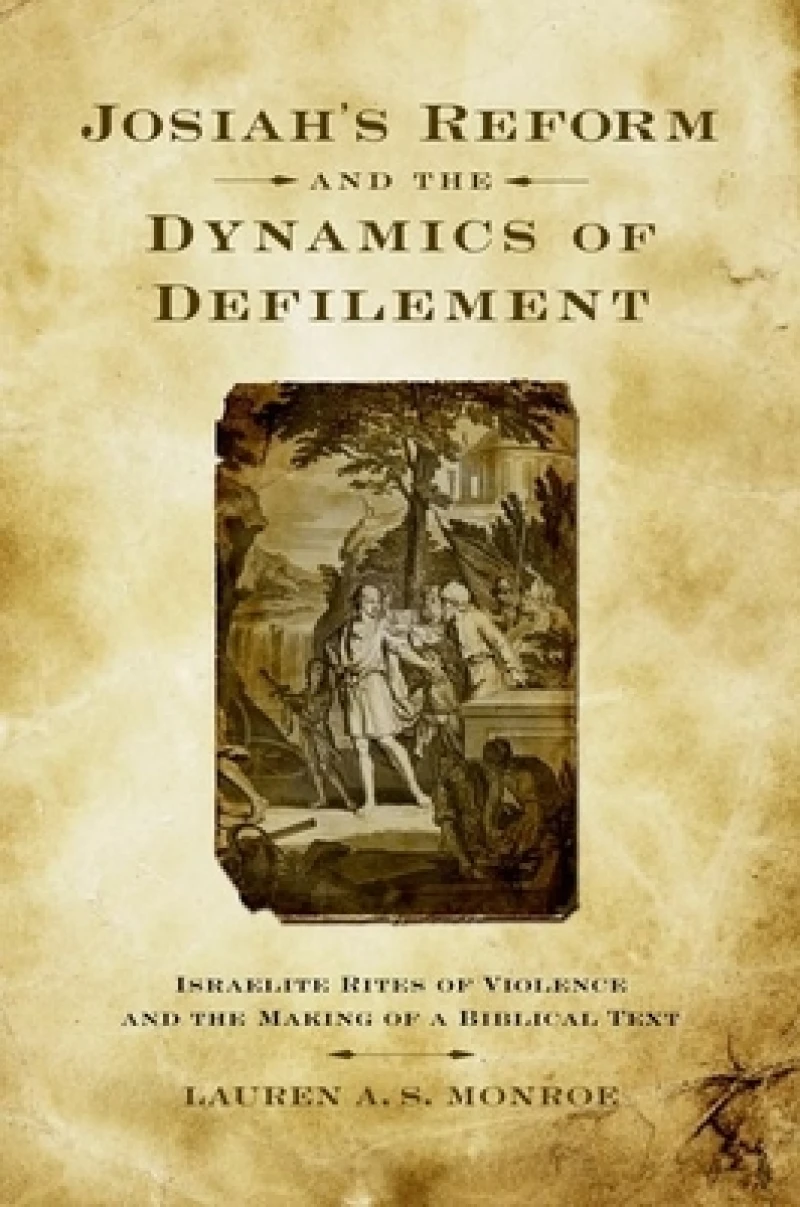
Josiah's Reform and the Dynamics of Defilement : Israelite Rites of Violence and the Making of a Biblical Text
Book Details
Format
Hardback or Cased Book
ISBN-10
0199774161
ISBN-13
9780199774166
Publisher
Oxford University Press Inc
Imprint
Oxford University Press Inc
Country of Manufacture
US
Country of Publication
GB
Publication Date
Oct 13th, 2011
Print length
216 Pages
Weight
465 grams
Dimensions
16.00 x 23.60 x 2.50 cms
Product Classification:
Ancient history: to c 500 CEHistory of religionBiblesJudaism: sacred texts
Ksh 10,200.00
Manufactured on Demand
0 in stock
Delivery Location
Delivery fee: Select location
Secure
Quality
Fast
Lauren Monroe argues that the use of cultic and ritual language in the account of the Judean King Josiah's reforms in 2 Kings 22-23 is key to understanding the history of the text's composition, and illuminates the essential, interrelated processes of textual growth and identity construction in ancient Israel.
Chapters 22 and 23 of 2 Kings tell the story of the religious reforms of the Judean King Josiah, who systematically destroyed the cult places and installations where his own people worshipped in order to purify Israelite religion and consolidate religious authority in the hands of the Jerusalem temple priests. This violent assertion of Israelite identity is portrayed as a pivotal moment in the development of monotheistic Judaism. Monroe argues that the use of cultic and ritual language in the account of the reform is key to understanding the history of the text''s composition, and illuminates the essential, interrelated processes of textual growth and identity construction in ancient Israel. Until now, however, none of the scholarship on 2 Kings 22-23 has explicitly addressed the ritual dimensions of the text. By attending to the specific acts of defilement attributed to Josiah as they resonate within the larger framework of Israelite ritual, Monroe''s work illuminates aspects of the text''s language and fundamental interests that have their closest parallels in the priestly legal corpus known as the Holiness Code (Leviticus 17-26), as well as in other priestly texts that describe methods of eliminating contamination. She argues that these priestly-holiness elements reflect an early literary substratum that was generated close in time to the reign of Josiah, from within the same priestly circles that produced the Holiness Code. The priestly composition was reshaped in the hands of a post-Josianic, exilic or post-exilic Deuteronomistic historian who transformed his source material to suit his own ideological interests. The account of Josiah''s reform is thus imprinted with the cultural and religious attitudes of two different sets of authors. Teasing these apart reveals a dialogue on sacred space, sanctified violence and the nature of Israelite religion that was formative in the development not only of 2 Kings 23, but of the historical books of the Bible more broadly.
Get Josiah's Reform and the Dynamics of Defilement by at the best price and quality guaranteed only at Werezi Africa's largest book ecommerce store. The book was published by Oxford University Press Inc and it has pages.

