
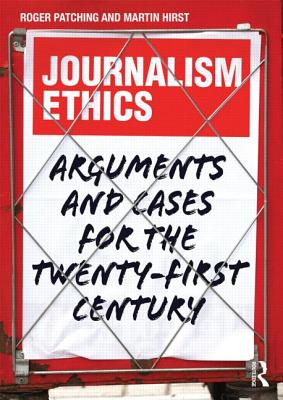
Journalism Ethics : Arguments and cases for the twenty-first century
Book Details
Delivery Location
Delivery fee: Select location
Developing a strong philosophical and theoretical framework and taking a consistent political economy approach throughout, this bestselling textbook introduces students to contemporary issues and cases in journalism ethics.
Whilst maintaining many Australian examples and building on the already popular structure and content, this new edition introduces a broader international range of examples and considers traditional and social media from a global perspective.
Ideas, examples and cases discussed include:
- WikiLeaks
- Digital technologies and ethico-legal dilemmas
- News of the World and phone hacking
- Using facebook as a source
- Defamatory tweets
- The Arab Spring
- The Japanese Tsunami and the Christchurch earthquake
- Using User Generated Content
- Freedom of Information laws
- Trial by media
- Tiger Woods
- Privacy vs. the public right to know
- Obama and race
- Fake news: is Jon Bon Jovi dead?
- Ethics and the use of footage of fatal incidents
After looking at the theory and practice of journalism ethics, the book concludes with a guide to on-the-job decision making.
Journalism Ethics: Arguments and Cases for the 21st Century explores the major ethical dilemmas facing journalists in the digital age.
Engaging with both the theory and practice of journalism ethics, this text explains the key ethical concepts and dilemmas in journalism and provides an international range of examples and case studies, considering traditional and social media from a global perspective.
Journalism Ethics offers an introductory philosophical underpinning to ethics that traces the history of the freedom of expression from the time of Greek philosophers like Aristotle, through the French and American revolutions, to modern day.
Throughout the book Patching and Hirst examine ethically-challenging issues such as deception, trial by media, dealing with sources and privacy intrusion. They also explore continuing ethical fault lines around accuracy, bias, fairness and objectivity, chequebook journalism, the problems of the foreign correspondent, the conflicts between ethics and the law and between journalists and public relations consultants.
Concluding with a step-by-step guide to ethical thinking on the job, this textbook is an invaluable resource for students of journalism, media and communication.
Get Journalism Ethics by Martin Hirst, Roger Patching at the best price and quality guaranteed only at Werezi Africa's largest book ecommerce store. The book was published by Taylor & Francis Ltd and it has 300 pages.
Customers Who Bought This Also Bought
Xmeditations
KSh 700.00
Groundwork for the Metaphysics of Morals
KSh 2,000.00
On the Genealogy of Morals
KSh 2,000.00
Beyond Good and Evil
KSh 2,000.00
The Nicomachean Ethics
KSh 1,600.00
The Sovereignty of Good
KSh 5,400.00
Justice
KSh 2,000.00
Meditations
KSh 1,600.00
What We Owe The Future
KSh 2,000.00
The Analects
KSh 2,350.00
How to Be a Leader – An Ancient Guide to Wise Leadership
KSh 2,800.00
There Are Places in the World Where Rules Are Less Important Than Kindness
KSh 3,600.00
More by Martin Hirst, Roger Patching

So You Want To Be A Journalist?
KSh 15,100.00

News 2.0
KSh 7,150.00

There''s No Good News
KSh 7,900.00
Journalism Ethics
KSh 30,950.00

There''s No Good News
KSh 30,950.00

News 2.0
KSh 30,950.00

Reporting in a Multimedia World
KSh 7,050.00
Journalism Ethics at the Crossroads
KSh 30,950.00
Navigating Social Journalism
KSh 37,800.00
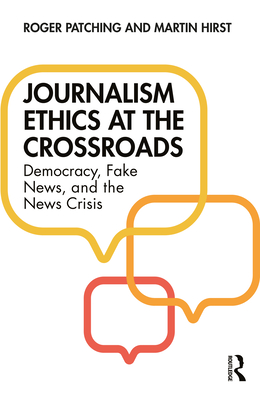
Journalism Ethics at the Crossroads
KSh 7,500.00

Navigating Social Journalism
KSh 9,350.00
