
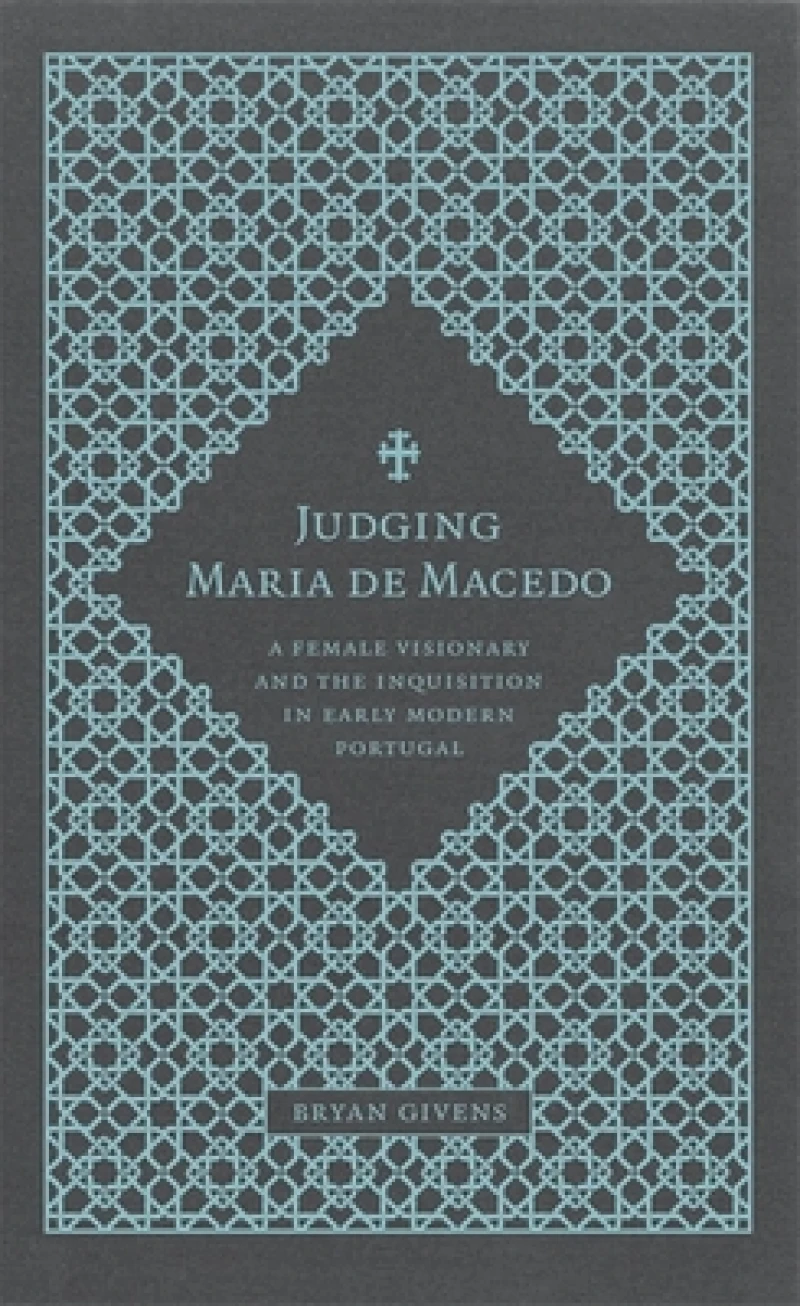
Judging Maria De Macedo : A Female Visionary and the Inquisition in Early Modern Portugal
by
Bryan Givens
Book Details
Format
Hardback or Cased Book
ISBN-10
0807137022
ISBN-13
9780807137024
Publisher
Louisiana State University Press
Imprint
Louisiana State University Press
Country of Manufacture
US
Country of Publication
GB
Publication Date
Jan 1st, 2011
Print length
272 Pages
Weight
499 grams
Dimensions
23.10 x 15.40 x 2.20 cms
Product Classification:
European historyEuropean history
Ksh 7,200.00
Temporarily out of stock, due soon
0 in stock
Delivery Location
Delivery fee: Select location
Secure
Quality
Fast
In Judging Maria de Macedo, Bryan Givens offers a microhistorical examination of Maria de Macedo's trial before the Inquisition in Lisbon in 1665-1666, providing an intriguing glimpse into Portuguese culture at the time.
On February 20, 1665, the Inquisition of Lisbon arrested Maria de Macedo, the wife of a midlevel official of the Portuguese Treasury, after she revealed during a deposition that, since she was ten years old, an enchanted Moor had frequently ""taken"" her to a magical castle in the legendary land of wonders known as the Hidden Isle. The island paradise was also the home of Sebastian, the former king of Portugal (1557--1578), who had died in battle in Morocco while on crusade in 1578. His body remained undiscovered, however, and many people in seventeenth-century Portugal -- including Maria -- eagerly awaited his return in glory. In Judging Maria de Macedo, Bryan Givens offers a microhistorical examination of Maria's trial before the Inquisition in Lisbon in 1665--1666, providing an intriguing glimpse into Portuguese culture at the time.
Maria's trial record includes a unique piece of evidence: a pamphlet she dictated to her husband fifteen years before her arrest. In the pamphlet, reproduced in its entirety in the book, Maria recounts in considerable detail her ""journeys"" to the Hidden Isle and her discussions with the people there, King Sebastian in particular. Not all of the components of Maria's vision were messianic in nature or even Christian in origin; her beliefs therefore represent a unique synthesis of disparate cultural elements in play in seventeenth-century Portugal.
Because the pamphlet antedates the Inquisition's involvement in Maria's case, it offers a rare example of a non-elite voice preserved without any mediation from an elite institution such as the Inquisition, as is the case with most early modern judicial records. In addition to analyzing Maria de Macedo's vision, Givens also uses the trial record to gain insight into the values, concerns, and motives of the Inquisitors in their judgment of her unusual case. He thus not only examines separately two important subcultures in early modern Portugal, but also analyzes how they interacted with each other.
Introducing a unique feminine voice from the early modern period, Judging Maria de Macedo opens a singular window onto seventeenth-century Portuguese culture.
Maria's trial record includes a unique piece of evidence: a pamphlet she dictated to her husband fifteen years before her arrest. In the pamphlet, reproduced in its entirety in the book, Maria recounts in considerable detail her ""journeys"" to the Hidden Isle and her discussions with the people there, King Sebastian in particular. Not all of the components of Maria's vision were messianic in nature or even Christian in origin; her beliefs therefore represent a unique synthesis of disparate cultural elements in play in seventeenth-century Portugal.
Because the pamphlet antedates the Inquisition's involvement in Maria's case, it offers a rare example of a non-elite voice preserved without any mediation from an elite institution such as the Inquisition, as is the case with most early modern judicial records. In addition to analyzing Maria de Macedo's vision, Givens also uses the trial record to gain insight into the values, concerns, and motives of the Inquisitors in their judgment of her unusual case. He thus not only examines separately two important subcultures in early modern Portugal, but also analyzes how they interacted with each other.
Introducing a unique feminine voice from the early modern period, Judging Maria de Macedo opens a singular window onto seventeenth-century Portuguese culture.
Get Judging Maria De Macedo by at the best price and quality guaranteed only at Werezi Africa's largest book ecommerce store. The book was published by Louisiana State University Press and it has pages.

