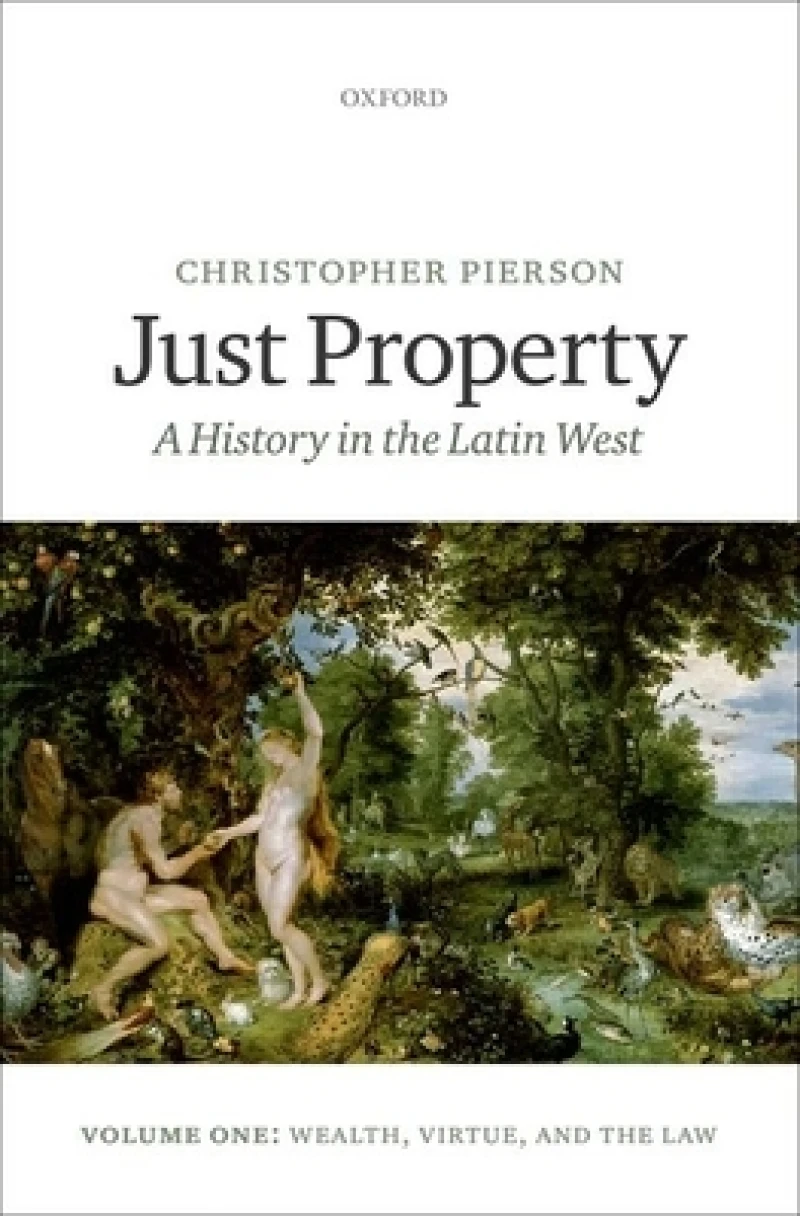
Just Property : A History in the Latin West. Volume One: Wealth, Virtue, and the Law
Book Details
Format
Hardback or Cased Book
ISBN-10
0199673284
ISBN-13
9780199673285
Publisher
Oxford University Press
Imprint
Oxford University Press
Country of Manufacture
GB
Country of Publication
GB
Publication Date
Aug 15th, 2013
Print length
302 Pages
Weight
600 grams
Dimensions
16.50 x 23.90 x 2.30 cms
Ksh 22,700.00
Werezi Extended Catalogue
0 in stock
Delivery Location
Delivery fee: Select location
Secure
Quality
Fast
Traces the complex lineages of thinking about private property from ancient to modern times. It challenges a number of deep-seated assumptions we make about the incontestability of private property by building a careful and extended account of where these assumptions came from.
We live in a world which is characterised by both a radical inequality in wealth and incomes and the accelerating depletion of scarce natural resources. One of the things that prevents us from addressing these problems, perhaps even prevents us from seeing them as problems, is our belief that individuals and corporations have claims to certain resources and income streams that are non-negotiable, even when these claims seem manifestly hostile to our collective long-term well-being. This book is an attempt to understand how, why and when we came to believe these things. This first volume traces ideas about private property and its justification in the Latin West, starting with the ancient Greeks. It follows several lines of thinking which run through the Roman and medieval worlds. It traces the profound impact of the rise of Christianity and the instantiation of both natural and Roman Law. It considers the complex interplay of religious and legal ideas as these developed through the Renaissance, the Reformation and the counter-Reformation leading on to the ideas associated with modern natural law. The first volume concludes with a close re-reading of Locke. We can find well-made arguments for private property throughout this history but these were not always the arguments which we now assume them to have been and they were almost always radically conditional, qualified by other considerations, above all, a sense of what the securing of the common good required. These arguments included an appeal to the natural law, to the dispensations of a just God, to utility, to securing economic growth and to maintaining the peace. They almost never included the claim that individuals have naturally- or God-given rights that trump the well-being, especially the basic well-being, of other individuals. In late modernity, we have lost sight of many of these arguments - to our collective loss.
Get Just Property by at the best price and quality guaranteed only at Werezi Africa's largest book ecommerce store. The book was published by Oxford University Press and it has pages.