
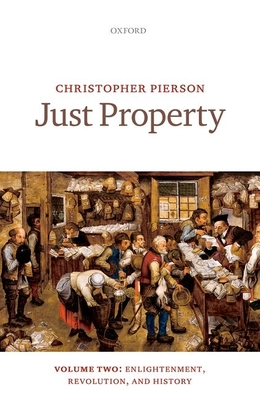
Just Property : Volume Two: Enlightenment, Revolution, and History
Book Details
Format
Hardback
ISBN-10
0199673292
ISBN-13
9780199673292
Publisher
Oxford University Press
Imprint
Oxford University Press
Country of Manufacture
GB
Country of Publication
GB
Publication Date
Sep 22nd, 2016
Print length
260 Pages
Weight
530 grams
Dimensions
16.30 x 24.20 x 2.40 cms
KSh 19,900.00
Temporarily out of stock, due soon
0 in stock
Delivery Location
Delivery fee: Select location
Secure
Quality
Fast
This volume traces the development of ideas about property in the Western world from the early eighteenth century, through the Enlightenment and the experience of the French Revolution to the critical stance of socialists and anarchists in the nineteenth century.
Property remains the bedrock of the societies we all inhabit. It underpins our core institutions - including families, states and economies - and it is the medium through which the intensifying politics of inequality is played out. There is plenty of evidence that its importance is increasing in a world of growing wealth inequality and depletion of natural resources. Volume Two of Just Property traces the development of ideas about property in the Western world from the early eighteenth century, through the Enlightenment and the experience of the French Revolution, to the critical stance of socialists and anarchists in the nineteenth century. It ranges across the thought of Bernard Mandeville, David Hume, Adam Smith, Voltaire, Rousseau, Kant, Hegel, the Abbe de Sieyes, Burke, Wollstonecraft, Charles Fourier, Karl Marx, Proudhon and Peter Kropotkin. Many themes persist from an earlier period, as does the influence of Christianity and the Roman Law but there are also many innovations. In general, the authority of God and the natural law recedes and the themes of utility and securing general welfare became more prominent. In the wake of Locke, labour, though sometimes in the form of ''past labour'', that is capital, attains a new prominence. For its admirers, a newly-unfettered private property is the means of securing personal freedom, constraining authoritarian governments, promoting the arts and sciences, and delivering an unprecedented improvement in the material condition of the whole population. For its critics, private property is the central component in a new political economy of systemic and unlimited class exploitation. It penetrates everywhere and corrupts everything that it touches.With these arguments, we are clearly on the terrain of modernity, witnessing a set of arguments and counter-arguments with which we all still struggle.
Get Just Property by Christopher Pierson at the best price and quality guaranteed only at Werezi Africa's largest book ecommerce store. The book was published by Oxford University Press and it has 260 pages.
Customers Who Bought This Also Bought

End of History and the Last Man
KSh 2,700.00

12 Rules for Life
KSh 2,350.00
The 48 Laws of Power
KSh 4,700.00

Second Treatise of Government – Norton Library
KSh 1,600.00
Discipline and Punish
KSh 2,350.00
The Prince The Original Classic
KSh 2,150.00
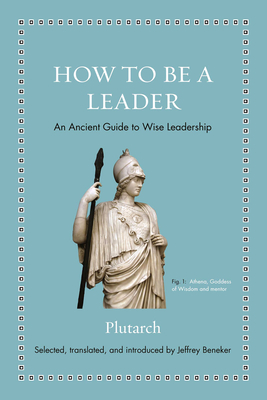
How to Be a Leader – An Ancient Guide to Wise Leadership
KSh 2,800.00

The Origin of Others
KSh 3,600.00
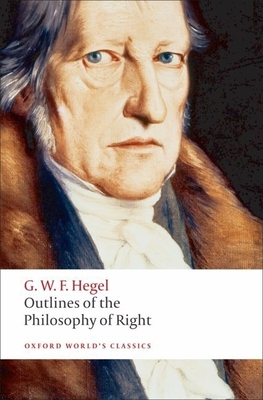
Outlines of the Philosophy of Right
KSh 2,500.00
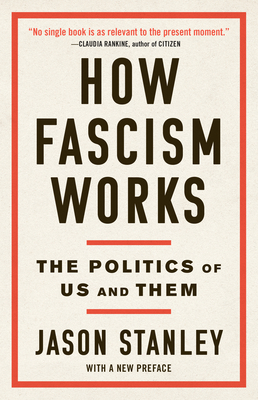
How Fascism Works
KSh 2,900.00
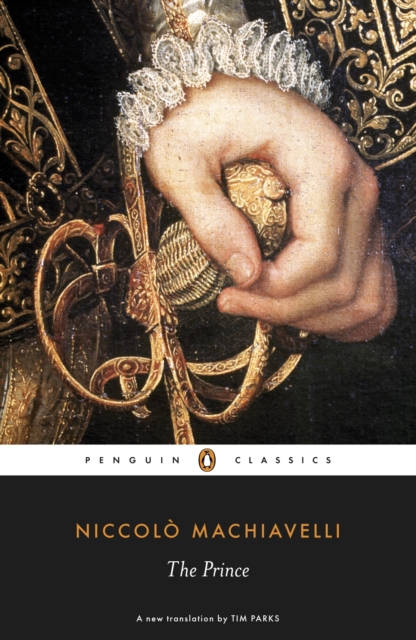
The Prince
KSh 1,800.00

Who''s Afraid of Gender?
KSh 2,350.00
More by Christopher Pierson
Beyond the Welfare State? – The New Political Economy of Welfare 3e
KSh 3,600.00
Conversations with Anthony Giddens
KSh 3,250.00

Socialism After Communism – The New Market Socialism
KSh 3,550.00
The Modern State
KSh 10,100.00
The Modern State
KSh 33,850.00

Beyond the Welfare State? – The New Political Economy of Welfare 3e
KSh 9,900.00
Hard Choices – Social Democracy in the Twenty–First Century
KSh 10,800.00
Just Property
KSh 19,600.00
The Next Welfare State? – UK Welfare after COVID–1 9
KSh 3,950.00
Just Property
KSh 22,700.00
