
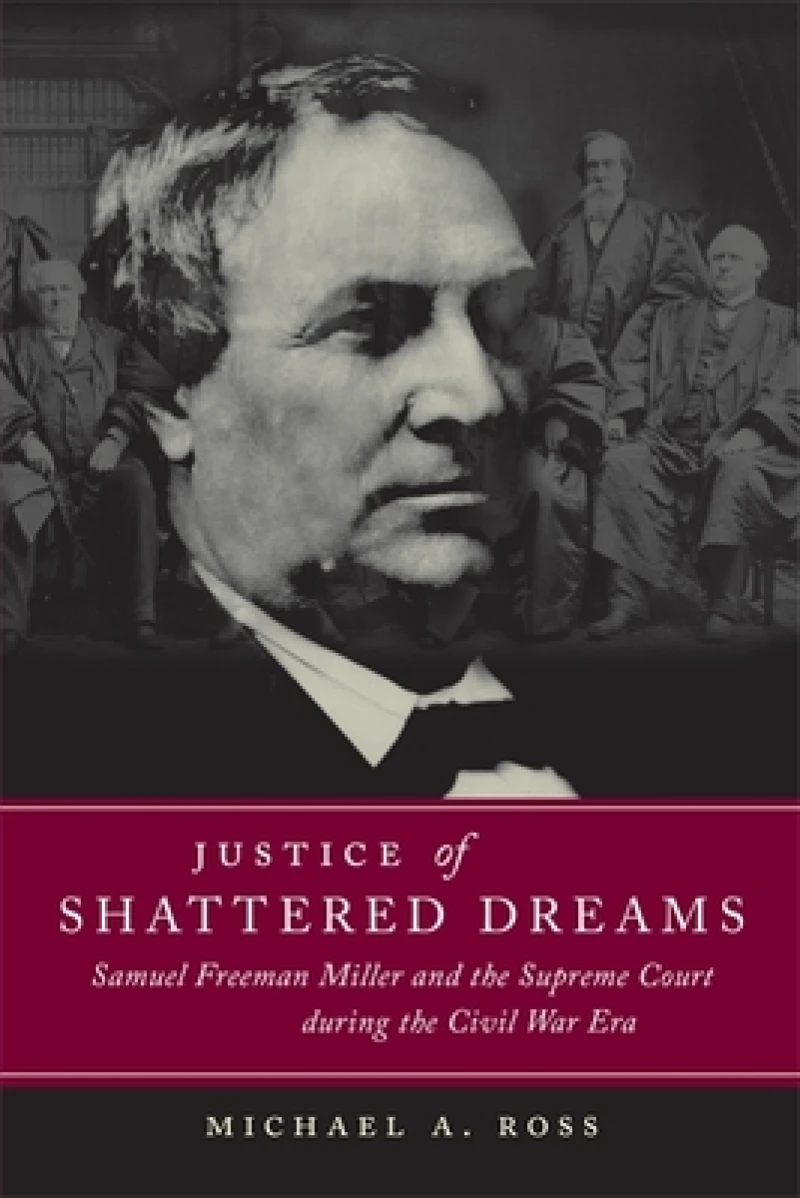
Justice of Shattered Dreams : Samuel Freeman Miller and the Supreme Court During the Civil War Era
Book Details
Format
Paperback / Softback
ISBN-10
0807129240
ISBN-13
9780807129241
Publisher
Louisiana State University Press
Imprint
Louisiana State University Press
Country of Manufacture
US
Country of Publication
GB
Publication Date
Sep 1st, 2003
Print length
350 Pages
Weight
333 grams
Dimensions
23.30 x 14.90 x 2.50 cms
Product Classification:
Biography: historical, political & militaryBiography: historical, political and militaryHistory of the AmericasModern history to 20th century: c 1700 to c 1900American Civil WarLaws of Specific jurisdictionsLaws of specific jurisdictions and specific areas of lawHistoryHistory of the AmericasCivil wars
Ksh 6,300.00
Werezi Extended Catalogue
0 in stock
Delivery Location
Delivery fee: Select location
Secure
Quality
Fast
Appointed by Abraham Lincoln to the US Supreme Court during the Civil War, Samuel Freeman Miller served on the highest tribunal for twenty-eight tumultuous years. Michael Ross creates a colourful portrait of a passionate man grappling with the difficult legal issues arising from a time of wrenching social and political change.
Appointed by Abraham Lincoln to the U.S. Supreme Court during the Civil War, Samuel Freeman Miller (1816-1890) served on the nation's highest tribunal for twenty-eight tumultuous years and holds a place in legal history as one of the Court's most influential justices. Michael A. Ross creates a colourful portrait of a passionate man grappling with the difficult legal issues arising from a time of wrenching social and political change. He also explores the impact President Lincoln's Supreme Court appointments made on American constitutional history.
Best known for his opinions in cases dealing with race and the Fourteenth Amendment, particularly the 1873 Slaughter-House Cases, Miller has often been considered a misguided opponent of Reconstruction and racial equality. In this major reinterpretation, Ross argues that historians have failed to study the evolution of Miller's views during the war and explains how Miller, a former slaveholder, became a champion of African Americans' economic and political rights. He was also the staunchest supporter of the Court of Lincoln's controversial war measures, including the decision to suspend such civil liberties as habeas corpus.
Although commonly portrayed as an agrarian folk hero, Miller in fact initially foresaw and embraced a future in which frontier and rivertown settlements would bloom into thriving metropolises. The optimistic vision grew from the free-labor ideology Miller brought to the Iowa Republican Party he helped found, one that celebrated ordinatry citizens' right to rise in station an driches. Disillusioned by the eventual failure of the boomtowns and repelled by the swelling coffers of eastern financiers, corporations, and robber barons, Miller became an insistent judicial voice for western Republicans embittered and marginalized in the Gilded Age.
The first biography of Miller since 1939, this welcome volume draws on Miller's previously unavailable papers to shed new light on a man who saw his dreams for America shattered but whose essential political and social values, as well as his personal integrity, remained intact.
Best known for his opinions in cases dealing with race and the Fourteenth Amendment, particularly the 1873 Slaughter-House Cases, Miller has often been considered a misguided opponent of Reconstruction and racial equality. In this major reinterpretation, Ross argues that historians have failed to study the evolution of Miller's views during the war and explains how Miller, a former slaveholder, became a champion of African Americans' economic and political rights. He was also the staunchest supporter of the Court of Lincoln's controversial war measures, including the decision to suspend such civil liberties as habeas corpus.
Although commonly portrayed as an agrarian folk hero, Miller in fact initially foresaw and embraced a future in which frontier and rivertown settlements would bloom into thriving metropolises. The optimistic vision grew from the free-labor ideology Miller brought to the Iowa Republican Party he helped found, one that celebrated ordinatry citizens' right to rise in station an driches. Disillusioned by the eventual failure of the boomtowns and repelled by the swelling coffers of eastern financiers, corporations, and robber barons, Miller became an insistent judicial voice for western Republicans embittered and marginalized in the Gilded Age.
The first biography of Miller since 1939, this welcome volume draws on Miller's previously unavailable papers to shed new light on a man who saw his dreams for America shattered but whose essential political and social values, as well as his personal integrity, remained intact.
Get Justice of Shattered Dreams by at the best price and quality guaranteed only at Werezi Africa's largest book ecommerce store. The book was published by Louisiana State University Press and it has pages.

