
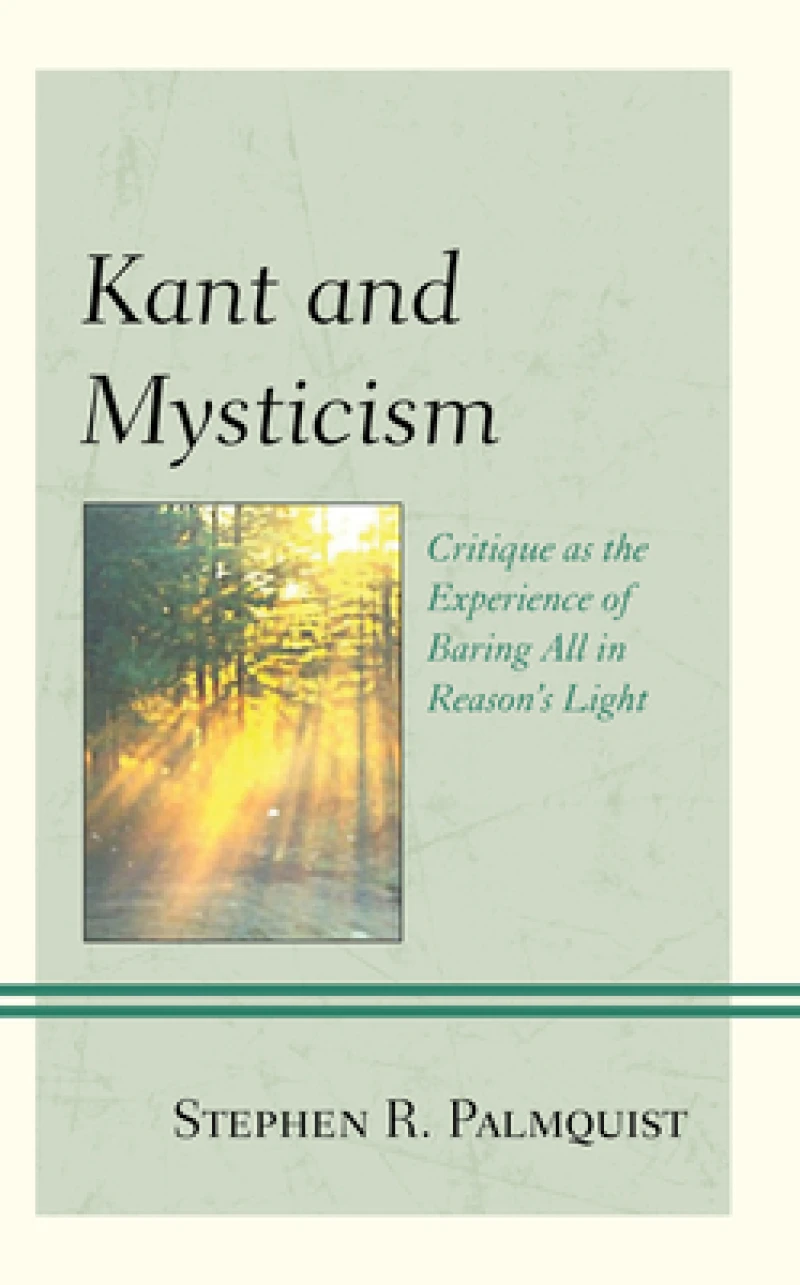
Kant and Mysticism : Critique as the Experience of Baring All in Reason's Light
Book Details
Format
Paperback / Softback
Book Series
Contemporary Studies in Idealism
ISBN-10
1793604665
ISBN-13
9781793604668
Publisher
Bloomsbury Publishing Plc
Imprint
Lexington Books
Country of Manufacture
GB
Country of Publication
GB
Publication Date
Mar 8th, 2022
Print length
192 Pages
Weight
288 grams
Dimensions
15.20 x 22.70 x 1.60 cms
Product Classification:
PhilosophyWestern philosophy: c 1600 to c 1900Mysticism
Ksh 7,150.00
Manufactured on Demand
0 in stock
Delivery Location
Delivery fee: Select location
Secure
Quality
Fast
Kant and Mysticism interprets Kant’s early criticism of Swedenborg’s mysticism as the fountainhead of the Critical philosophy. Kantian Critique revolutionizes not only traditional metaphysics, but also our understanding of mysticism: Critical mysticism is a unitive experience that impels us to lay bare all human pretensions to reason’s light.
What is happening when someone has a mystical experience, such as “feeling at one with the universe” or “hearing God’s voice?” Does philosophy provide tools for assessing such claims? Which claims can be dismissed as delusions and which ones convey genuine truths that might be universally meaningful? Valuable insights into such pressing questions can be found in the writings of Immanuel Kant, though few philosophical commentators have appreciated the implications beyond his famous “Copernican hypothesis.” In Kant and Mysticism, Stephen R. Palmquist corrects this skewed view of Kant once and for all.
Beginning with a detailed analysis of Kant’s 1766 work Dreams of a Spirit-Seer, Palmquist demonstrates that in Dreams Kant first discovers and explains his plan to write a new, “critical” philosophy that will revolutionize metaphysics by laying bare the limits of human reason. Palmquist shows how the same metaphorical relationship—between reason’s dreams (metaphysics) and sensibility’s dreams (mysticism)—permeates Kant’s mature writings. Clarifying how Kant’s final (unfinished) book, Opus Postumum, completes this dual project, Palmquist explains how the “critical mysticism” entailed by Kant’s position has profound implications for contemporary understandings of religious and mystical experience, both by religious individuals and by philosophers seeking to understand such experiences.
Beginning with a detailed analysis of Kant’s 1766 work Dreams of a Spirit-Seer, Palmquist demonstrates that in Dreams Kant first discovers and explains his plan to write a new, “critical” philosophy that will revolutionize metaphysics by laying bare the limits of human reason. Palmquist shows how the same metaphorical relationship—between reason’s dreams (metaphysics) and sensibility’s dreams (mysticism)—permeates Kant’s mature writings. Clarifying how Kant’s final (unfinished) book, Opus Postumum, completes this dual project, Palmquist explains how the “critical mysticism” entailed by Kant’s position has profound implications for contemporary understandings of religious and mystical experience, both by religious individuals and by philosophers seeking to understand such experiences.
Get Kant and Mysticism by at the best price and quality guaranteed only at Werezi Africa's largest book ecommerce store. The book was published by Bloomsbury Publishing Plc and it has pages.

