

Kant and Technics : From the Critique of Pure Reason to the Opus Postumum
Book Details
Delivery Location
Delivery fee: Select location
Martin Heidegger, Gilbert Simondon, and Bernard Stiegler each argued in their own way that, ever since its inception in ancient Greece, western philosophy is incapable of thinking technics, which reaches its clearest expression in the philosophy of Immanuel Kant. According to Heidegger, Kant articulated the essence of modern technics as enframing (Gestell) without understanding the nature of his own insight, while Simondon claimed that transcendental philosophy is structurally incapable of thinking technics as its answer to the question of technics either comes too early (a priori) or too later (a posteriori). Stiegler synthesized both positions in his claim that Kant was incapable of acknowledging the technical constitution of his own consciousness. All three thinkers thus argue, in one way or another, that Kant was essentially incapable of seeing, understanding, let alone thinking, technics.
The intention of this book is two-fold. On the one hand, it argues that, despite Heidegger, Simondon, and Stiegler’s inability of recognizing it, there is an explicit concept of technics at work in Kant’s philosophy. This technics is however not a technics that was overlooked by Heidegger, Simondon, and Stiegler. Instead, this book shows that, from the Critique of Pure Reason (1780) until the posthumously published Opus Postumum (1796-1803), transcendental philosophy is at once constituted against, while at the same time relying upon, and proceeding from technics. On the other hand, this book engages with the broader relation between philosophy and technics. If there is indeed such a thing as a Kantian thought on technics, then Kant can no longer be considered philosophy’s most prominent ‘techno-oblivious’ thinker. The question about the relation between Kant and technics is thus nothing less than a question about the relation between philosophy and technics as a whole.
Get Kant and Technics by Franziska Aigner at the best price and quality guaranteed only at Werezi Africa's largest book ecommerce store. The book was published by Bloomsbury Publishing PLC and it has 280 pages.
Customers Who Bought This Also Bought

End of History and the Last Man
KSh 2,700.00

12 Rules for Life
KSh 2,350.00

The 48 Laws of Power
KSh 4,700.00

Second Treatise of Government – Norton Library
KSh 1,600.00
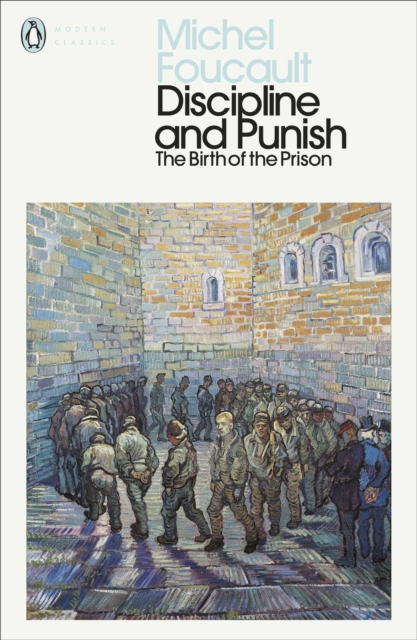
Discipline and Punish
KSh 2,350.00

The Prince The Original Classic
KSh 2,150.00
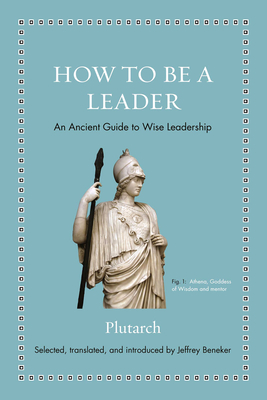
How to Be a Leader – An Ancient Guide to Wise Leadership
KSh 2,800.00

The Origin of Others
KSh 3,600.00

Outlines of the Philosophy of Right
KSh 2,500.00

How Fascism Works
KSh 2,900.00

The Prince
KSh 1,800.00

Who''s Afraid of Gender?
KSh 2,350.00

