
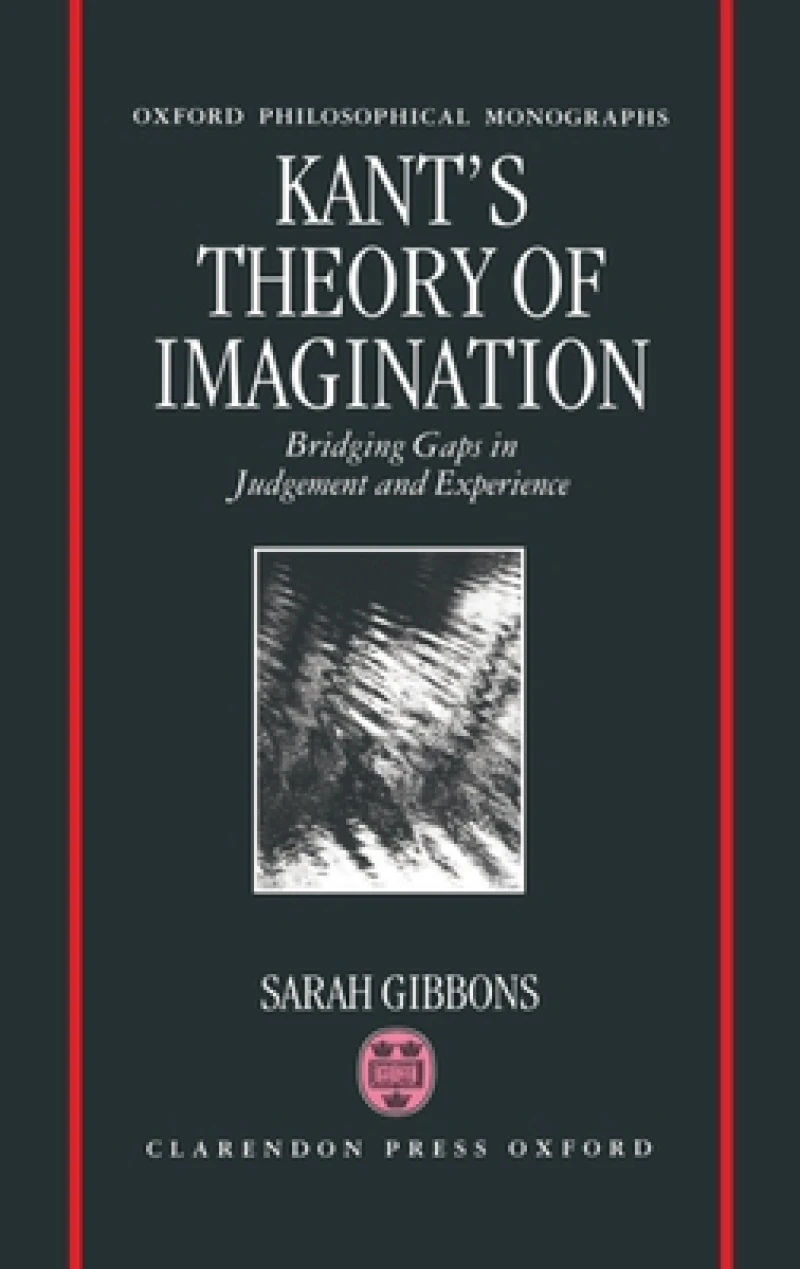
Kant's Theory of Imagination : Bridging Gaps in Judgement and Experience
Book Details
Format
Hardback or Cased Book
Book Series
Oxford Philosophical Monographs
ISBN-10
0198240414
ISBN-13
9780198240419
Publisher
Oxford University Press
Imprint
Clarendon Press
Country of Manufacture
GB
Country of Publication
GB
Publication Date
Oct 27th, 1994
Print length
216 Pages
Weight
448 grams
Dimensions
22.10 x 15.40 x 2.70 cms
Product Classification:
History of Western philosophyPhilosophy of mind
Ksh 29,150.00
Manufactured on Demand
0 in stock
Delivery Location
Delivery fee: Select location
Secure
Quality
Fast
Sarah Gibbons here departs from previous scholarship on Kant by demonstrating the centrality of imagination to Kant's philosophy as a whole. She shows that imagination performs a vital function in `bridging gaps' between the different elements of cognition and experience. Thus, the role imagination plays in Kant's works expresses his fundamental insight into the complexity of human cognition.
This book departs from much of the scholarship on Kant by demonstrating the centrality of imagination to Kant''s philosophy as a whole. In Kant''s works, human experience is simultaneously passive and active, thought and sensed, free and unfree: these dualisms are ofen thought of as unfortunate byproducts of his system. Gibbons, however, shows that imagination performs a vital function in ''bridging gaps'' between the different elements of cognition and experience. Thus, the role imagination plays in Kant''s works expresses his fundamental insight into the complexity of cognition for finite rational beings such as ourselves.Gibbons begins with an interpretation of synthesis which shows it to be a broader activity than most accounts suggest. Examining the first Critique, she presents a reading of the Transcendental Deduction and the chapter on Schematism that spells out the extraconceptual activities of imagination essential to cognition. This account of imagination is built upon in the Critique of Judgment, where Kant elaborates its role in characterizing the subjective conditions of judgement.Throughout, the cooperation of imagination and reason is highlighted; Gibbons shows that on Kant''s account, human beings pursue reason''s ideal ends through the provisional and continuing attempt to articulate them. This attempt involves an appeal to a shared social and historical imagination - thus, a full characterization of the subjective conditions of judgement must include the role of imagination.
Get Kant's Theory of Imagination by at the best price and quality guaranteed only at Werezi Africa's largest book ecommerce store. The book was published by Oxford University Press and it has pages.

