
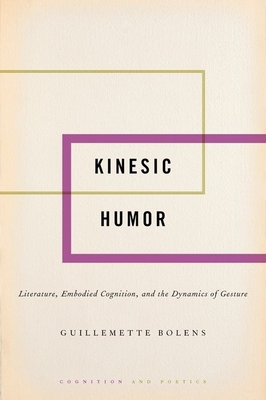
Kinesic Humor : Literature, Embodied Cognition, and the Dynamics of Gesture
Book Details
Format
Hardback
Book Series
Cognition and Poetics
ISBN-10
0190930063
ISBN-13
9780190930066
Publisher
Oxford University Press Inc
Imprint
Oxford University Press Inc
Country of Manufacture
US
Country of Publication
GB
Publication Date
Sep 24th, 2021
Print length
216 Pages
Weight
466 grams
Dimensions
16.40 x 33.10 x 2.30 cms
Product Classification:
Literature: history & criticism
KSh 17,250.00
Currently unavailable
0 in stock
Delivery Location
Delivery fee: Select location
Secure
Quality
Fast
Literature is one of the richest sources of information concerning the ways in which human beings play with cognition. Human cognition is grounded in the ability to feel, perceive, and move. Kinesic Humor examines literary works written in different languages and various historical periods, in which the cognitive processing of gestures and kinesic interactions trigger humorous effects. By bringing together literary studies, cognitive studies, gesture studies, and humor studies, this book offers an original perspective on literary artworks such as Chrétien de Troyes'' Yvain, Milton''s Paradise Lost, Cervantes'' Don Quixote, Rousseau''s Confessions, Sterne''s Tristram Shandy, and Stendhal''s Le Rouge et le Noir.
This is an open access title available under the terms of a CC BY-NC-ND 4.0 International license. It is free to read at Oxford Scholarship Online and offered as a free PDF download from OUP and selected open access locations. The triggers of laughter in spoken language or conversation can often be very simple, such as a change in gesture, or in vocal tone or tempo. Speakers and listeners understand these dynamics of gesture through motor cognition and use them to great effect. The causes of laughter and the experience of humor in written texts, however, are less well understood. In Kinesic Humor, Guillemette Bolens offers a cognitive poetics-based study of triggers of laughter in texts, focusing in particular on tonic shifts and gesture in plot and narrative. Bolens shows how literary texts from a variety of periods provide remarkably precise information concerning kinesthesia, the role of tonicity in communication, and the impact of momentum, timing, and tempo on the way in which gestures are processed in human exchanges. She investigates the narrative use of such parameters and how they prompt laughter in a wide-ranging corpus of major authors that includes Chrétien de Troyes, Cervantes, Milton, Saint-Simon, Rousseau, Sterne, and Stendhal. Using the theory of embodied cognition, Bolens shows how thwarted perceptions and expectations of movements and sensations produce the cognitive shifts typical of humor. Bringing together narratology, cognitive studies, gesture studies, humor studies, and historical context, this book offers original perspectives on important artworks and represents a major contribution to cognitive poetics. Originally published in French as L''Humour et le savoir des corps in 2016, this volume not only brings the work to an English-speaking audience for the first time but expands significantly on the original by analyzing a new corpus of texts and engaging with recent advances in the field to develop a cutting-edge theory of kinesic humor.
Get Kinesic Humor by Guillemette Bolens at the best price and quality guaranteed only at Werezi Africa's largest book ecommerce store. The book was published by Oxford University Press Inc and it has 216 pages.
Customers Who Bought This Also Bought

On Freedom
KSh 2,350.00

The Origin of Others
KSh 3,600.00
There Are Places in the World Where Rules Are Less Important Than Kindness
KSh 3,600.00

Amazing Peace
KSh 3,050.00
Lewis Carroll and "Alice" on Stage
KSh 9,350.00
There Are Places in the World Where Rules Are Less Important Than Kindness
KSh 2,350.00

Swim in a Pond in the Rain
KSh 2,000.00

The Obscene Bird of Night – unabridged, centennial edition
KSh 3,050.00

I''m Not Here to Give a Speech
KSh 1,800.00

This Craft of Verse
KSh 3,600.00

On Great Writing (On the Sublime)
KSh 2,000.00
The Naked Eye
KSh 2,350.00
More by Guillemette Bolens
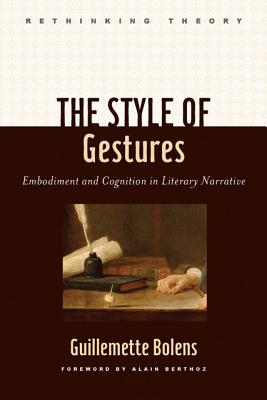
More in This Genre
On Freedom
KSh 2,350.00
The Origin of Others
KSh 3,600.00
There Are Places in the World Where Rules Are Less Important Than Kindness
KSh 3,600.00
Amazing Peace
KSh 3,050.00
Lewis Carroll and "Alice" on Stage
KSh 9,350.00
There Are Places in the World Where Rules Are Less Important Than Kindness
KSh 2,350.00
