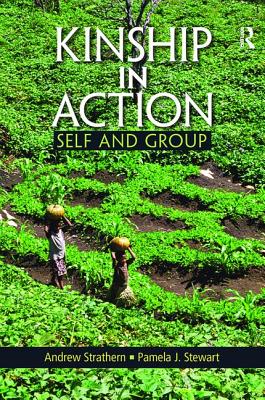
Kinship in Action : Self and Group
Book Details
Format
Paperback / softback
ISBN-10
0131844849
ISBN-13
9780131844841
Publisher
Taylor & Francis Inc
Imprint
Routledge
Country of Manufacture
US
Country of Publication
GB
Publication Date
Jun 30th, 2010
Print length
224 Pages
Weight
316 grams
Dimensions
15.20 x 22.80 x 1.50 cms
Product Classification:
Social & cultural anthropology, ethnographySocial and cultural anthropology
KSh 9,350.00
Currently unavailable
0 in stock
Delivery Location
Delivery fee: Select location
Secure
Quality
Fast
For courses in Social Organization, Kinship, and Cultural Ecology.
Kinship has made a come-back in Anthropology. Not only is there a line of noted, general, introductory works and readers in the topic, but theoretical discussions have been stimulated both by technological changes in mechanisms of reproduction and by reconsiderations of how to define kinship in the most productive ways for cross-cultural comparisons.
In addition, kinship studies have moved away from the minutiae of kin terminological systems and the "kinship algebra" often associated with these, to the broader analysis of processes, historical changes and fundamental cultural meanings in which kin relationships are implicated. In this changed, and changing context both Andrew Strathern and Pamela J. Stewart -- both of the University of Pittsburgh -- bring together a number of interests and concerns, in order to provide pointers for students, as well as scholars, in this field of study.
Taking an explicitly processual approach, the authors examine definitions of terms such as kinship itself, approach the topic in a way that is invariably ethnographic, and deploy materials from field areas where they themselves have worked.
Kinship has made a come-back in Anthropology. Not only is there a line of noted, general, introductory works and readers in the topic, but theoretical discussions have been stimulated both by technological changes in mechanisms of reproduction and by reconsiderations of how to define kinship in the most productive ways for cross-cultural comparisons.
In addition, kinship studies have moved away from the minutiae of kin terminological systems and the "kinship algebra" often associated with these, to the broader analysis of processes, historical changes and fundamental cultural meanings in which kin relationships are implicated. In this changed, and changing context both Andrew Strathern and Pamela J. Stewart -- both of the University of Pittsburgh -- bring together a number of interests and concerns, in order to provide pointers for students, as well as scholars, in this field of study.
Taking an explicitly processual approach, the authors examine definitions of terms such as kinship itself, approach the topic in a way that is invariably ethnographic, and deploy materials from field areas where they themselves have worked.
Get Kinship in Action by Pamela J Stewart, USAUniversity of Pittsburgh at the best price and quality guaranteed only at Werezi Africa's largest book ecommerce store. The book was published by Taylor & Francis Inc and it has 224 pages.
Customers Who Bought This Also Bought

Nexus
KSh 2,350.00

World According to Colour
KSh 2,700.00

Sapiens
KSh 2,350.00

Guns, Germs and Steel
KSh 2,400.00

Shifting Sands
KSh 4,500.00

21 Lessons for the 21st Century
KSh 2,350.00

Profits, Prophets, Coaches and Kings
KSh 4,500.00

Africa Is Not A Country
KSh 2,350.00
Myth and Meaning
KSh 2,150.00

Three Women
KSh 2,000.00

Half of It
KSh 2,000.00

Death and Life of Great American Cities
KSh 3,600.00