Book Details
Format
Paperback / softback
ISBN-10
3030718751
ISBN-13
9783030718756
Edition
2021 ed.
Publisher
Springer Nature Switzerland AG
Imprint
Springer Nature Switzerland AG
Country of Manufacture
GB
Country of Publication
GB
Publication Date
Jul 3rd, 2022
Print length
256 Pages
Weight
424 grams
Dimensions
15.50 x 23.30 x 1.80 cms
Product Classification:
Artificial intelligence
KSh 23,400.00
Werezi Extended Catalogue
Delivery in 12 days
1 copies in stock
Delivery Location
Delivery fee: Select location
Delivery in 12 days
Secure
Quality
Fast
Knowing our World: An Artificial Intelligence Perspective considers the methodologies of science, computation, and artificial intelligence to explore how we humans come to understand and operate in our world. While humankind’s history of articulating ideas and building machines that can replicate the activity of the human brain is impressive, Professor Luger focuses on understanding the skills that enable these goals. Based on insights afforded by the challenges of AI design and program building, Knowing our World proposes a foundation for the science of epistemology. Taking an interdisciplinary perspective, the book demonstrates that AI technology offers many representational structures and reasoning strategies that support clarification of these epistemic foundations. This monograph is organized in three Parts; the first three chapters introduce the reader to the foundations of computing and the philosophical background that supportsthe AI tradition. These three chapters describe the origins of AI, programming as iterative refinement, and the representations and very high-level language tools that support AI application building. The book’s second Part introduces three of the four paradigms that represent research and development in AI over the past seventy years: the symbol-based, connectionist, and complex adaptive systems. Luger presents several introductory programs in each area and demonstrates their use. The final three chapters present the primary theme of the book: bringing together the rationalist, empiricist, and pragmatist philosophical traditions in the context of a Bayesian world view. Luger describes Bayes' theorem with a simple proof to demonstrate epistemic insights. He describes research in model building and refinement and several philosophical issues that constrain the future growth of AI. The book concludes with his proposal of the epistemic stance of an active, pragmatic, model-revising realism.
Get Knowing our World: An Artificial Intelligence Perspective by George F. Luger at the best price and quality guaranteed only at Werezi Africa's largest book ecommerce store. The book was published by Springer Nature Switzerland AG and it has 256 pages.
Customers Who Bought This Also Bought

Magnifica Humanitas
KSh 1,500.00

Nexus
KSh 2,350.00

The Thinking Machine
KSh 2,350.00

The Reverse Centaur's Guide to Life After AI
KSh 3,050.00

The MANIAC
KSh 2,000.00
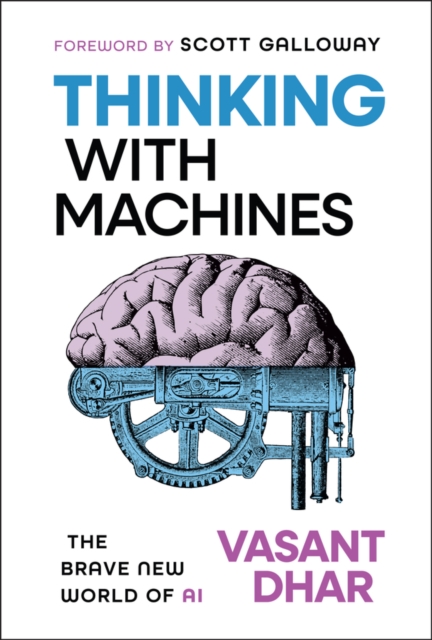
Thinking With Machines: The Brave New World of AI
KSh 4,300.00
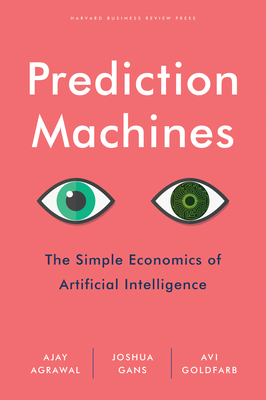
Prediction Machines
KSh 3,950.00

Confident AI
KSh 3,050.00

Responsible AI
KSh 6,400.00

Empire of AI
KSh 4,500.00

The MANIAC
KSh 2,700.00

Data Management, Analytics and Innovation
KSh 32,400.00