
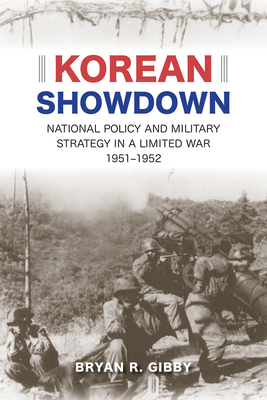
Korean Showdown : National Policy and Military Strategy in a Limited War, 1951-1952
Book Details
Format
Hardback
ISBN-10
0817320733
ISBN-13
9780817320737
Publisher
The University of Alabama Press
Imprint
The University of Alabama Press
Country of Manufacture
US
Country of Publication
GB
Publication Date
Jan 12th, 2021
Print length
408 Pages
Weight
742 grams
Dimensions
16.30 x 23.50 x 3.90 cms
KSh 8,700.00
Temporarily out of stock, due soon
0 in stock
Delivery Location
Delivery fee: Select location
Secure
Quality
Fast
Takes a holistic and integrative approach to strategy, operations, and tactics during the Korean War's stalemate period and demonstrates how these matters shaped each other and influenced, or were influenced by, political and strategic policy decision-making.
A historical analysis of the policies and military strategies applied during the Korean War stalemate period
Korean Showdown: National Policy and Military Strategy in a Limited War, 1951–1952 takes a holistic and integrative approach to strategy, operations, and tactics during the Korean War’s stalemate period and demonstrates how these matters shaped each other and influenced, or were influenced by, political and strategic policy decision-making. Bryan R. Gibby offers an analysis of the major political and military decisions affecting how the war was conducted operationally and diplomatically by examining American, Chinese, North Korean, and South Korean operations in the context of fighting a limited war with limited means, but for objectives that were not always limited in scope or ambition. The foundational political decision was Harry Truman’s voluntary repatriation policy, which extended the war by up to eighteen months. Its military counterpart was the American-led Operation Showdown, the last deliberate military offensive to coerce concessions at the negotiation table. Showdown’s failure (and the Communists’ own equally disappointing military efforts) opened up new avenues for solving the war short of a militarily imposed solution.
Gibby’s research draws on primary sources from American, Korean, and Chinese archives and publications. Many of these sources have not yet been mined in diplomatic and military histories of the Korean War. This innovative book also addresses a significant gap in the study of Korean military operations—the linkage between ground and air pressure campaigns, as well as the many Chinese and American operations conducted to establish negotiation positions. Gibby also explores many political and propagandist developments that assumed great importance in the summer of 1952, such as prisoner of war riots, the bombing of hydroelectric dams, and the South Korean constitutional crisis, which significantly influenced American and Chinese military decision-making.
Ultimately, this volume serves as a cautionary analysis of the limits of force, the necessity to understand an adversary, and the importance of strategic consensus. It also offers an effective case study on an underappreciated period of civil-military tension during the Cold War and on how civilian politicians and military leaders must collaborate to determine a realistic and effective strategy.
Korean Showdown: National Policy and Military Strategy in a Limited War, 1951–1952 takes a holistic and integrative approach to strategy, operations, and tactics during the Korean War’s stalemate period and demonstrates how these matters shaped each other and influenced, or were influenced by, political and strategic policy decision-making. Bryan R. Gibby offers an analysis of the major political and military decisions affecting how the war was conducted operationally and diplomatically by examining American, Chinese, North Korean, and South Korean operations in the context of fighting a limited war with limited means, but for objectives that were not always limited in scope or ambition. The foundational political decision was Harry Truman’s voluntary repatriation policy, which extended the war by up to eighteen months. Its military counterpart was the American-led Operation Showdown, the last deliberate military offensive to coerce concessions at the negotiation table. Showdown’s failure (and the Communists’ own equally disappointing military efforts) opened up new avenues for solving the war short of a militarily imposed solution.
Gibby’s research draws on primary sources from American, Korean, and Chinese archives and publications. Many of these sources have not yet been mined in diplomatic and military histories of the Korean War. This innovative book also addresses a significant gap in the study of Korean military operations—the linkage between ground and air pressure campaigns, as well as the many Chinese and American operations conducted to establish negotiation positions. Gibby also explores many political and propagandist developments that assumed great importance in the summer of 1952, such as prisoner of war riots, the bombing of hydroelectric dams, and the South Korean constitutional crisis, which significantly influenced American and Chinese military decision-making.
Ultimately, this volume serves as a cautionary analysis of the limits of force, the necessity to understand an adversary, and the importance of strategic consensus. It also offers an effective case study on an underappreciated period of civil-military tension during the Cold War and on how civilian politicians and military leaders must collaborate to determine a realistic and effective strategy.
Get Korean Showdown by Bryan R. Gibby at the best price and quality guaranteed only at Werezi Africa's largest book ecommerce store. The book was published by The University of Alabama Press and it has 408 pages.
Customers Who Bought This Also Bought

From Third World to First
KSh 3,200.00

Black Wave
KSh 2,700.00
Histories of the Hanged
KSh 2,700.00
A Man of the World
KSh 5,350.00
Africa: A Modern History
KSh 8,000.00

Legacy of Violence
KSh 3,150.00

The Ethnic Cleansing of Palestine
KSh 2,350.00

Question of Palestine
KSh 2,700.00

Freedom
KSh 6,300.00
King Leopold''s Ghost
KSh 2,350.00
Trapped in History
KSh 2,350.00

Shake Hands With The Devil
KSh 2,350.00

