
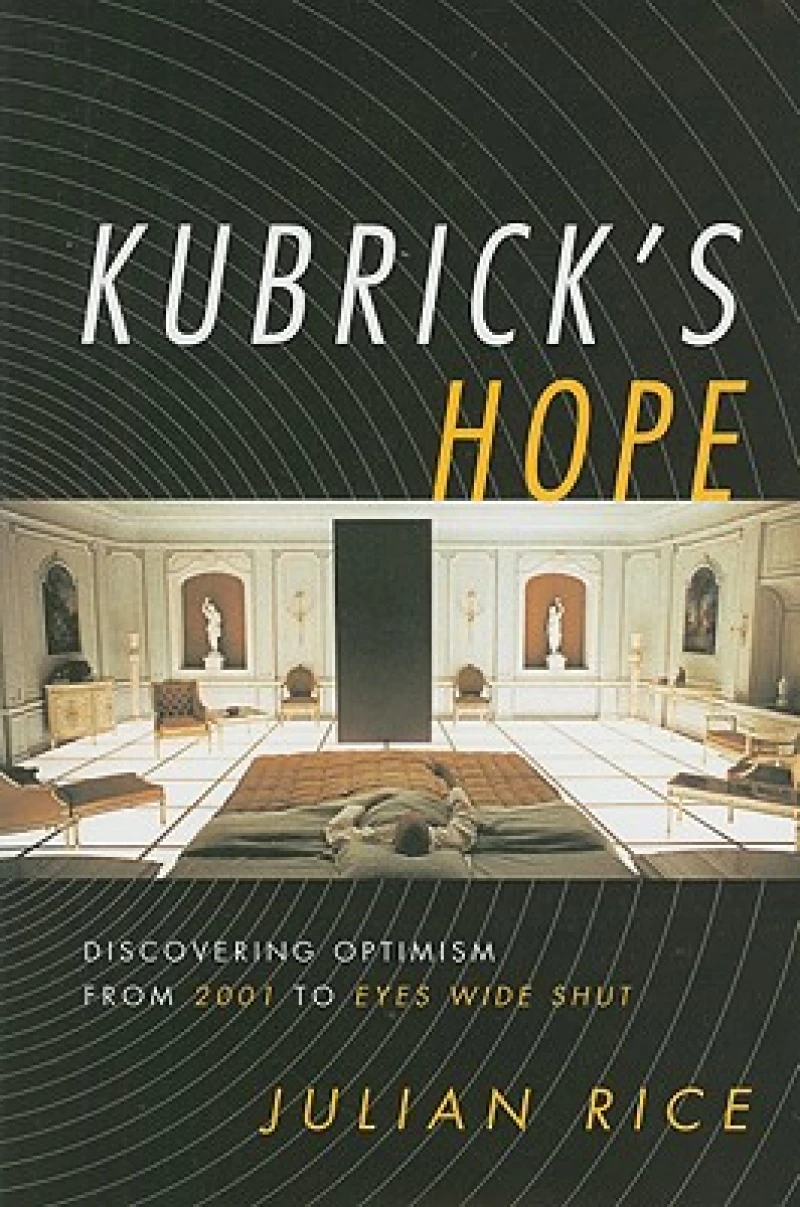
Kubrick's Hope : Discovering Optimism from 2001 to Eyes Wide Shut
by
Julian Rice
Book Details
Format
Hardback or Cased Book
ISBN-10
0810862069
ISBN-13
9780810862067
Publisher
Scarecrow Press
Imprint
Scarecrow Press
Country of Manufacture
US
Country of Publication
GB
Publication Date
Sep 29th, 2008
Print length
296 Pages
Weight
649 grams
Dimensions
23.60 x 16.00 x 2.80 cms
Product Classification:
Film theory & criticism
Ksh 10,800.00
Werezi Extended Catalogue
0 in stock
Delivery Location
Delivery fee: Select location
Secure
Quality
Fast
There have been two common assumptions about Stanley Kubrick: that his films portray human beings who are driven exclusively by aggression and greed, and that he pessimistically rejected meaning in a contingent, postmodern world. However, as Kubrick himself remarked, "A work of art should be always exhilarating and never depressing, whatever its subject matter may be." In this new interpretation of Kubrick's films, Julian Rice suggests that the director's work had a more positive outlook than most people credit him. And while other studies have recounted Kubrick's life and production histories, few have offered lucid explanations of specific sources and their influence on his films. In Kubrick's Hope, Rice explains how the theories of Freud and Jung took cinematic form, and also considers the significant impression left on the director's last six films by Robert Ardrey, Bruno Bettelheim, and Joseph Campbell. In addition to providing useful contexts, Rice offers close readings of the films, inviting readers to note details they may have missed and to interpret them in their own way. By refreshing their experience of the films and discarding postmodern cliches, viewers may discover more optimistic themes in the director's works. Beginning with 2001: A Space Odyssey and continuing through A Clockwork Orange, Barry Lyndon, The Shining, Full Metal Jacket, and Eyes Wide Shut, Rice illuminates Kubrick's thinking at the time he made each film. Throughout, Rice examines the compelling political, psychological, and spiritual issues the director raises. As this book contends, if these works are considered together and repeatedly re-viewed, Kubrick's films may help viewers to personally grow and collectively endure.
There have been two common assumptions about Stanley Kubrick: that his films portray human beings who are driven exclusively by aggression and greed, and that he pessimistically rejected meaning in a contingent, postmodern world. However, as Kubrick himself remarked, "A work of art should be always exhilarating and never depressing, whatever its subject matter may be." In this new interpretation of Kubrick''s films, Julian Rice suggests that the director''s work had a more positive outlook than most people credit him. And while other studies have recounted Kubrick''s life and production histories, few have offered lucid explanations of specific sources and their influence on his films. In Kubrick''s Hope, Rice explains how the theories of Freud and Jung took cinematic form, and also considers the significant impression left on the director''s last six films by Robert Ardrey, Bruno Bettelheim, and Joseph Campbell. In addition to providing useful contexts, Rice offers close readings of the films, inviting readers to note details they may have missed and to interpret them in their own way. By refreshing their experience of the films and discarding postmodern clichés, viewers may discover more optimistic themes in the director''s works. Beginning with 2001: A Space Odyssey and continuing through A Clockwork Orange, Barry Lyndon, The Shining, Full Metal Jacket, and Eyes Wide Shut, Rice illuminates Kubrick''s thinking at the time he made each film. Throughout, Rice examines the compelling political, psychological, and spiritual issues the director raises. As this book contends, if these works are considered together and repeatedly re-viewed, Kubrick''s films may help viewers to personally grow and collectively endure.
Get Kubrick's Hope by at the best price and quality guaranteed only at Werezi Africa's largest book ecommerce store. The book was published by Scarecrow Press and it has pages.

