
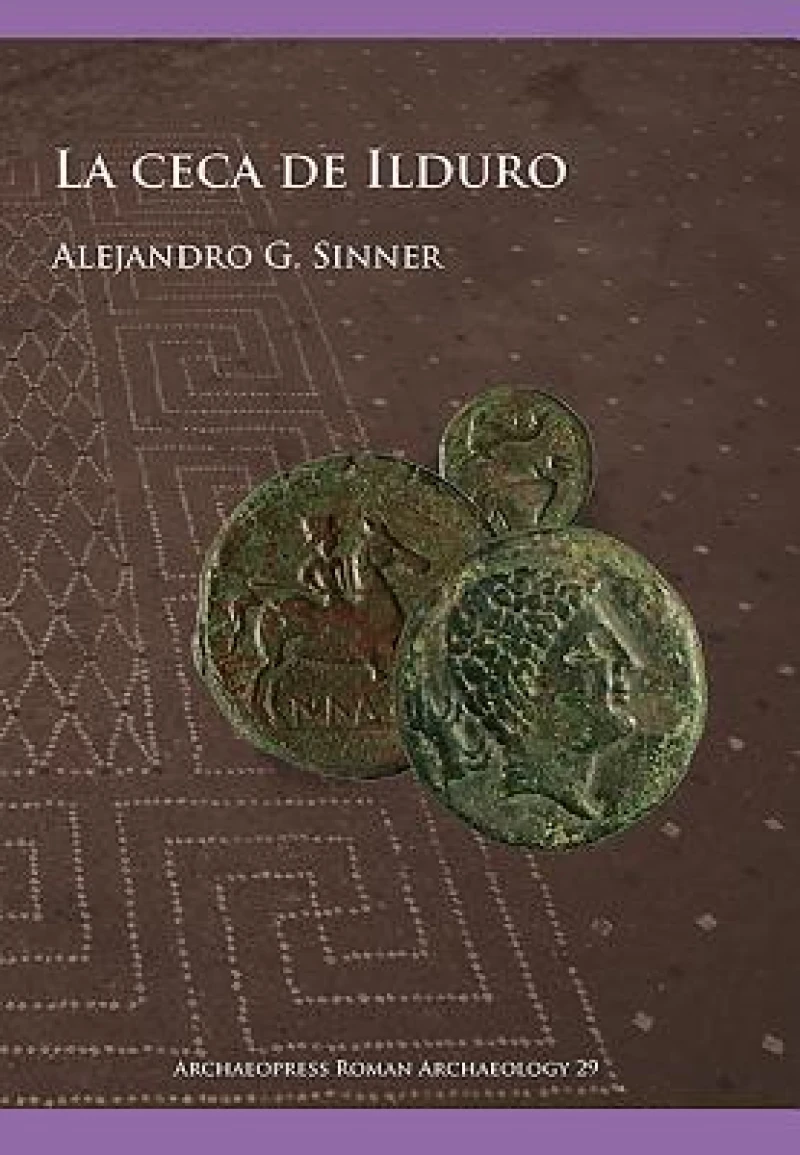
La ceca de Ilduro
Book Details
Format
Paperback / Softback
Book Series
Archaeopress Roman Archaeology
ISBN-10
1784917230
ISBN-13
9781784917234
Publisher
Archaeopress
Imprint
Archaeopress Archaeology
Country of Manufacture
GB
Country of Publication
GB
Publication Date
Dec 31st, 2017
Print length
196 Pages
Weight
714 grams
Dimensions
20.70 x 29.00 x 1.00 cms
Product Classification:
Classical Greek & Roman archaeologyCoins, banknotes, medals, seals (numismatics)
Ksh 7,350.00
Werezi Extended Catalogue
Delivery in 14 days
1 copies in stock
Delivery Location
Delivery fee: Select location
Delivery in 14 days
Secure
Quality
Fast
This book is exclusively devoted to the mint of Ilduro, its main goal being to study not only the issues produced by the workshop in detail, but also the role that this coinage had in the monetarization of a changing society, that of the Laietani, which had never previously needed to use coinage.
The minting of coinage in a territory without previous monetary history or tradition reflects a series of political, social and cultural changes that took place in order to make it possible. Such changes can be traced in the archaeological record thanks to elements apparently as different as coins, ceramics, epigraphy, funerary rites or architecture; these changes thus emerge as some of the most significant points in the colonization process that took place throughout the second century B.C. and at the beginning of the next century in the valley of Cabrera de Mar (ancient Ilduro) and the Laietani territory.
This book is exclusively devoted to the mint of Ilduro, its main goal being to study not only the issues produced by the workshop in detail, but also the role that this coinage had in the monetarization of a changing society, that of the Laietani, which had never previously needed to use coinage. To do so, the author of this study endeavours to answer the following questions in as much depth as possible: Who minted the coins? Why? What for? How? Where? When? How many?
With the aim of answering the aforementioned questions, this volume has been organized into ten chapters divided in three broader sections dedicated to studying, specifically, each one of the aspects involved in the production of this mint. The chapters considering the location of the workshop and the legends used are fundamental to answer the questions of who minted the coins and where. On the other hand, aspects such as metrology, typology and the technique (metallographic analysis) used by the mint are essential to understand how the coins were minted, and also to put forward a hypothesis as regards the use given to the coin issues discussed in the present study. Finally, the chapters dedicated to the production, classification and chronology of the issues should answer such important questions as when and how much money was put into circulation.
This is a book that, in addition to increasing our knowledge of Iberian numismatics, brings us closer to the evolution and production of the coin issues minted in present-day northeastern Spain in general and to the Ilduro workshop in particular.
This book is exclusively devoted to the mint of Ilduro, its main goal being to study not only the issues produced by the workshop in detail, but also the role that this coinage had in the monetarization of a changing society, that of the Laietani, which had never previously needed to use coinage. To do so, the author of this study endeavours to answer the following questions in as much depth as possible: Who minted the coins? Why? What for? How? Where? When? How many?
With the aim of answering the aforementioned questions, this volume has been organized into ten chapters divided in three broader sections dedicated to studying, specifically, each one of the aspects involved in the production of this mint. The chapters considering the location of the workshop and the legends used are fundamental to answer the questions of who minted the coins and where. On the other hand, aspects such as metrology, typology and the technique (metallographic analysis) used by the mint are essential to understand how the coins were minted, and also to put forward a hypothesis as regards the use given to the coin issues discussed in the present study. Finally, the chapters dedicated to the production, classification and chronology of the issues should answer such important questions as when and how much money was put into circulation.
This is a book that, in addition to increasing our knowledge of Iberian numismatics, brings us closer to the evolution and production of the coin issues minted in present-day northeastern Spain in general and to the Ilduro workshop in particular.
Get La ceca de Ilduro by at the best price and quality guaranteed only at Werezi Africa's largest book ecommerce store. The book was published by Archaeopress and it has pages.

