
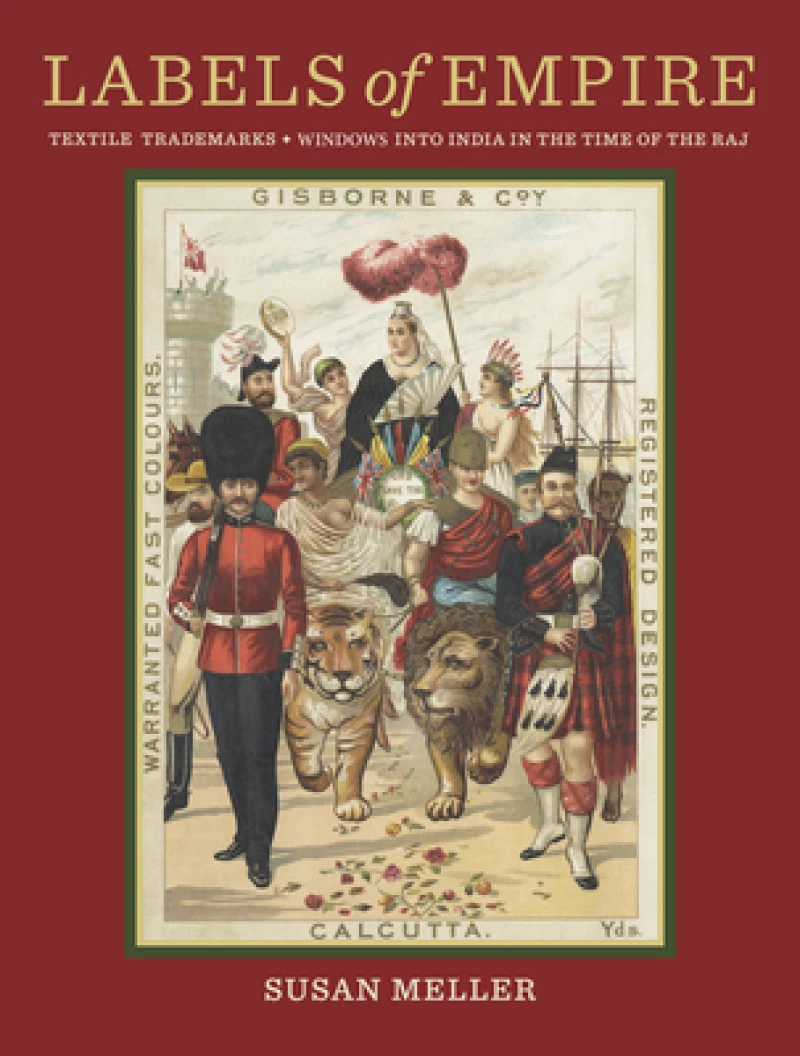
Labels of Empire : Textile Trademarks: Windows into India in the Time of the Raj
Book Details
Delivery Location
Delivery fee: Select location
At one time Great Britain clothed the world. In the 1880s, when the British textile industry was at its height, 85 percent of the world’s population wore clothing made from fabric produced in the mills of Lancashire. From 1910 to 1913 alone, seven billion yards of cloth were folded, stamped, labeled, and baled. Most of this output was for export, and 30 percent of it went to India.
British textile manufacturers selling into the competitive Indian market were dealing with a largely illiterate population. In order to differentiate their goods, they stamped their cloth with distinctive images—a crouching tiger or perhaps an elephant standing on top of a globe. When chromolithography came into widespread use in the late 1800s, illustrated paper labels (known in the trade as “shipper’s tickets”) made to appeal to the local people were added. Designed, printed, and registered in Manchester, these brightly colored images were pasted onto the pieces of cloth being sold, further helping to establish a company’s brand. Hindu gods, native animals, scenes from the great Indian epics—the Mahabharata and Ramayana—and views of everyday life were common subjects. In a sense a form of premium, they provided the consumer with an additional incentive to buy the goods of a particular firm.
Labels of Empire begins with the late 19th-century heyday of British textile manufacturing and closes with Indian independence in 1947. By combining visual narrative, popular culture, and magical realism in a way never done before, this book offers an unprecedented look at the British textile industry in the time of the Raj—and its remarkably successful use of paper labels as trademarks.
Get Labels of Empire by at the best price and quality guaranteed only at Werezi Africa's largest book ecommerce store. The book was published by Oro Editions and it has pages.

