
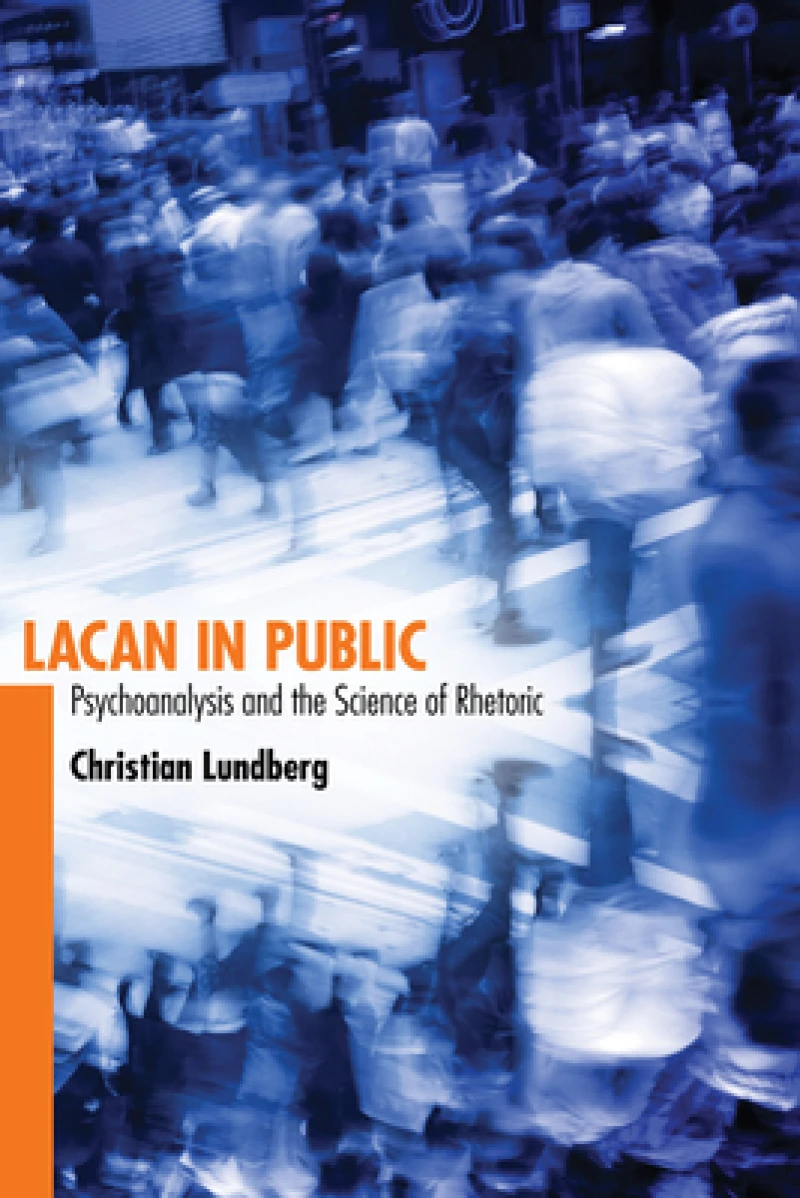
Lacan in Public : Psychoanalysis and the Science of Rhetoric
Book Details
Format
Paperback / Softback
Book Series
Rhetoric, Culture, and, Social Critique
ISBN-10
0817359206
ISBN-13
9780817359201
Publisher
The University of Alabama Press
Imprint
The University of Alabama Press
Country of Manufacture
GB
Country of Publication
GB
Publication Date
Feb 20th, 2018
Print length
248 Pages
Weight
380 grams
Dimensions
22.60 x 14.90 x 1.70 cms
Product Classification:
Semantics, discourse analysis, stylisticsDiscourse analysisPsychology
Ksh 4,400.00
Temporarily out of stock, due soon
0 in stock
Delivery Location
Delivery fee: Select location
Secure
Quality
Fast
Argues that Lacan's contributions to the theory of rhetoric are substantial and revolutionary and that rhetoric is, in fact, the central concern of Lacan's entire body of work. Lacan's conception of rhetoric, Christian Lundberg argues in Lacan in Public, upsets and extends the received wisdom of American rhetorical studies.
Lacan in Public argues that Lacan’s contributions to the theory of rhetoric are substantial and revolutionary and that rhetoric is, in fact, the central concern of Lacan’s entire body of work.
Scholars typically cite Jacques Lacan as a thinker primarily concerned with issues of desire, affect, politics, and pleasure. And though Lacan explicitly contends with some of the pivotal thinkers in the field of rhetoric, rhetoricians have been hesitant to embrace the French thinker both because his writing is difficult and because Lacan’s conception of rhetoric runs counter to the American traditions of rhetoric in composition and communication studies.
Lacan’s conception of rhetoric, Christian Lundberg argues in Lacan in Public, upsets and extends the received wisdom of American rhetorical studies—that rhetoric is a science, rather than an art; that rhetoric is predicated not on the reciprocal exchange of meanings, but rather on the impossibility of such an exchange; and that rhetoric never achieves a correspondence with the real-world circumstances it attempts to describe.
As Lundberg shows, Lacan’s work speaks directly to conversations at the center of current rhetorical scholarship, including debates regarding the nature of the public and public discourses, the materiality of rhetoric and agency, and the contours of a theory of persuasion.
Scholars typically cite Jacques Lacan as a thinker primarily concerned with issues of desire, affect, politics, and pleasure. And though Lacan explicitly contends with some of the pivotal thinkers in the field of rhetoric, rhetoricians have been hesitant to embrace the French thinker both because his writing is difficult and because Lacan’s conception of rhetoric runs counter to the American traditions of rhetoric in composition and communication studies.
Lacan’s conception of rhetoric, Christian Lundberg argues in Lacan in Public, upsets and extends the received wisdom of American rhetorical studies—that rhetoric is a science, rather than an art; that rhetoric is predicated not on the reciprocal exchange of meanings, but rather on the impossibility of such an exchange; and that rhetoric never achieves a correspondence with the real-world circumstances it attempts to describe.
As Lundberg shows, Lacan’s work speaks directly to conversations at the center of current rhetorical scholarship, including debates regarding the nature of the public and public discourses, the materiality of rhetoric and agency, and the contours of a theory of persuasion.
Get Lacan in Public by at the best price and quality guaranteed only at Werezi Africa's largest book ecommerce store. The book was published by The University of Alabama Press and it has pages.

