
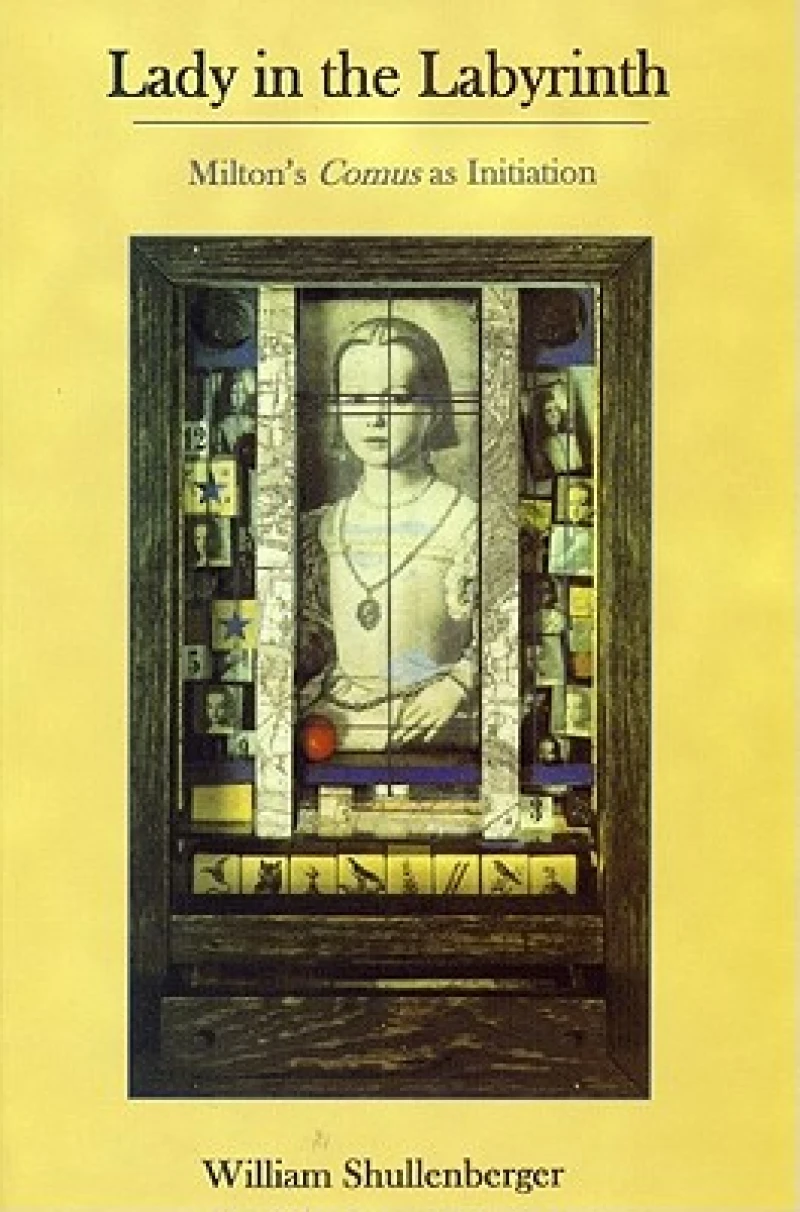
Lady in the Labyrinth : Milton's Comus as Initiation
Book Details
Format
Hardback or Cased Book
ISBN-10
161147387X
ISBN-13
9781611473872
Publisher
Fairleigh Dickinson University Press
Imprint
Fairleigh Dickinson University Press
Country of Manufacture
US
Country of Publication
GB
Publication Date
Nov 1st, 2008
Print length
360 Pages
Weight
662 grams
Dimensions
24.30 x 16.90 x 2.50 cms
Ksh 18,350.00
Werezi Extended Catalogue
0 in stock
Delivery Location
Delivery fee: Select location
Secure
Quality
Fast
Modern literary scholarship has traced the ways in which a distinctly modern sense of selfhood and subjectivity, and of the individualist liberal society in which such a self takes shape, emerges from the drama and poetry of the early seventeenth century. John Milton, writer of the greatest long poem in English, Paradise Lost, takes up the challenge of modern character and social formation from Shakespeare and Donne and their contemporaries. He begins this task in his own early maturity, some thirty years before the publication of his great epic, with A Maske Presented at Ludlow Castle,I>, more commonly known as Comus. There has not been a major book-length study of Milton's Maske in the past twenty years, so Lady in the Labyrinth fills a major gap in Milton and Renaissance criticism. It comprehensively surveys, evaluates, and integrates recent and traditional criticism of Comus in the context of Milton's other work, while developing new directions for study, focusing anthropological and psychological analysis on the poem's characters and mythological dimensions. Parallels between the ritual elements of the Maske and the rites of passage of non-European cultures will widen the horizons of both canonically based and multiculturally engaged scholars and writers. The book's study of Milton's identification with his female hero, and his advocacy of womens ethical, sexual, and political autonomy, gives a jolt to ongoing debates about Milton and feminism. The first of Milton's heroes of Christian Liberty, the fifteen-year-old Lady who performs in his Maske, is also the first of his characters to act out this transformation of human identity. Lady in the Labyrinth treats Comus, first performed in 1634, as a rite of passage for its Lady, and for the emerging culture whose hopes are invested in her. Displaying in song, argument and dance such character qualities as inferiority, self-consciousness, flexibility, and independence, the Lady gives vital form to
Modern literary scholarship has traced the ways in which a distinctly modern sense of selfhood and subjectivity, and of the individualist liberal society in which such a self takes shape, emerges from the drama and poetry of the early seventeenth century. John Milton, writer of the greatest long poem in English, Paradise Lost, takes up the challenge of modern character and social formation from Shakespeare and Donne and their contemporaries. He begins this task in his own early maturity, some thirty years before the publication of his great epic, with A Maske Presented at Ludlow Castle,I>, more commonly known as Comus. There has not been a major book-length study of Milton''s Maske in the past twenty years, so Lady in the Labyrinth fills a major gap in Milton and Renaissance criticism. It comprehensively surveys, evaluates, and integrates recent and traditional criticism of Comus in the context of Milton''s other work, while developing new directions for study, focusing anthropological and psychological analysis on the poem''s characters and mythological dimensions. Parallels between the ritual elements of the Maske and the rites of passage of non-European cultures will widen the horizons of both canonically based and multiculturally engaged scholars and writers. The book''s study of Milton''s identification with his female hero, and his advocacy of womens ethical, sexual, and political autonomy, gives a jolt to ongoing debates about Milton and feminism. The first of Milton''s heroes of Christian Liberty, the fifteen-year-old Lady who performs in his Maske, is also the first of his characters to act out this transformation of human identity. Lady in the Labyrinth treats Comus, first performed in 1634, as a rite of passage for its Lady, and for the emerging culture whose hopes are invested in her. Displaying in song, argument and dance such character qualities as inferiority, self-consciousness, flexibility, and independence, the Lady gives vital form to
Get Lady in the Labyrinth by at the best price and quality guaranteed only at Werezi Africa's largest book ecommerce store. The book was published by Fairleigh Dickinson University Press and it has pages.

